

Agriculture and the Rhythm of Rural India
Reference library · 1023 words
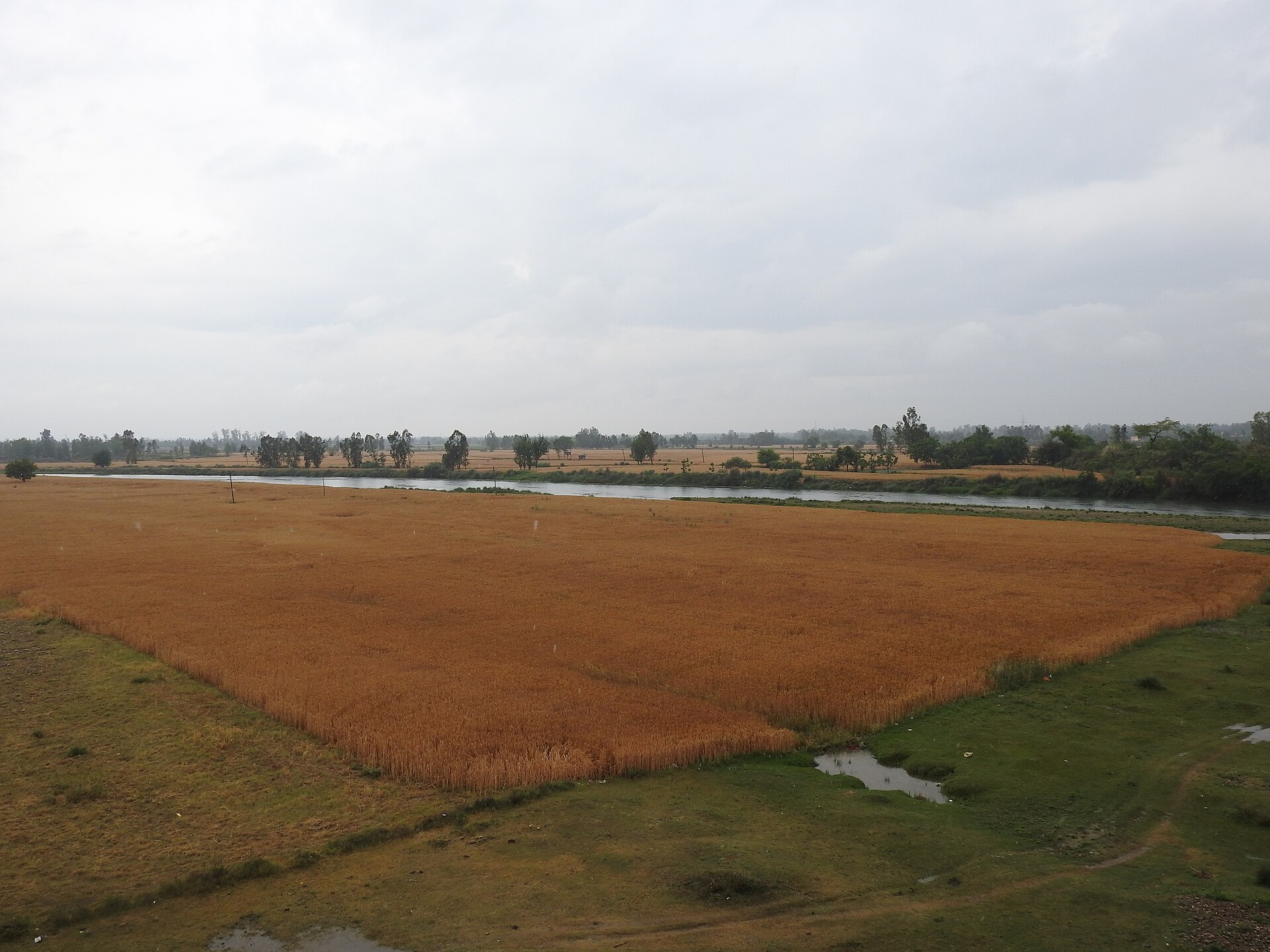

Indian agriculture runs on two main cropping seasons, and almost everything else in rural life is arranged around them. The kharif season begins with the arrival of the monsoon in June and July and is harvested from September: rice, cotton, maize, soybean, groundnut, millets and most pulses. The rabi season is sown from October and November into cooling soil holding residual moisture, watered through the winter where irrigation exists, and harvested in March and April: wheat, mustard, barley and chickpea. A shorter zaid season fills the hot gap between them with melons, fodder and vegetables where water allows. The consequence is that a delayed monsoon does not simply reduce one harvest, it compresses the sowing window of the first crop and can shift the timing of the second.
The structural fact that shapes almost every policy argument is the size of the holding. India's Agriculture Census has recorded a steadily shrinking average operational holding, now close to one hectare, with the large majority of holdings classified as small or marginal, meaning under two hectares and often well under one. Hindu and customary inheritance divides land among heirs each generation, so fragmentation is continual, and many families farm several non-contiguous scraps. A farm of that size cannot easily justify machinery, cannot absorb a failed season from savings, and gives its owner almost no bargaining power against a trader. This is why so much Indian agricultural policy takes the form of subsidised inputs and guaranteed prices rather than support for scale.
The Green Revolution and its inheritance
The turning point came in the mid 1960s. After two consecutive drought years and humiliating dependence on American food aid, India adopted a package of high yielding semi dwarf wheat and rice varieties, chemical fertiliser, assured irrigation and guaranteed procurement prices. The wheat varieties derived from work by Norman Borlaug in Mexico, adapted for Indian conditions under the agricultural scientist M. S. Swaminathan, and were pushed hardest in Punjab, Haryana and western Uttar Pradesh, where canal irrigation and tubewells made water reliable. Rice followed with varieties from the International Rice Research Institute in the Philippines. Within roughly fifteen years India moved from recurrent food crises to foodgrain self sufficiency at the national level, which is one of the genuine achievements of twentieth century development policy.
It also created problems that dominate the present. The system rewarded wheat and rice above all else, so Punjab, a semi arid state, ended up growing a water intensive summer rice crop sustained by free or nearly free electricity for pumping. Groundwater tables across much of Punjab and Haryana have fallen severely, and in many blocks extraction exceeds recharge. Heavy nitrogen use without balanced potash and micronutrients has degraded soils. The narrow post harvest window between rice and wheat encourages farmers to burn paddy stubble in late October and November, a major contributor to the smog that settles over Delhi each winter. Almost every proposed remedy, crop diversification, metered power, direct seeded rice, runs into the same obstacle: the farmer bears the risk of switching while the benefit is diffuse.
The institutions in between deserve explaining. Each year the Commission for Agricultural Costs and Prices recommends minimum support prices for a list of crops, which the Union Cabinet approves. In practice the guarantee is meaningful mainly for wheat and rice, and mainly in states where the Food Corporation of India and state agencies actually procure at scale, which is why Punjab, Haryana, Telangana and Chhattisgarh have a stake in the system that Bihar, which dismantled its regulated markets in 2006, does not. Procured grain flows into the public distribution system that supplies subsidised food to a large majority of the population under the National Food Security Act of 2013. Sales have traditionally been routed through regulated markets, or mandis, established under state agricultural produce marketing committee laws. The attempt to liberalise this architecture through three central farm laws in 2020 produced a year of mass protest on Delhi's borders, largely by Punjabi and Haryanvi farmers who feared the erosion of assured procurement, and the laws were repealed in November 2021. Whether a legally enforceable minimum support price should replace them remains one of the most contested questions in Indian public policy, with agricultural economists sharply divided on whether it is fiscally or logistically possible.
Livelihoods beyond the crop
Farming employs a far larger share of Indians than it contributes to national income. Something close to 45 per cent of the workforce is engaged in agriculture and allied activities, which generate under a fifth of gross value added. That gap is the essence of rural poverty: too many people sharing too little output. It is also why non farm income matters so much. Livestock is the great stabiliser, since a buffalo or a few goats produce saleable value weekly rather than seasonally. India became the world's largest milk producer largely through Operation Flood, the dairy cooperative programme launched in 1970 and led by Verghese Kurien, which scaled up the village cooperative model pioneered at Anand in Gujarat and marketed under the Amul brand. Its significance was organisational rather than technological: it gave millions of very small producers a route to an urban market they could not otherwise reach.
The rest of the rural income mix comes from wage labour, seasonal migration to construction sites and brick kilns in distant states, and government programmes. The Mahatma Gandhi National Rural Employment Guarantee Act of 2005 offers rural households up to 100 days of paid unskilled work a year on demand, functioning as a wage floor and a lean season buffer. PM-KISAN transfers a modest fixed annual sum to landholding farmer families in three instalments. Horticulture, fruit, vegetables, spices and flowers, now exceeds foodgrains in tonnage and offers far better returns per hectare, but it requires cold chains, transport and market access that thin infrastructure often cannot supply, which is why gluts and price crashes for onions, tomatoes and potatoes recur with grim regularity. Understanding rural India means holding both facts at once: an agricultural system that reliably feeds 1.4 billion people, and one that leaves most of the people producing that food close to the margin.
References
- Ministry of Agriculture and Farmers Welfare, Government of IndiaDepartment of Agriculture and Farmers Welfare
- Government of IndiaAgriculture Census of India
- National Dairy Development BoardNational Dairy Development Board
- Food and Agriculture Organization of the United NationsFAO in India
- Encyclopaedia BritannicaGreen Revolution
This is a reference article, written from the sources above. It is background, not news reporting.