


The Reserve Bank of India: Guardian of the Currency
Reference library · 1098 words
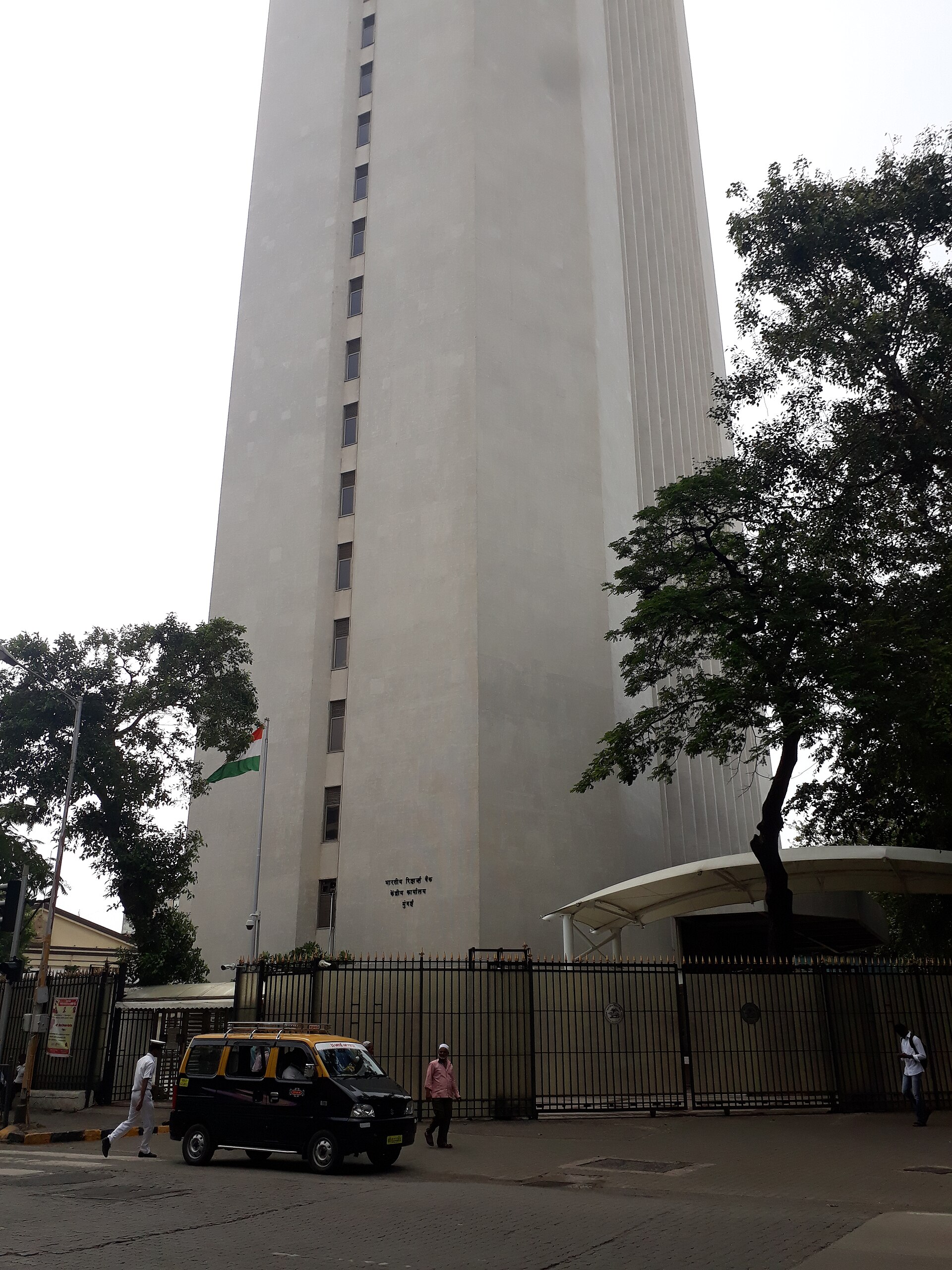

Every Indian banknote carries a promise signed by the Governor of the Reserve Bank of India. The institution behind that signature is one of the older central banks outside Europe and North America, and one of the more powerful institutions in Indian public life, although it operates with far less visibility than the ministries in Delhi. It sets the price of money, regulates the banks, manages the country's foreign exchange reserves, prints and destroys currency, runs the government's accounts and increasingly sets the rules for the digital payment systems that most Indians now use daily.
The Reserve Bank was created by the Reserve Bank of India Act of 1934 and began operating on 1 April 1935. Its design followed the recommendations of the Royal Commission on Indian Currency and Finance, usually called the Hilton Young Commission, which reported in 1926 and argued that currency and credit management should be taken out of the hands of the colonial government's finance department and given to a specialist body. The bank was established as a shareholders' institution with privately held capital, on the theory that this would insulate it from political direction. Its central office was in Calcutta and moved to Bombay in 1937, where it remains. It was nationalised with effect from 1 January 1949, and the Government of India has owned it since.
What it actually does
The most visible function is currency. The Reserve Bank issues all Indian banknotes except the one rupee note, which is technically issued by the Government of India and signed by the Finance Secretary. Notes are printed at presses in Nashik, Dewas, Mysuru and Salboni, and the bank manages distribution through currency chests held at commercial bank branches, along with the withdrawal and destruction of soiled notes. This unglamorous logistics operation became briefly the most discussed subject in the country in November 2016, when the Prime Minister announced on television that five hundred and one thousand rupee notes, then the great majority of currency by value, would cease to be legal tender within hours. The Reserve Bank had to replace them. The episode raised questions about the bank's institutional independence that have not been fully resolved, since the decision was announced by the government and the bank's board recommendation was made shortly before.
The second function is monetary policy, and here the institutional design changed significantly in the last decade. Until 2016 the Governor decided the policy rate after taking advice. An amendment to the Act that year created a six member Monetary Policy Committee, three from the Reserve Bank including the Governor and three appointed by the government, with the Governor holding a casting vote in the event of a tie. At the same time India adopted formal inflation targeting: the government notifies a consumer price inflation target, set at four per cent with a tolerance band of two percentage points either side, for a five year period. If the target is missed for three consecutive quarters, the bank must report to the government explaining why and what it will do. The principal instrument is the repo rate, the rate at which the bank lends overnight to commercial banks against government securities, supported by the cash reserve ratio and the statutory liquidity ratio, which specify what proportion of deposits banks must hold as reserves and in approved securities respectively.
The third function is regulation. The Reserve Bank licenses and supervises commercial banks, cooperative banks and a large universe of non banking financial companies, and it can impose restrictions, replace boards and force resolution. Indian banking has been dominated since 1969 and 1980, when successive governments nationalised the largest private banks, by public sector institutions in which the government remains the majority shareholder. This creates a permanent awkwardness: the regulator supervises banks owned by the government that appoints the regulator. The tension became acute after the asset quality review begun in 2015, which forced banks to recognise loans that had been rolled over rather than acknowledged as bad, revealing a far larger stock of stressed corporate credit than reported. The resulting clean up drove the Insolvency and Bankruptcy Code of 2016 and years of recapitalisation.
The fourth function is external. The bank manages the exchange rate under the Foreign Exchange Management Act of 1999, which replaced the far more restrictive control regime of 1973. India runs a managed float: the rupee's value is set by the market, but the bank intervenes by buying and selling dollars to smooth volatility, and it holds a large stock of foreign exchange reserves for that purpose. The memory driving this policy is the balance of payments crisis of 1991, when reserves fell to a few weeks of imports and the government physically shipped gold to be pledged with the Bank of England and the Bank of Japan. That humiliation triggered the liberalisation programme that reshaped the Indian economy.
Payments, independence and the arguments ahead
The bank's newest area of significance is payments. India's Unified Payments Interface, operated by the National Payments Corporation of India, an entity promoted by the Reserve Bank and the Indian Banks' Association, allows instant transfers between bank accounts through mobile applications and has grown into one of the largest real time retail payment systems anywhere, used by street vendors and large retailers alike. The bank sets the rules for it, including contentious questions such as whether any single application should be allowed to dominate transaction volumes. Since late 2022 the bank has also run pilots of a central bank digital currency, the digital rupee, in wholesale and retail forms, whose eventual purpose is still being defined.
The recurring public argument concerns independence. The Act contains a provision, Section 7, allowing the central government to issue directions to the bank in the public interest after consultation with the Governor. It has never been formally invoked, but its existence was publicly raised during a period of open friction in 2018 over liquidity for non bank lenders, regulatory forbearance and the size of the surplus the bank transfers to the government, and the Governor resigned before his term ended in December that year. The question of how much of its accumulated reserves the bank should keep against risks and how much it should hand over as dividend was addressed by an expert committee chaired by a former Governor, which reported in 2019 and proposed a framework for calculating the economic capital the bank needs. Governments facing fiscal pressure will always want more; central bankers will always want a larger buffer. That argument is structural, not exceptional, and it recurs in most countries with a central bank.
References
- Reserve Bank of IndiaAbout Us: History
- Reserve Bank of IndiaMonetary Policy Framework
- Encyclopaedia BritannicaReserve Bank of India
- Ministry of Finance, Government of IndiaDepartment of Economic Affairs
- International Monetary FundIndia: Country Information
This is a reference article, written from the sources above. It is background, not news reporting.