
Armed Forces Structure: An Overview
Reference library · 1099 words
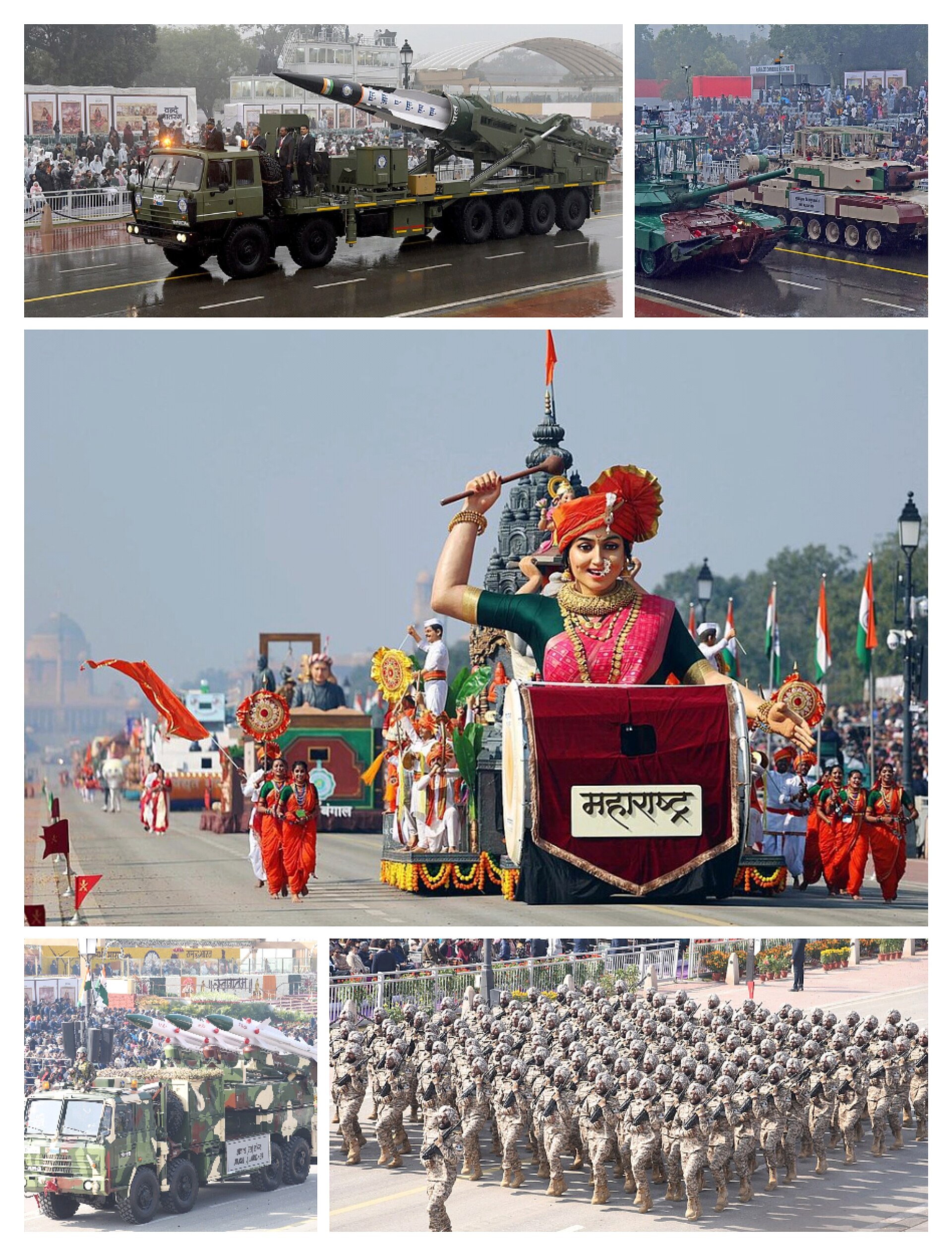

India maintains one of the largest military establishments in the world, with active personnel numbering well over a million and defence spending consistently among the highest of any country. Its structure has three notable features that distinguish it from many comparable states: it is entirely volunteer, with no conscription; it is subject to unusually strict civilian control exercised through the bureaucracy as much as through elected ministers; and it has, until very recently, kept its three services organisationally separate to a degree most large militaries abandoned decades ago.
Formal command authority rests with the President, who under the Constitution is Supreme Commander of the armed forces. In practice this is titular. Real decisions are made by the Union Cabinet, and specifically by the Cabinet Committee on Security, chaired by the Prime Minister and including the ministers for defence, home affairs, finance and external affairs, advised by the National Security Adviser. The Ministry of Defence, headed by the Raksha Mantri, translates those decisions into direction for the services. The insistence on civilian primacy is deliberate and dates from independence: the political leadership of the time, watching neighbouring states fall to their own armies, built a system in which no single officer commanded all three services and in which civil servants controlled budgets, procurement and promotions. India has never experienced a military coup, and the arrangement is generally credited with contributing to that record, though officers have long argued that it also produced slow decisions and poor military advice at the political level.
The three services and the joint layer
The Indian Army is by far the largest service, with roughly 1.2 million active personnel. It is organised into six operational commands, Northern at Udhampur, Western at Chandimandir, South Western at Jaipur, Southern at Pune, Central at Lucknow and Eastern at Kolkata, along with a training command headquartered at Shimla. Soldiers are recruited into regiments, many of which retain the class and regional compositions inherited from the colonial period, such as the Sikh, Gorkha, Rajput, Jat, Madras and Maratha regiments, alongside all India, all class formations. Two specialised bodies deserve mention: the Rashtriya Rifles, an army raised counter insurgency force used extensively in Jammu and Kashmir, and the Assam Rifles, the oldest paramilitary force in the country, administered by the Ministry of Home Affairs but operationally controlled by the Army.
The Indian Navy operates three geographic commands, Western at Mumbai, Eastern at Visakhapatnam and Southern at Kochi. It is one of few navies operating aircraft carriers: INS Vikramaditya, a rebuilt Soviet era ship commissioned in 2013, and INS Vikrant, the first carrier designed and built in India, commissioned in September 2022. It also operates the sea leg of the nuclear deterrent through ballistic missile submarines of the Arihant class, the first of which was commissioned in 2016. The Indian Air Force is organised into five operational commands, including Western Air Command at New Delhi, together with training and maintenance commands, and flies a mixed fleet of Russian, French and indigenous types, a diversity that reflects decades of shifting supply relationships and imposes real maintenance costs.
A fourth armed force of the Union, the Indian Coast Guard, was established in 1978 and sits under the Ministry of Defence, responsible for maritime law enforcement, search and rescue and offshore security. Separately, and often confused with the military abroad, the Central Armed Police Forces come under the Ministry of Home Affairs: the Central Reserve Police Force for internal security, the Border Security Force on the Pakistan and Bangladesh frontiers, the Indo Tibetan Border Police along the Himalayan boundary with China, the Sashastra Seema Bal on the Nepal and Bhutan borders and the Central Industrial Security Force at airports and critical installations. Together these forces number over a million personnel and handle most of what an outside observer might assume the army does.
Reform, deterrence and unresolved arguments
Jointness has been the central institutional argument of the past twenty five years. The Kargil conflict of 1999 exposed serious failures in intelligence sharing and inter service coordination, and the review committee that followed, together with a Group of Ministers report in 2001, recommended a Chief of Defence Staff. What was created instead in 2001 was an Integrated Defence Staff without a single commander above it, and the Andaman and Nicobar Command, India's first genuinely tri service theatre command. The full post was finally established in 2019, with General Bipin Rawat taking office as the first Chief of Defence Staff on 1 January 2020, heading a newly created Department of Military Affairs within the ministry. He was killed in a helicopter crash in December 2021, and General Anil Chauhan was appointed to succeed him in September 2022. The proposal to reorganise the three services into integrated theatre commands, each responsible for a geographic area under one commander, remains under discussion and has met resistance, particularly from an air force concerned about dividing a small and flexible combat aircraft fleet among theatre commanders.
Nuclear weapons sit outside the service chain. The Strategic Forces Command, created in 2003, manages the arsenal, but authority to use it belongs to the Nuclear Command Authority, whose Political Council is chaired by the Prime Minister and is the only body that can authorise release. The doctrine made public in 2003 commits India to no first use against nuclear armed states, with a stated exception for retaliation against major chemical or biological attack. Senior figures have periodically questioned the durability of no first use, which keeps the doctrine a live subject of analysis rather than a settled fact.
Two further changes are reshaping the institution. Recruitment was overhauled in June 2022 by the Agnipath scheme, under which most new entrants below officer rank enlist as Agniveers for four years, with only a minority retained for full careers. The government presents it as a way to lower the average age of the force and contain a pension bill that consumes an enormous share of the defence budget. It triggered protests across northern India from aspirants who had trained for permanent service, and veterans have questioned its effect on regimental cohesion. Meanwhile the role of women has expanded considerably: the first women fighter pilots were commissioned in 2016, the Supreme Court ruled in 2020 that women officers must be eligible for permanent commissions and command appointments in the Army, and the National Defence Academy was opened to women candidates in 2021. Alongside this runs a sustained effort to reduce dependence on imported weapons, including the corporatisation of the state ordnance factories into seven defence public sector undertakings in 2021, with results that are real but uneven.
References
- Ministry of Defence, Government of IndiaMinistry of Defence
- Indian ArmyIndian Army official website
- Indian NavyIndian Navy official website
- Indian Air ForceIndian Air Force official website
- Stockholm International Peace Research InstituteSIPRI Military Expenditure Database
This is a reference article, written from the sources above. It is background, not news reporting.