
Australia's Indian Story
Reference library · 1020 words
_Usef,_1935_(5051563b15).jpg)
India and Australia were joined for a century and a half by a shared imperial administration before they were joined by migration policy, and that fact explains much of what followed. People from the Indian subcontinent were present in the Australian colonies from the earliest decades of British settlement, arriving as sailors on trading ships, as domestic servants brought by returning officials of the East India Company, and as agricultural labourers recruited for pastoral properties in New South Wales in the 1830s and 1840s. Colonial records are thin and often reduce these people to a line in a ship's manifest, but the presence is documented well before the gold rushes.
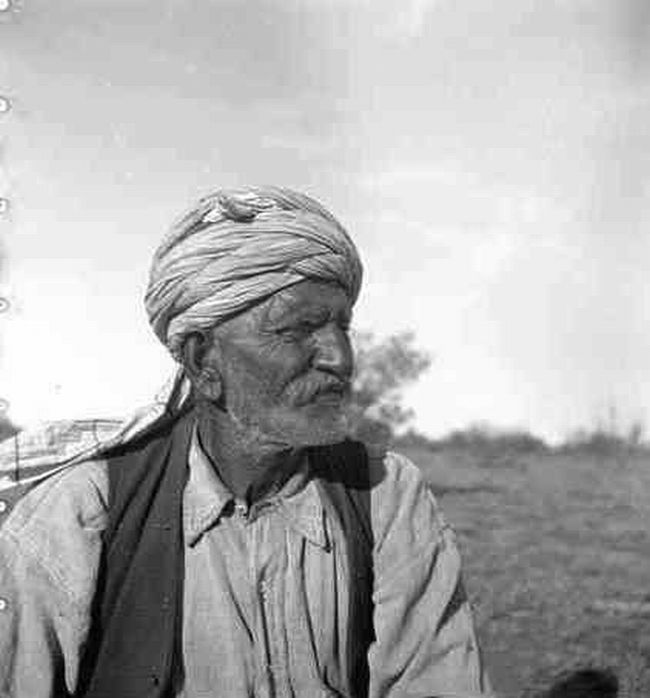
The most visible nineteenth century arrivals were two occupational groups. The first were hawkers, many of them Punjabi Sikhs, who walked circuits through rural New South Wales, Victoria and Queensland carrying cloth, tools and household goods to farms far from any store, extending credit and becoming, for isolated selectors, a genuine part of the rural economy. The second were the cameleers who opened the arid interior. They are remembered as Afghans, and the word survives in the name of the Ghan railway, but a large share came from what was then British India, from Baluchistan, the North West Frontier, Punjab and Kashmir. They carried supplies to inland stations, serviced the Overland Telegraph, supported exploring expeditions and built small mosques in towns such as Marree and Broken Hill, some of which still stand.
Exclusion and its slow unwinding
One of the first acts of the new Commonwealth Parliament was the Immigration Restriction Act 1901, the legislative core of the White Australia policy. It avoided naming races by using a dictation test that could be administered in any European language, which made exclusion a matter of administrative choice rather than open statute. Indians were British subjects, which created a persistent diplomatic embarrassment: the empire's own subjects were barred from one of its dominions. Those already resident faced restrictions on bringing families, on naturalisation and, in some periods and places, on the old age pension and the franchise, and the resident Indian population shrank steadily through the first half of the twentieth century. Concessions came slowly, including limited provision in the 1920s for the wives and children of Indians lawfully settled in Australia.
Dismantling took decades. The Colombo Plan, launched in 1951, brought Asian students including Indians to Australian universities on government sponsorship, and did as much as any policy to change public perceptions of who might belong. Migration rules were substantially relaxed in 1966 under the Holt government, allowing non European migrants to settle on the basis of qualifications, and the Whitlam government removed race as a criterion entirely in 1973. Even so, Indian migration remained small until the 1990s. One notable exception is Woolgoolga on the New South Wales north coast, where Punjabi families who came to cut cane and then bought banana farms built a community from the 1940s onward, and where a Sikh temple has stood since the late 1960s, making it one of the oldest continuously settled Indian communities in the country.
The modern corridor
What transformed the picture was the reorientation of Australian migration towards skills and education. From the mid 1990s a points based skilled stream, employer sponsored temporary visas and above all the international student market drew large numbers of Indians, particularly in information technology, accounting, engineering, nursing and hospitality. Many arrived first as students and later transitioned to permanent residence. The scale is now substantial: the 2021 Census recorded India as the second largest country of birth for Australian residents after England, with the India born population having roughly doubled in a decade, and India has since been among the largest sources of permanent migrants and by far one of the largest sources of international students.
The effects show up across Australian public life. Punjabi has been among the fastest growing languages spoken at home, alongside Hindi, Tamil, Telugu, Malayalam, Gujarati, Bengali and Nepali. Hinduism and Sikhism have been among the fastest growing religious affiliations recorded at Census, with new temples and gurdwaras built in the outer suburbs where migrants have settled: the growth corridors of western and southwestern Sydney, Melbourne's west and southeast, and expanding areas around Perth, Brisbane and Adelaide. Diwali is now marked publicly in most capital cities, Indian grocery chains and restaurants have moved well beyond enclave trade, and cricket, in particular the Border Gavaskar Trophy contested since 1996, gives the two countries a shared civic ritual that most bilateral relationships lack.
The relationship has not been uninterrupted. In 2009 and 2010 a series of assaults on Indian students, concentrated in Melbourne, generated intense Indian media coverage, prompted diplomatic representations from New Delhi and caused a measurable drop in student enrolments. Australian authorities disputed how far the attacks were racially motivated as opposed to opportunistic crimes against night shift workers travelling on public transport, and both explanations carried some weight, but the episode forced changes to student safety, accommodation and the regulation of private colleges. Underlying tensions about qualification recognition, exploitation of temporary visa holders in low wage work, and the quality of some education providers have not gone away.
Policy has since moved to formalise the corridor. The Australia India Economic Cooperation and Trade Agreement entered into force at the end of December 2022, cutting tariffs on a large share of trade and including provisions on services and student work rights. It followed a comprehensive India Economic Strategy commissioned by the Australian government and delivered in 2018, which argued that no single market offered more growth opportunity to 2035 and that Australia had systematically underinvested in understanding it. A migration and mobility partnership signed in 2023 created new pathways for skilled Indian graduates and professionals. Alongside these sit strategic considerations, including the revived Quadrilateral Security Dialogue with the United States and Japan, and closer defence and energy cooperation. What began as an accident of shared empire has become one of Australia's most consequential bilateral relationships, and the demographic change underlying it is now large enough that it shapes the country's suburbs, schools and universities as much as its diplomacy.
References
- Australian Bureau of StatisticsCensus of Population and Housing
- Department of Foreign Affairs and Trade, AustraliaIndia country brief
- Department of Foreign Affairs and Trade, AustraliaAustralia India Economic Cooperation and Trade Agreement
- National Museum of AustraliaNational Museum of Australia
- University of MelbourneAustralia India Institute
This is a reference article, written from the sources above. It is background, not news reporting.