Bengali: Language of Poetry and Partition
Reference library · 991 words
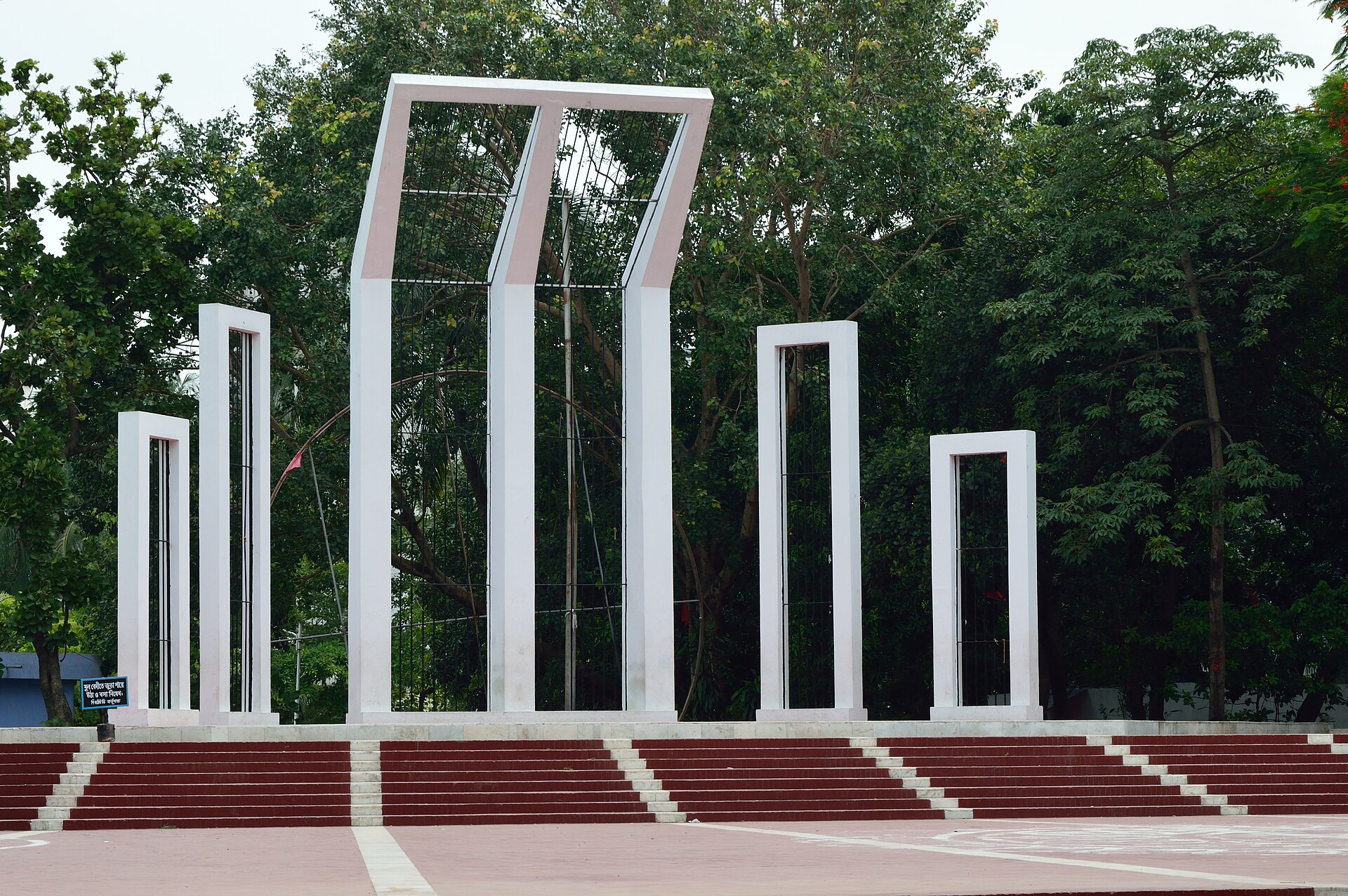

Bengali, or Bangla as its speakers call it, is spoken by well over two hundred million people, which places it among the half dozen most widely spoken languages on earth. It is the national language of Bangladesh and an official language of the Indian states of West Bengal and Tripura, with large populations in Assam and Jharkhand and substantial diaspora communities in Britain, the Gulf states, the United States and Australia. It belongs to the Indo-Aryan branch of the Indo-European family, descending through the Magadhi Prakrit spoken in the eastern Gangetic plain, and it is written in the Bengali-Assamese script, an elegant descendant of the ancient Brahmi writing system, in which the letters hang from a horizontal headline.
The oldest surviving specimens of the language are the Charyapada, a set of cryptic mystical songs composed by Buddhist adepts, generally dated somewhere between the tenth and twelfth centuries. They were lost for centuries and rediscovered in a Nepalese royal library in 1907 by the Sanskrit scholar Haraprasad Shastri, an event that pushed the documented history of Bengali back by hundreds of years and is still celebrated as a founding moment of Bengali literary self-consciousness. Their language is transitional and hard to read, and Assamese and Odia scholars have also claimed them, which tells you something about how modern language boundaries were drawn across a continuum that did not originally have them.
Prose, print and the Bengal Renaissance
Bengali literature before the nineteenth century was overwhelmingly verse: devotional poetry to Krishna and to the goddess, narrative poems, and the mangal kavya tradition. Modern Bengali prose was substantially manufactured, and the workshop was colonial Calcutta. Fort William College, founded in 1800 to train East India Company officers in Indian languages, commissioned textbooks and grammars, and the Baptist mission press at Serampore produced type and printed books in quantity. Later in the century Ishwar Chandra Vidyasagar rationalised the alphabet, wrote the primer that generations of Bengali children learned from, and campaigned successfully for the legalisation of widow remarriage in 1856, showing how closely language reform and social reform ran together.
What followed is usually called the Bengal Renaissance: a period in which Bengali writers, scientists, reformers and painters produced an outpouring of work that shaped Indian modernity far beyond Bengal. Its central figure is Rabindranath Tagore, who in 1913 became the first non-European to win the Nobel Prize in Literature, largely on the strength of his own English translation of his song collection Gitanjali. Tagore wrote thousands of songs, several novels, plays, essays on education and nationalism, and founded the university at Santiniketan. His reach is unusual in world literature: he wrote both Jana Gana Mana, which India adopted as its national anthem, and Amar Shonar Bangla, which Bangladesh adopted as its own, making him the only person to have written the anthems of two sovereign states. Beside him stands Kazi Nazrul Islam, the rebel poet, whose fiercely anti-colonial verse and syncretic imagery made him the national poet of Bangladesh. A parallel argument ran through the same decades over which Bengali to write in: an ornate, heavily Sanskritised register called sadhu bhasha, or the colloquial cholito bhasha closer to speech. Tagore and the essayist Pramatha Chaudhuri pushed the colloquial form, and it won.
Partitioned twice, and the price of a language
Bengal has been divided twice, and language was central both times. In 1905 the viceroy Lord Curzon partitioned the province along a line that separated its mostly Muslim east from its mostly Hindu west. The administrative case was that Bengal was too large to govern; the political effect, widely believed to be the intention, was to split a politically assertive population. The protest movement that followed, Swadeshi, turned to boycott of British goods and to Bengali song and symbol as instruments of resistance. The partition was annulled in 1911. In 1947 the province was divided again, this time permanently, by the boundary commission under Cyril Radcliffe, and East Bengal became the eastern wing of Pakistan. Millions moved, and the refugee colonies of Calcutta and the abandoned properties of the east are still part of family memory on both sides.
The second partition set up the language conflict that eventually undid it. Pakistan was created as a state for Muslims, but its two wings shared little else, and the decision to make Urdu the sole state language was received in the east, where Bengali speakers were the majority of the whole country, as an act of erasure. On 21 February 1952, police fired on students demonstrating near Dhaka University in defence of Bengali, killing several. The dead became martyrs, the Shaheed Minar monument was raised on the spot, and the date became the emotional core of Bengali nationalism. Bengali was granted official status in 1956, but the grievance did not go away, and it fed directly into the movement that led to the liberation war of 1971 and the creation of Bangladesh. In 1999 UNESCO designated 21 February as International Mother Language Day, observed from 2000, so that a Dhaka protest is now the occasion on which the world marks linguistic rights generally. It is a rare case of people being killed for the right to speak a language, and of that killing changing the map.
Bengali today is not a single uniform thing. The standard written form is based on the speech of the Nadia region west of the border, which means that many speakers in Bangladesh write a variety noticeably distant from their own dialect. Vocabulary registers differ too, with more Persian and Arabic derived words common in the east and more Sanskrit derived ones in the west, though the shared literary canon keeps the two firmly one language. Its cultural output remains disproportionate: the films of Satyajit Ray, the songs sung at Durga Puja and at Pohela Boishakh, the poetry recited in living rooms from Kolkata to Sydney. For Bengalis, the language is not merely a medium. It is the thing itself.
References
- UNESCOInternational Mother Language Day
- The Nobel PrizeRabindranath Tagore, Nobel Prize in Literature 1913
- Encyclopaedia BritannicaBengali language
- Banglapedia, Asiatic Society of BangladeshCharyapada
This is a reference article, written from the sources above. It is background, not news reporting.