



Brain Drain or Brain Gain: A Long Debate
Reference library · 1087 words

The phrase brain drain was coined in Britain in the early 1960s, by a Royal Society report describing the loss of British scientists to the United States. It transferred almost immediately to India, where it described something that looked worse: a poor country using scarce public money to train engineers, doctors and scientists who then left to work in rich ones. Sixty years later the same argument is still running, but the evidence has become far more ambiguous than either side originally expected, and the question of whether India loses or gains from the emigration of its most educated people no longer has a simple answer.
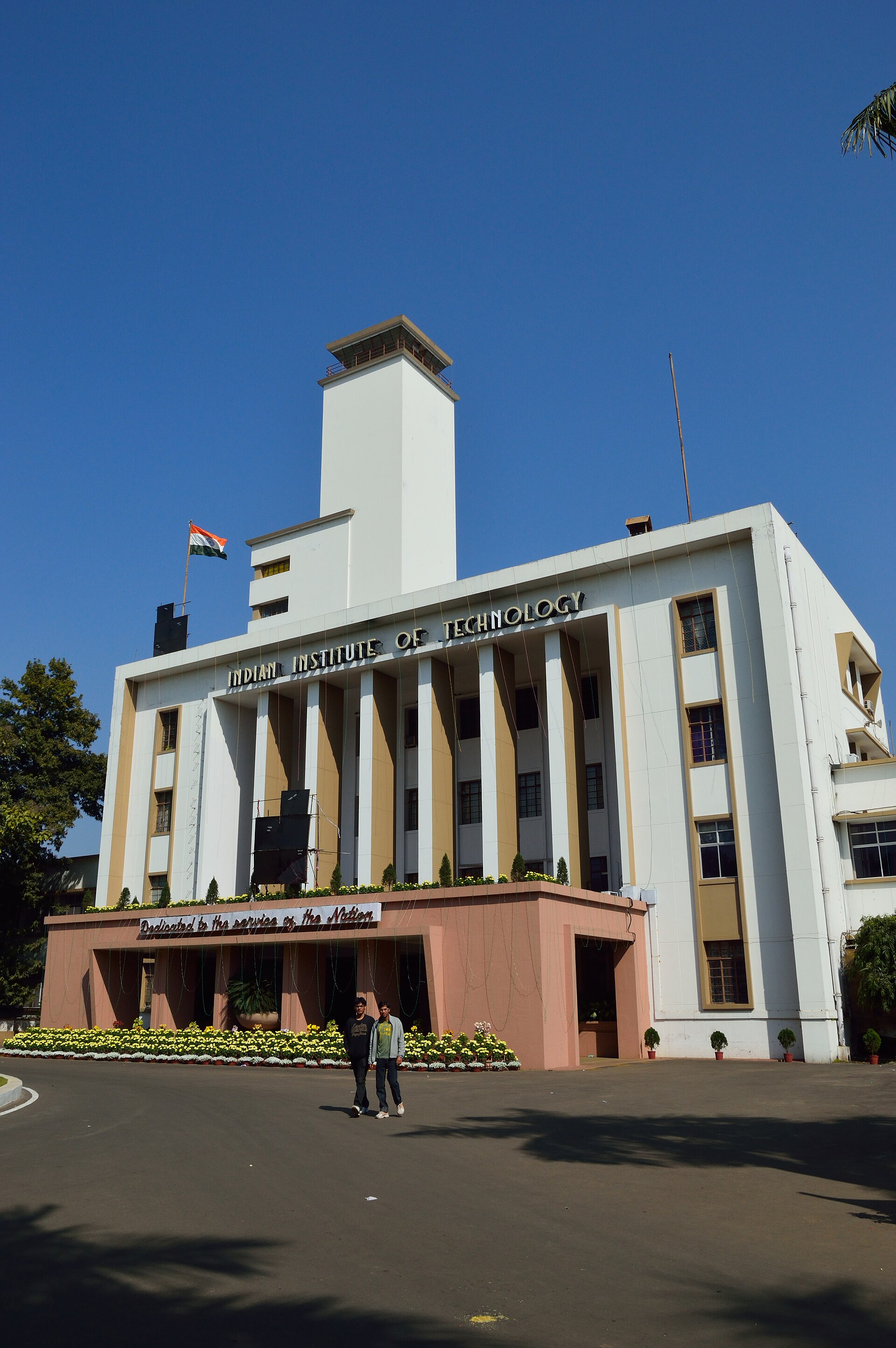
The institutional background matters. Independent India made a deliberate bet on scientific and technical education. A government committee chaired by N.R. Sarkar recommended a network of higher technical institutes, and the first Indian Institute of Technology opened at Kharagpur in 1951 in a building that had been a colonial detention camp. Others followed at Bombay, Madras, Kanpur and Delhi, each built with foreign partnership, and the All India Institute of Medical Sciences was established in Delhi in 1956. These were heavily subsidised, extremely selective institutions producing graduates trained to an international standard, at a moment when the Indian economy had few jobs that could use them at that level.
Then the doors opened abroad. The United States Immigration and Nationality Act of 1965 abolished the national origin quotas that had effectively excluded Asians and replaced them with preferences based on skills and family ties, and Indian professional migration to America began in earnest. Britain's National Health Service recruited Indian doctors in large numbers through the 1960s and 1970s. The Immigration Act of 1990 in the United States created the H-1B visa for specialty occupations, which became the principal route for Indian software engineers during the 1990s and after. A parallel and much larger migration ran to the Gulf after the 1973 oil price shock, but that flow was mostly construction and service labour rather than professionals, and it has always raised different questions.
The case for drain
The classic argument is about subsidy and scarcity. If the Indian taxpayer funds most of the cost of an engineering or medical degree at an elite public institution, and the graduate leaves within a few years, the public gets no return on the investment while a wealthy country acquires a trained worker for nothing. In the 1970s the economist Jagdish Bhagwati proposed a tax on the incomes of skilled emigrants, collected by host countries and remitted to countries of origin, precisely to correct this. It was never adopted anywhere, but the reasoning has not been refuted.
The strongest version of the case concerns health workers rather than engineers. India trains large numbers of doctors and nurses, and it has a severe shortage of both in rural districts. Kerala in particular has exported nurses to the Gulf, Britain, Ireland, the United States and Australia for decades. A software engineer who leaves takes a private good with him; a nurse who leaves takes a public health capacity that was already inadequate. The World Health Organization has developed a code of practice on international recruitment of health personnel partly in response to exactly this pattern.
The case for gain
Against this stand several arguments that have gathered evidence over time. The first is remittances. India has been the world's largest recipient of remittances for over a decade, receiving well over a hundred billion United States dollars a year by the mid 2020s according to World Bank estimates, a sum larger than foreign direct investment inflows and larger than software exports for much of that period. Much of it comes from Gulf workers rather than from professionals, but it is money the country would not otherwise have, spent largely on housing, education and healthcare in the sending districts.
The second is what the economist AnnaLee Saxenian called brain circulation. Studying Silicon Valley, she found that Indian and Taiwanese engineers who had emigrated did not simply disappear; they formed professional networks, founded firms, and then routed work, capital and customers back to their countries of origin. The Indus Entrepreneurs, an organisation of Indian origin technology entrepreneurs founded in Silicon Valley in 1992, is a concrete instance. The rise of Bangalore as a software centre depended heavily on returnees and on the credibility that Indian engineers had already earned abroad. Multinational firms opened Indian research and development centres because they had Indian engineers in their own head offices vouching for the talent pool: Texas Instruments opened a design centre in Bangalore in the mid 1980s, and General Electric opened a large research centre there in 2000. Those centres now employ tens of thousands of people doing work that would not have come to India otherwise.
The third argument is subtler and more contested. If the prospect of emigration raises the expected return on education, more people invest in getting educated than would otherwise, and since only some of them actually leave, the country may end up with a larger stock of skilled workers than it would have had in a closed system. Economists call this the incentive effect. It is well documented for nursing in the Philippines and is plausible for Indian software, where private engineering colleges expanded enormously in the 1990s and 2000s in response to visible overseas opportunity. Critics reply that the quality of much of that expansion was poor and that it produced unemployable graduates rather than a genuine skills stock.
Policy has followed the shift in framing. India abandoned any attempt to restrict emigration and instead built links to the diaspora: the Pravasi Bharatiya Divas convention has been held since 2003, timed to the ninth of January to mark Gandhi's return from South Africa in 1915, and the Overseas Citizen of India card, introduced in 2005, gives people of Indian origin lifelong visa free entry and most residency rights short of voting and agricultural land ownership.
Two frictions keep the debate alive. Indian nationals face by far the longest waits for United States permanent residence because of a per country cap that allocates each nationality the same share regardless of population, producing backlogs measured in decades for employment based categories. And the movement is no longer one way: rising Indian salaries in technology and finance, and tighter immigration politics in several destinations, have produced a visible return flow of mid career professionals. Whether that constitutes gain depends on where you stand, and, as with most of this argument, on which decade you happen to be measuring.
References
- World BankMigration and Remittances Data
- Ministry of External Affairs, Government of IndiaOverseas Indian Affairs
- Organisation for Economic Co-operation and DevelopmentInternational Migration Outlook
- World Health OrganizationGlobal Code of Practice on the International Recruitment of Health Personnel
- United States Citizenship and Immigration ServicesH-1B Specialty Occupations
This is a reference article, written from the sources above. It is background, not news reporting.