Canada's Punjabi Heartland
Reference library · 993 words
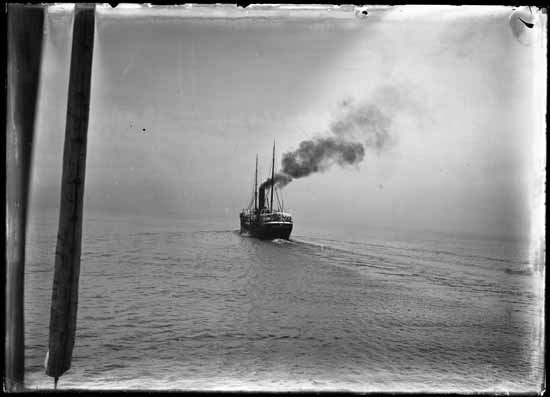

Canada is the country outside South Asia where Punjabi life has taken deepest institutional root. Punjabi is consistently among the most widely spoken languages in the country after English and French, gurdwaras stand in provincial capitals and small farming towns alike, and Punjabi Canadians have held senior cabinet posts and provincial premierships. None of this happened quickly or easily. The story runs from a handful of sawmill labourers in British Columbia at the turn of the twentieth century, through half a century of legal exclusion, to a community that now shapes municipal politics in Surrey and Brampton and occasionally strains relations between Ottawa and New Delhi.
The first arrivals came by sea to the Pacific coast in the late 1890s and early 1900s. A common account holds that Sikh soldiers of the British Indian Army travelling home across Canada after Queen Victoria's Diamond Jubilee celebrations in 1897 carried back reports of land and wages in British Columbia. Whatever the precise trigger, by 1904 to 1908 several thousand men, overwhelmingly Sikh and overwhelmingly from Punjab's Doaba districts, were working in lumber mills, on railway construction and in canneries around Vancouver, New Westminster and the Fraser Valley. They were British subjects arriving in a British dominion, which made their treatment awkward for a government that wished to exclude them without saying so.
The mechanism it found was indirect. In 1907 British Columbia stripped Indians of the provincial franchise, which also barred them from professions and public contracts tied to the voters list. In 1908 Ottawa introduced the continuous journey regulation, requiring immigrants to travel to Canada by an uninterrupted voyage from their country of birth on a through ticket. Since no shipping line ran direct services from India, the rule closed the door while never naming Indians. It was tested in 1914, when a Japanese steamship, the Komagata Maru, was chartered by a Singapore based businessman and sailed to Vancouver with 376 passengers, most of them Sikhs. The ship sat in the harbour for two months under guard while lawyers argued and food ran short. All but a small number of passengers were refused landing and the vessel was escorted out to sea. On its return to India, a confrontation with police at Budge Budge near Calcutta left roughly twenty people dead. The Canadian government formally apologised in the House of Commons in 2016, after an earlier expression of regret in 2008.
From exclusion to the points system
Exclusion produced a stranded, almost entirely male population. Wives and children were generally barred, so the early community aged without renewing itself. Its institutions were built anyway. The Khalsa Diwan Society established a gurdwara on Second Avenue in Vancouver in 1908, and for decades it functioned as employment exchange, courtroom, hostel and political headquarters at once. The franchise was restored to Indian Canadians in 1947, and family sponsorship slowly resumed. The decisive change came in 1967, when Canada replaced national origin preferences with a points system assessing education, skills, language and age. This was not designed with Punjab in mind, but it removed the racial filter, and chain migration through sponsored relatives did the rest. Vancouver's Ross Street Gurdwara, opened in 1970 and designed by the Canadian architect Arthur Erickson, marked the transition from a besieged minority to a settled one.
Settlement clustered for practical reasons. In British Columbia, Punjabi families concentrated in Surrey, Delta and Abbotsford, where berry and vegetable farms, sawmills and later trucking firms offered work that did not require Canadian credentials. In Ontario, Brampton and neighbouring parts of Peel Region grew into the largest Punjabi settlement in the country, feeding off warehouse, transport and construction employment along the highway corridors around Toronto Pearson airport. Calgary and Edmonton followed. The pattern is self reinforcing: once a suburb has Punjabi grocers, gurdwaras, real estate agents, radio stations and lenders, it is cheaper and safer for a new arrival to go there than anywhere else.
Politics, money and friction
Concentration converts into electoral weight. Because Canadian ridings are geographically drawn and party nominations are decided by local members, suburbs with dense, well organised communities and high sign up rates exert influence well beyond their share of the national population. Punjabi Canadians have accordingly been prominent in both major federal parties and in provincial legislatures, and Punjabi is regularly heard in the House of Commons. Critics of the nomination system, including some within the community, argue that bloc sign ups distort candidate selection. Defenders reply that this is simply how party politics has always worked for organised groups.
Economically, the corridor runs both ways. Remittances flow to Doaba villages, where they have visibly rebuilt housing and funded schools and clinics, while also inflating land prices and, some Punjabi economists argue, discouraging local enterprise. In the other direction, Canadian colleges have drawn very large numbers of Punjabi students since the 2010s, many financed by family land sales and bank loans, and many concentrated in private career colleges of uneven quality. Ottawa's 2024 caps on study permits and its tightening of post graduation work permit eligibility hit these students hard, and the effects were felt immediately in Punjab's education agency business.
The corridor also carries political disputes. Advocacy for Khalistan, a separate Sikh state, has a long presence in Canada, sharpened by the events of 1984 in India and by the 1985 bombing of Air India Flight 182, which killed 329 people and remains the deadliest terrorist attack in Canadian history. India has repeatedly accused Canada of tolerating separatist activity; Canada has replied that lawful advocacy is protected speech. Relations deteriorated sharply in September 2023 when the Canadian prime minister told Parliament that agencies were pursuing credible allegations of Indian state involvement in the killing of a Sikh separatist leader in Surrey earlier that year. India rejected the allegation. The matter remains before Canadian courts and is genuinely unresolved, and it is worth stating plainly that most Punjabi Canadians are bystanders to a quarrel conducted over their heads.
References
- The Canadian EncyclopediaSouth Asian Canadians
- Library and Archives CanadaKomagata Maru
- Statistics CanadaCensus of Population: Language
- Immigration, Refugees and Citizenship CanadaStudy permits and post-graduation work permits
- BBC NewsIndia-Canada relations
This is a reference article, written from the sources above. It is background, not news reporting.