
Civil Service Tradition: The Role of the IAS
Reference library · 1003 words

The Indian Administrative Service is a body of a few thousand permanent officials who occupy the senior operating posts of the Indian state, from the government of a rural district to the desks in New Delhi where national policy is drafted. It is small, competitively recruited, hard to dismiss and enormously powerful, and understanding it is close to a precondition for understanding how India is actually governed.
Its ancestor is the Indian Civil Service, the covenanted service of British India. Until the middle of the nineteenth century the East India Company appointed its civil servants by patronage and trained them at Haileybury. Following the report prepared by Thomas Babington Macaulay and others in 1854, entry was thrown open to competitive examination from 1855. In 1863 Satyendranath Tagore became the first Indian to pass, though the examination was held in London and the age limits were set in ways that made Indian success difficult. Indianisation proceeded slowly and under pressure, and by the 1940s the service was roughly half Indian. Its members governed districts of a million people or more with tiny staffs, which produced both the administrative confidence and the aloofness for which the ICS was famous.
At independence there was a serious argument about whether to keep such a service at all, given that its officers had enforced colonial law against the nationalist movement. Sardar Vallabhbhai Patel, as the minister responsible, insisted on retaining and re-founding it, arguing in the Constituent Assembly that without a permanent, all India administrative frame the union would not hold. The Indian Administrative Service was created in 1946, and the Constitution gave it unusual protection. Article 312 allows Parliament to create all India services common to the Union and the states, and Article 311 restricts the circumstances in which a civil servant may be dismissed or reduced in rank. The All India Services Act of 1951 supplied the operating rules.
Getting in
Recruitment runs through the Union Public Service Commission, a constitutional body, by way of the Civil Services Examination. Roughly a million candidates register each year for something in the order of a thousand posts spread across more than twenty services, of which only around one hundred and eighty are IAS places. The examination has three stages: an objective preliminary test, a set of written papers of formidable length, and an interview. Candidates choose an optional subject and may write in any Eighth Schedule language. Reservation applies for Scheduled Castes, Scheduled Tribes, Other Backward Classes and economically weaker sections, with correspondingly different age and attempt limits. A whole coaching industry has grown around the examination, concentrated in Delhi's Old Rajinder Nagar and in Rajinder Nagar's imitators in Patna, Hyderabad and Pune, and its costs raise reasonable questions about who can afford to spend three or four years preparing.
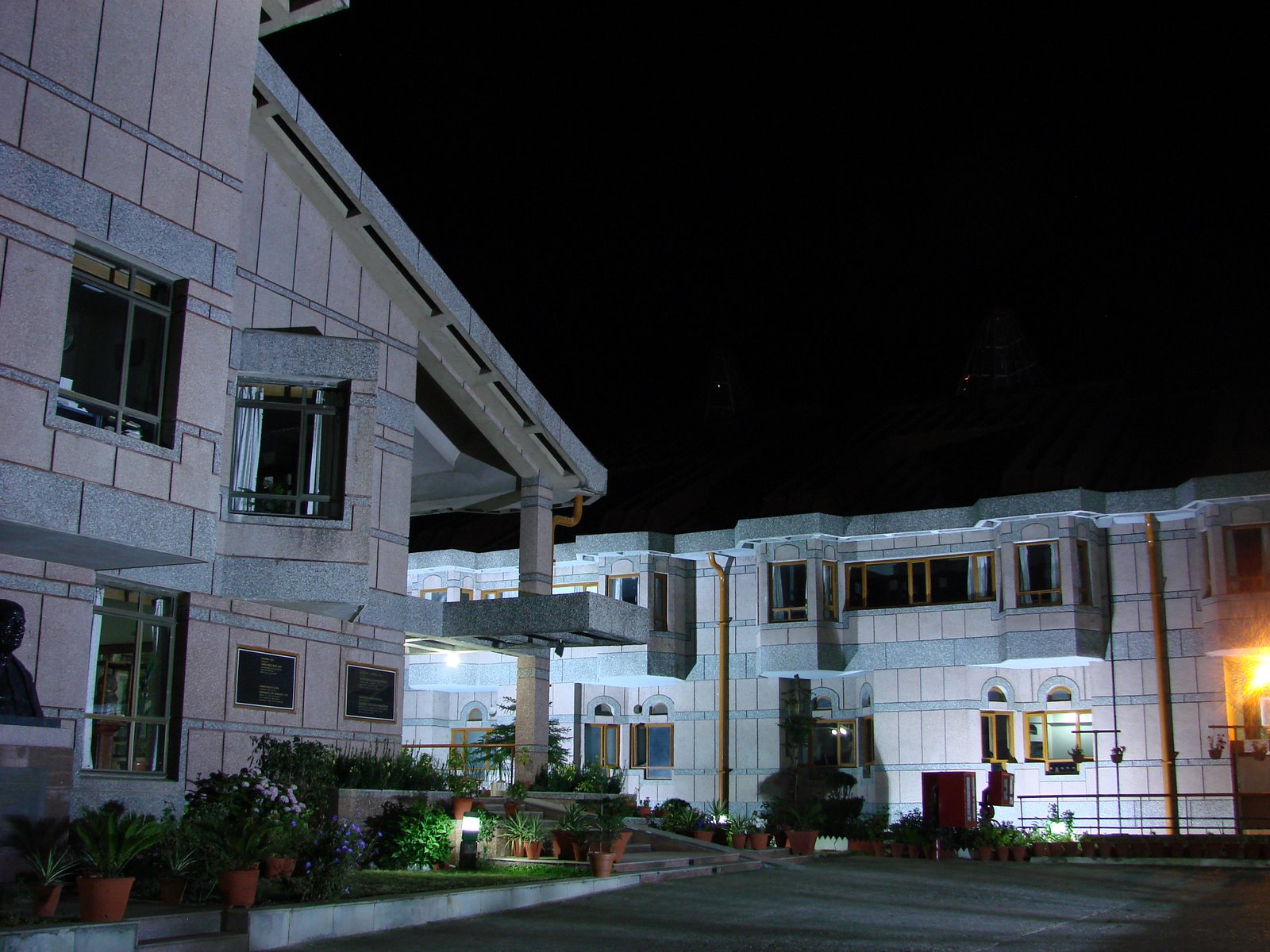
Successful candidates train at the Lal Bahadur Shastri National Academy of Administration in Mussoorie, in the Himalayan foothills, and are then allotted to a state cadre under an allocation policy revised in 2017 that groups states into zones and requires candidates to rank preferences across them. An officer is normally attached to that cadre for a career, with periods of deputation to the central government. Roughly a third of each cadre is reserved for officers who are not natives of the state, a deliberate design intended to dilute local loyalties.
What the job actually is
A new officer spends the first years in a district as an assistant collector and then as a sub-divisional magistrate, which combines revenue administration with magisterial powers over public order. The apex district post carries three names depending on region and function: collector, district magistrate and deputy commissioner. The collector title reflects the original purpose of the office, which was to assess and collect land revenue, and the land records system remains one of its core functions. The magistrate title reflects powers under the criminal procedure code, including the ability to impose prohibitory orders. In practice the district officer is also the government's disaster manager, the chair of dozens of committees, the returning officer for elections and the person the state expects to answer for anything that goes wrong.
Later the career moves into state secretariats and into the central government as deputy secretary, director, joint secretary and additional secretary, and at the top into the posts of chief secretary of a state and cabinet secretary of India. Because the same cadre supplies both district administration and policy drafting, the IAS is a generalist service by design. An officer may run a power utility, then a health department, then a finance portfolio.
That design is the central controversy. Critics argue that generalists rotated every two years cannot acquire the depth needed for financial regulation, public health or energy policy, and that specialists are permanently subordinate to them. Defenders reply that coordination across sectors is itself a skill, and that specialists tend to defend their own domain rather than the public interest. The government has experimented with lateral entry, appointing outside professionals directly to joint secretary level from 2018; a further advertisement in 2024 was withdrawn after objections that it bypassed reservation requirements. A second recurring complaint is political interference through transfers. In a 2013 judgment on a petition brought by a group of retired officers led by T. S. R. Subramanian, the Supreme Court directed that civil servants should have a reasonable minimum tenure and that oral instructions from ministers should be recorded in writing, and asked states to constitute civil services boards. Implementation has been patchy and short transfers remain common.
The service is also under pressure from the sheer growth of what the state does. The Second Administrative Reforms Commission, which reported between 2005 and 2009, recommended narrower recruitment, mid-career competency testing and greater use of specialists, and most of its proposals remain unimplemented. Whether the IAS is a steel frame holding a diverse country together, or a nineteenth century instrument straining under twenty first century tasks, is a live argument in India rather than a question with an agreed answer.
References
- Union Public Service CommissionCivil Services Examination
- Government of India, Department of Personnel and TrainingAll India Services
- Lal Bahadur Shastri National Academy of AdministrationAbout the Academy
- Encyclopaedia BritannicaIndian Civil Service
- Government of IndiaConstitution of India
This is a reference article, written from the sources above. It is background, not news reporting.