Classical Dance as Living History
Reference library · 1085 words
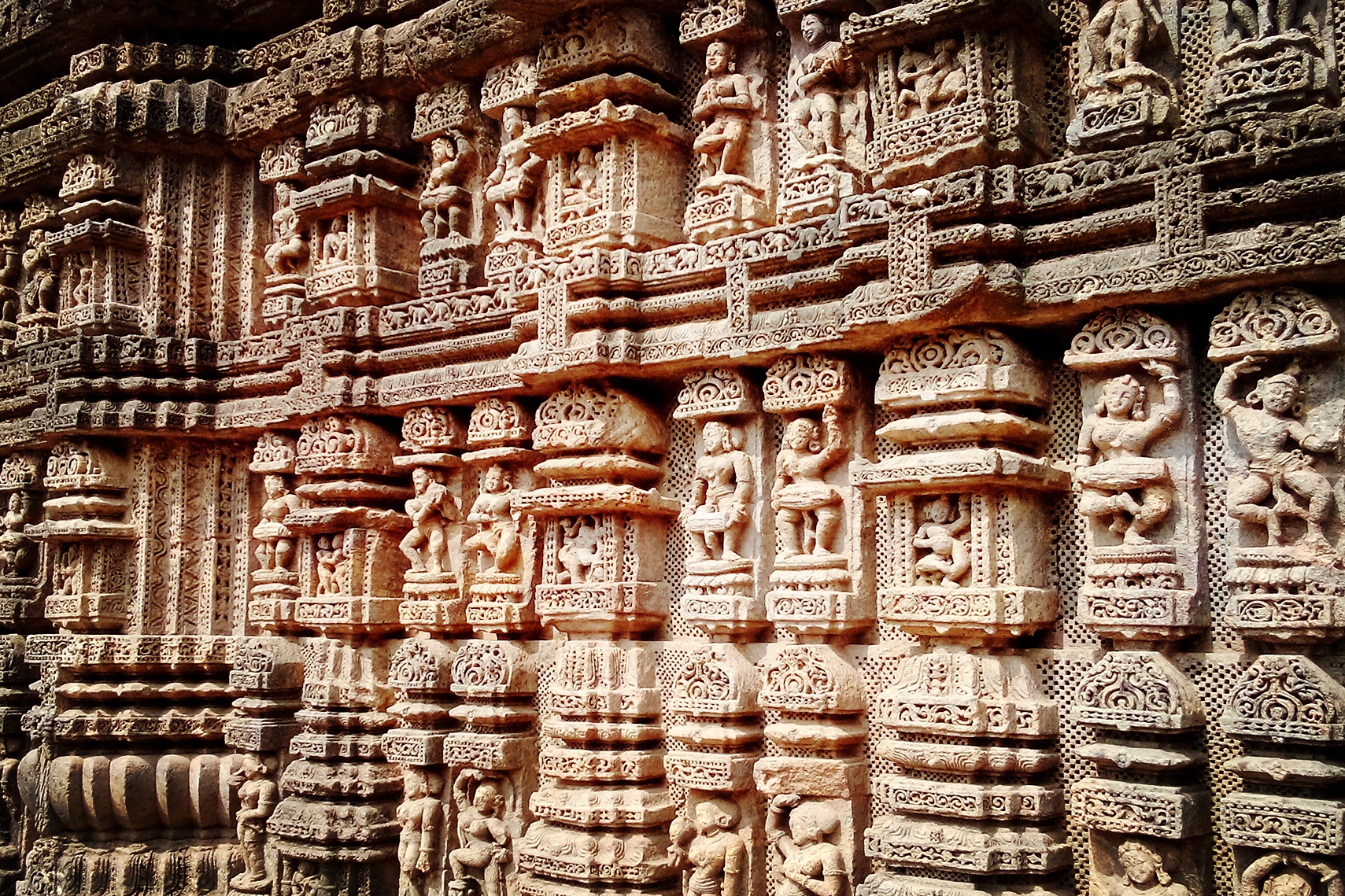

India's classical dance forms are often introduced as survivals from deep antiquity, unchanged for two thousand years. That description is flattering and misleading in roughly equal measure. What is genuinely ancient is the theoretical apparatus: the Natyashastra, a Sanskrit treatise attributed to the sage Bharata and usually dated by scholars to somewhere between the second century before the common era and the third century after it, sets out a complete grammar of theatre, including gesture, gait, costume, stage construction and the emotional effects a performance should produce. What is recent is almost every visible feature of the dances now performed on concert stages: their names, their fixed repertoires, their proscenium format, their costumes and the social class of the people who dance them. Both facts matter, and holding them together is the only honest way to look at the subject.
The Sangeet Natak Akademi, India's national academy for the performing arts established in 1952, recognises eight forms as classical: Bharatanatyam from Tamil Nadu, Kathak from north India, Kathakali and Mohiniyattam from Kerala, Kuchipudi from the Telugu country, Odissi from Odisha, Manipuri from Manipur, and Sattriya from Assam, which was added to the list in 2000. The boundaries of that list are themselves argued over, with advocates of Chhau and of several regional theatre traditions contending that the classification reflects institutional politics as much as artistic structure. What the eight share is an inherited vocabulary rather than a common origin: a division of movement into pure rhythmic dance, expressive interpretation of a sung text, and full dramatic enactment; a codified set of hand gestures; and an aesthetic goal borrowed from Sanskrit poetics in which the performer's task is to arouse a distilled emotional flavour in the spectator.
Temples, courts and the colonial rupture
Before the twentieth century most of these traditions were sustained by two patrons: temples and princely courts. In Tamil Nadu, women dedicated to temple service performed a repertoire then called sadir; the sequence of items that today opens and closes a Bharatanatyam recital was substantially shaped in the nineteenth century by four brothers, Chinnayya, Ponnayya, Sivanandam and Vadivelu, musicians attached to the Maratha court at Thanjavur. Kathak developed in two directions at once, retaining its association with narrative recitation while acquiring, in the Mughal and later Awadh courts of Lucknow and in the Rajput court of Jaipur, the fast footwork, spins and rhythmic sparring with a drummer that define it now. Kathakali, an all night masked and painted dance drama, took form in Kerala from roughly the seventeenth century under the patronage of local rulers. Manipuri grew inside the Vaishnava devotional life of the Manipur valley, and Sattriya inside the monastic institutions founded by the reformer Sankardev in the fifteenth and sixteenth centuries.
Colonial rule and Indian social reform together broke that patronage system. Missionary and reformist campaigns from the late nineteenth century attacked temple dedication as immoral, and the movement culminated in legislation, notably the Madras law of 1947 that prohibited the dedication of women to temples. The women of hereditary performing communities lost their livelihoods and their claim to the art in the same movement that saved the art for respectability. The dance itself was rescued by a different constituency: the lawyer and critic E. Krishna Iyer campaigned publicly for it, and Rukmini Devi Arundale, from a Brahmin family and married into the Theosophical Society, founded the school at Adyar in Madras in 1936 that became Kalakshetra, restaging the form with new costumes, devotional emphasis and a sanitised repertoire suitable for middle class daughters. Odissi was reconstructed in the middle of the twentieth century from fragments of the temple mahari tradition, the boys' gotipua tradition and the sculpted figures of Odisha's temples. In Kerala, the poet Vallathol Narayana Menon founded Kerala Kalamandalam at Cheruthuruthy in 1930 to keep Kathakali alive under an institutional roof.
Why the reconstruction is contested
These revivals are the reason the dances exist today at scale, and they are also the reason the field is politically raw. Scholars and descendants of hereditary performers have argued since at least the 1980s that the twentieth century recovery involved an appropriation: a lower caste, largely female professional tradition was taken over by upper caste amateurs, purged of its erotic content, given a Sanskritic pedigree and then presented as a timeless spiritual inheritance. Defenders reply that the older system was materially exploitative, that abolition was demanded by reformers who came from those communities themselves, and that a living art necessarily changes hands. Both positions contain a great deal that is true. What is not defensible is the version that erases the rupture altogether and presents the modern recital as an unbroken transmission from the Natyashastra.
The mechanics of a recital give a sense of what actually survives. A performance is built on a spoken or drummed rhythmic cycle, the tala, and on a melodic frame, the raga, shared with the classical music systems. The dancer moves between passages of pure rhythmic patterning, where the body works as a percussion instrument, and passages of interpretation, where a single line of poetry may be repeated many times, each repetition unfolding a different reading through facial expression and gesture. A trained audience follows this the way a jazz audience follows variations on a theme. The codified hand positions function less as a fixed sign language than as a shared alphabet from which a performer composes; the same gesture can mean a lotus, a beak or a refusal depending on the line being sung.
Training remains long and physically severe. A serious student of Bharatanatyam or Odissi typically studies for a decade or more before a solo debut, and Kathakali actors begin with years of eye exercises, body massage and dawn training in the discipline's characteristic outward turned stance. The economics are hard: the number of dancers who can live on performance fees alone is small, and most working artists teach. Institutional support comes from the Sangeet Natak Akademi, from state academies, from festivals held at heritage sites such as the temple complex at Khajuraho and the shore temple at Mamallapuram, and from a large diaspora market. In Australia, North America, Britain, Singapore and the Gulf, weekend classes and the ritual of the solo debut have become a principal way that migrant families transmit language, religion and a sense of origin to children born abroad, which has made the diaspora one of the art form's most important patrons and, increasingly, one of the places where its conventions are being questioned again.
References
- Sangeet Natak AkademiSangeet Natak Akademi, National Academy of Music, Dance and Drama
- Kerala KalamandalamKerala Kalamandalam Deemed University of Art and Culture
- Kalakshetra FoundationKalakshetra Foundation, Chennai
- UNESCOKutiyattam, Sanskrit theatre
This is a reference article, written from the sources above. It is background, not news reporting.