
Classical Language Status: What It Means
Reference library · 1025 words

In 2004 the Government of India created a category that had not previously existed in Indian law or administration: the classical language. The immediate occasion was a long campaign by Tamil scholars and politicians, and Tamil was the first language declared. What began as a single recognition has since grown into a list, and each addition has been accompanied by a familiar mixture of scholarly argument, regional pride and open political calculation. Understanding what the status actually confers, and what it does not, is more useful than following the arguments about who deserves it.
The declaration is an executive decision of the Union Cabinet, taken on the advice of the Ministry of Culture and a linguistic expert committee. It is entirely separate from the Eighth Schedule of the Constitution, which lists twenty two scheduled languages and carries specific legal consequences for official use, recruitment examinations and representation on the Official Languages Commission. A language can be classical without being scheduled, as Pali and Prakrit are, and can be scheduled without being classical, as most of the twenty two are. Nor does classical status make a language official anywhere. It is a cultural designation attached to a funding programme.
The criteria as originally framed required high antiquity of early texts or recorded history over a period of roughly one and a half to two thousand years, a body of ancient literature regarded as a valuable heritage by generations of speakers, a literary tradition that is original and not borrowed from another speech community, and a recognisable distinction between the classical language and its modern form, allowing for the possibility of discontinuity between the two. The criteria were revised in 2024 by a committee working under the Sahitya Akademi, with adjustments including explicit reference to epigraphic and inscriptional evidence and to knowledge texts alongside poetry, prose and drama.
The list and how it grew
Tamil was declared classical in 2004, Sanskrit in 2005, Kannada and Telugu in 2008, Malayalam in 2013 and Odia in 2014. In October 2024 the Union Cabinet approved five further languages at once: Marathi, Pali, Prakrit, Assamese and Bengali. The sequence is instructive. The first six recognitions were spaced across a decade and each followed sustained lobbying by state governments and literary bodies. The 2024 decision, taken shortly before state elections in Maharashtra, recognised more languages in a single sitting than the previous twenty years had, which critics read as evidence that the process had become primarily political and defenders read as overdue correction of an unjustifiably slow queue.
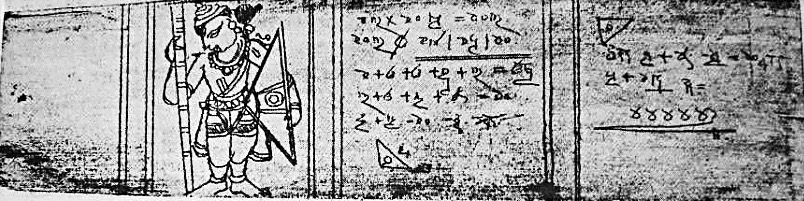
The scholarly objections have been substantive. Several linguists argued that Kannada, Telugu and Malayalam were admitted under a looser reading of the antiquity requirement than Tamil had been held to, particularly regarding the gap between the earliest inscriptions and the earliest substantial literature. The inclusion of Sanskrit was challenged in litigation before the Madras High Court on the ground that it was granted without a fresh application of the stated tests, though the courts have generally treated the designation as a policy matter within the government's discretion. There is a deeper problem that the criteria cannot resolve: literary antiquity is a matter of surviving evidence, and surviving evidence depends on writing material, climate and the accidents of preservation, so the palm leaf manuscript traditions of the south and the birch bark and paper traditions of the north are not comparable on equal terms. Languages with strong oral traditions and little early inscription, including several Adivasi languages of central India, cannot meet the tests at all.
What the status delivers
In practical terms the designation triggers a modest package. The Ministry of Education is to establish a centre of excellence for the study of the language, to create professorial chairs in central universities through the University Grants Commission, and to institute international awards for scholars working in the field. The Central Institute of Classical Tamil, set up in Chennai in 2008, is the most developed of these bodies, with a mandate covering manuscript preservation, lexicography, translation and the training of researchers. Centres for classical Kannada and classical Telugu were established under the Central Institute of Indian Languages at Mysuru, and Malayalam and Odia followed. The sums involved are small by the standards of Indian public spending, and several of the centres have been criticised for slow recruitment, limited output and a tendency to produce ceremonial conferences rather than scholarship.
The gap between what the status delivers and what its advocates expect it to deliver is the recurring source of disappointment. Campaigners frequently speak as though recognition will strengthen the everyday position of a language, but the pressures on Indian languages are not addressed by manuscript centres. Those pressures come from the dominance of English in higher education and white collar employment, from the migration of urban middle class children into English medium schooling, and from the fact that the economic return to English fluency is large and visible while the return to literary knowledge of one's own language is not. A classical designation does nothing about any of this. It is also worth noting that the two languages most secure in the classical category, Sanskrit and Pali, have very few first language speakers, which underlines that the status is about textual heritage rather than living use.
What the designation does achieve should not be dismissed either. It has funded genuine work in cataloguing and digitising manuscript collections that were physically decaying, particularly palm leaf holdings in Tamil Nadu, Kerala and Odisha, where humidity and insect damage destroy material within a few generations if it is not conserved or copied. It has supported critical editions and translations that would otherwise not have been commissioned. And it has a symbolic function that matters in a federal country with a long and unresolved argument about language: for speakers of southern and eastern languages in particular, official acknowledgement that their literary tradition is as old and as valuable as Sanskrit's answers a grievance that goes back to the anti Hindi agitations of the 1930s and 1960s. That grievance is real, and symbolic remedies for real grievances are not worthless. They are simply not the same thing as language policy.
References
- Press Information Bureau, Government of IndiaCabinet approves classical language status
- Ministry of Education, Government of IndiaClassical Languages
- Central Institute of Indian LanguagesCentres of Excellence for Classical Languages
- Central Institute of Classical TamilAbout the Institute
This is a reference article, written from the sources above. It is background, not news reporting.