

Colonial Trade Companies and Their Legacy
Reference library · 1030 words

For roughly two and a half centuries, the European presence in India was organised not by governments but by chartered companies: private corporations granted a monopoly of trade in a defined region by their home sovereign, permitted to raise capital from shareholders, and, crucially, licensed to maintain armed forces, build fortifications and make treaties. That combination of commercial and quasi-sovereign powers is the single most important fact about them, and it is what allowed a trading firm to end up governing a subcontinent.
The companies and their bases
The Portuguese arrived first, when Vasco da Gama reached Calicut in 1498. Portugal did not use a joint stock company but a royal enterprise, the Estado da India, which seized Goa in 1510 under Afonso de Albuquerque and attempted to control the Indian Ocean by licensing and taxing other ships. The English East India Company was chartered by Elizabeth I on the last day of 1600. The Dutch Vereenigde Oostindische Compagnie, the VOC, followed in 1602 and was the first to raise permanent joint stock capital rather than funding each voyage separately, an innovation that made long term investment in forts and shipping possible. France created its Compagnie des Indes Orientales in 1664 under Colbert and settled at Pondicherry; Denmark established a base at Tranquebar on the Coromandel coast in 1620.
The English company built its Indian network from coastal factories, meaning fortified warehouses with resident agents rather than manufacturing plants. Surat became its main western base after 1612, when the company obtained trading rights from the Mughal court following naval clashes with the Portuguese off the Gujarat coast. Fort St George at Madras was founded in 1639. Bombay came to the English crown in 1661 as part of the dowry of Catherine of Braganza and was transferred to the company in 1668 for a nominal rent. Calcutta grew from a settlement established on the Hooghly at the end of the seventeenth century. Three of India's largest cities therefore began as company real estate.
What the companies traded shaped the arrangement. Europe wanted Indian cotton textiles, above all the fine cottons of Bengal and the printed calicoes of the Coromandel, along with pepper, indigo, saltpetre for gunpowder and later tea from China. Europe had little that India wanted in exchange, so payment was largely in silver bullion. The chronic outflow of specie from Europe to Asia was a standing grievance in London and Amsterdam and one of the pressures that made territorial revenue attractive: a company that could tax Indian land would no longer need to ship silver.
From merchant to ruler
The transition happened in Bengal within a single decade. Anglo-French rivalry during the Carnatic Wars in the south had already shown that European drilled infantry, paid regularly and disciplined, could be decisive in Indian succession disputes. In 1757 at Plassey, Robert Clive defeated the Nawab of Bengal Siraj ud-Daula in an engagement settled largely by prior arrangement with the Nawab's commander and with Bengali banking houses. In 1764 at Buxar the company defeated a combined force of the Nawab of Awadh, the deposed Nawab of Bengal and the Mughal emperor Shah Alam II. In 1765 the emperor granted the company the diwani, the right to collect the land revenue of Bengal, Bihar and Orissa. A trading corporation had become the revenue administration of one of the richest provinces in Asia while nominally remaining a Mughal officeholder.
The consequences arrived quickly. The Bengal famine of 1770 killed a very large proportion of the province's population, and although its immediate cause was drought, the company's revenue demands and its officials' private grain dealings were widely blamed at the time. The scandal of company government fed directly into British legislation. The Regulating Act of 1773 created a Governor General and a supervisory structure; Pitt's India Act of 1784 established a Board of Control answerable to Parliament; the Charter Act of 1813 stripped the company of its Indian trade monopoly; and the Charter Act of 1833 ended its commercial functions altogether, leaving it as an administrative shell. After the rebellion of 1857 the Government of India Act of 1858 transferred the company's territories to the Crown, and the company itself was wound up in the following years.
What was left behind
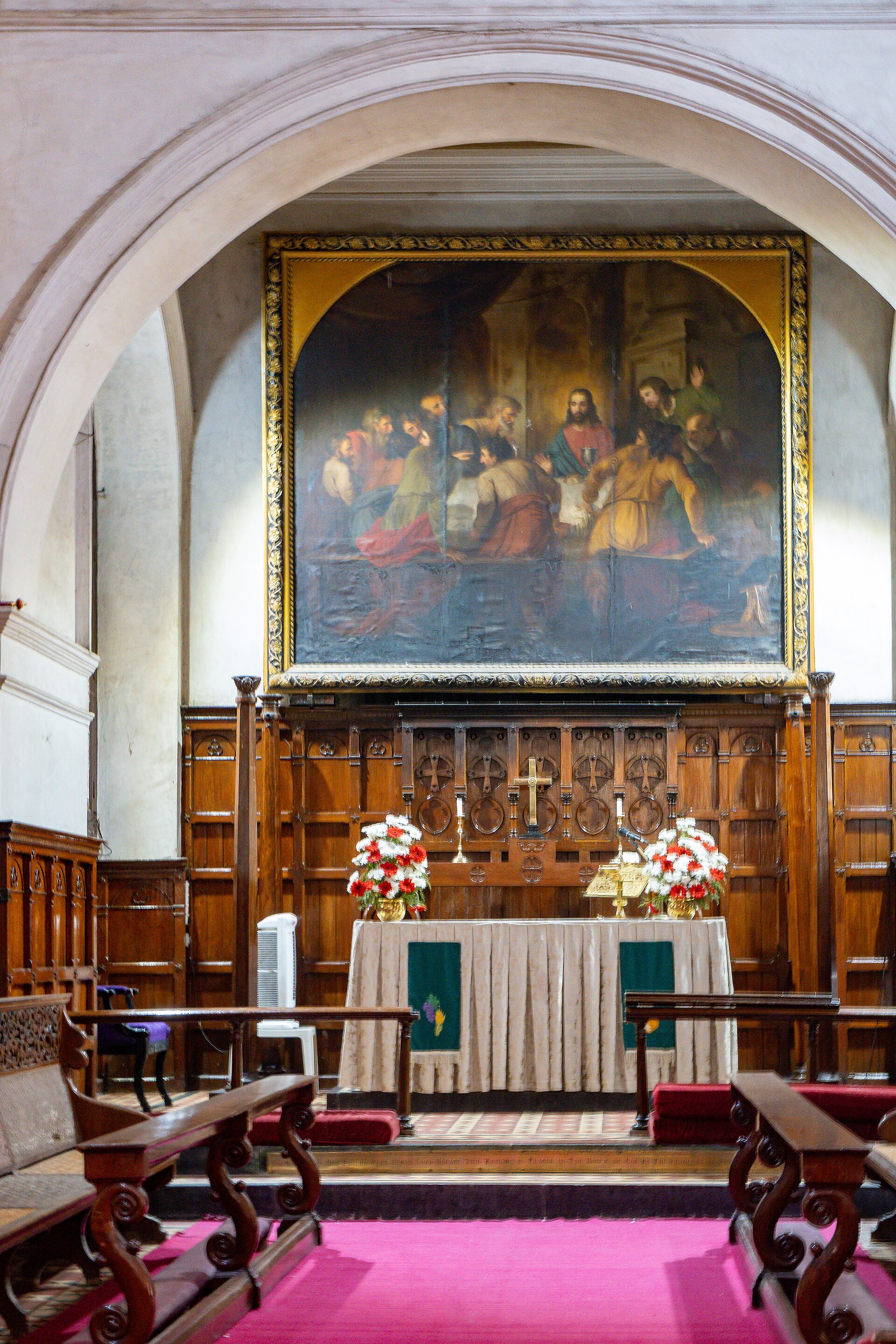
The physical legacy is easiest to see: the port cities, the fort districts of Chennai and Kolkata, the churches and cemeteries, the railway and telegraph lines laid out to move goods and troops toward those ports, and a legal and revenue vocabulary that survives in Indian administration. The presidency towns gave their names to the presidency armies, the presidency banks that became the State Bank of India, and the high courts established in 1862.
The economic legacy is contested and should be presented as such. The nationalist critique, argued most influentially by Dadabhai Naoroji in Poverty and Un-British Rule in India, published in 1901, and by Romesh Chunder Dutt, held that company and later British rule drained wealth from India through remitted revenues, home charges and pensions, and that Indian handloom textile production was destroyed by a deliberate policy of admitting British machine cloth free while taxing Indian exports. Their argument became foundational to Indian nationalism. Some later economic historians accept substantial deindustrialisation in textile handicrafts but attribute much of it to the general collapse in the price of machine spun yarn worldwide after the industrial revolution, which damaged handloom sectors in many countries that were never colonised. Others emphasise the political economy of tariffs and the suppression of Indian industrial policy. The scale of the transfer and the counterfactual of what India's economy would have done otherwise remain genuinely disputed among specialists, and any confident single figure should be treated with caution.
A third legacy is institutional and less often noticed. The chartered company pioneered the idea of a private body exercising public power at a distance: raising an army, coining money, administering justice and answering to shareholders. The debates in the British Parliament about how to control such a body, culminating in the impeachment trial of Warren Hastings, are among the earliest sustained arguments about corporate accountability, and they are still cited when the reach of transnational corporations is discussed today.
References
- Encyclopaedia BritannicaEast India Company
- The British LibraryIndia Office Records
- The National Archives (UK)East India Company records guidance
- Encyclopaedia BritannicaBattle of Plassey
- RijksmuseumDutch East India Company collections
This is a reference article, written from the sources above. It is background, not news reporting.