
Cooperative Federalism: States and Centre Together
Reference library · 1081 words

India's Constitution never uses the word federation. Article 1 describes the country as a Union of States, a phrase chosen deliberately in the Constituent Assembly to signal that the states did not create the Union by agreement and cannot leave it. Yet the machinery that follows is unmistakably federal: two levels of government, each directly elected, each with its own legislature, executive and revenue, and a written division of subjects between them that neither can unilaterally rewrite. Constitutional scholars have long settled on the description quasi-federal, and the practical politics of the country consists largely of negotiating where on that spectrum any given issue sits. Cooperative federalism is the name given to the institutions built to conduct that negotiation without going to court every time.
The division itself sits in the Seventh Schedule, which sets out three lists. The Union List covers defence, foreign affairs, currency, banking, railways, atomic energy and inter-state commerce. The State List covers police, public order, public health and hospitals, agriculture, land, local government and, historically, most consumption taxation. The Concurrent List, where both may legislate, covers criminal law, marriage and divorce, education, forests, electricity and labour. Where a central and a state law on a concurrent subject conflict, Article 254 gives the central law precedence, unless the state law received presidential assent. Anything not listed anywhere falls to the Union, which is the reverse of the American arrangement and a strong tilt toward the centre. So is the power under Article 249 for the Rajya Sabha to authorise Parliament to legislate on a State List subject in the national interest, and the emergency provisions, most controversially Article 356, which allows the dismissal of a state government.
Where the money comes from and how it is split
The sharper federal conflicts in India are fiscal rather than legislative. The Union collects the most productive taxes, while the states carry the larger share of expenditure responsibility, because health, education, policing, irrigation and rural roads are largely theirs to deliver. That structural gap is bridged by transfers, and the body that decides the terms is the Finance Commission, appointed by the President every five years under Article 280. Its central recommendation is the share of the divisible pool of central taxes that goes to the states collectively, and the formula that distributes that share among them. The Fourteenth Finance Commission raised the states' share substantially, and the Fifteenth, which reported for the period beginning 2021, set it at forty-one per cent after adjusting for the reorganisation of Jammu and Kashmir into union territories.
The distribution formula is itself politically explosive because it weighs population, area, forest cover, income distance and demographic performance. States in the south and west, which reduced fertility rapidly and have higher per capita incomes, argue that formulas anchored to population reward states that did neither, and that they contribute far more to the pool than they receive. States in the north and east argue that need, not contribution, is the correct basis for a shared national fisc, and that a poorer state with weaker administrative capacity cannot be told to fund its own catch-up. Both positions have merit and the disagreement is not going away, particularly with the delimitation of parliamentary constituencies due to be revisited. A further irritant is the growth of cesses and surcharges, which are levied by the Union but are not part of the divisible pool, so the effective transfer is smaller than the headline percentage suggests.
The forums where bargaining happens
Several institutions exist to conduct this bargaining. The Inter-State Council, provided for in Article 263, was finally constituted in 1990 following the recommendations of the Sarkaria Commission, which had spent the 1980s examining centre-state relations after a decade of acute friction. The Punchhi Commission revisited the same ground and reported around 2010. Zonal Councils, created under the States Reorganisation Act of 1956, group neighbouring states to discuss shared problems such as river water, border disputes and inter-state transport.
The most consequential recent creation is the Goods and Services Tax Council, established by the Constitution's One Hundred and First Amendment in 2016 and given effect when GST began on 1 July 2017. Its design is unusual and worth understanding. States surrendered their most important independent revenue power, the ability to set sales tax and value added tax rates, in exchange for a permanent seat at a body that sets those rates jointly. In the Council, the Union holds one-third of the weighted votes and all the states together hold two-thirds, and a decision requires a three-fourths majority, which means the Union cannot carry a proposal alone and neither can any bloc of states. In practice the Council has almost always proceeded by consensus rather than by voting. The bargain included a guarantee that states would be compensated for revenue shortfall for five years, funded by a cess. When that guarantee expired in 2022, and after the pandemic had blown a hole in collections, the question of how states replace a revenue stream they no longer control became one of the most contested items in Indian public finance.
Alongside these bodies sits NITI Aayog, which replaced the Planning Commission on 1 January 2015. The change mattered because the old Planning Commission allocated funds to states, giving an unelected body leverage over elected state governments. NITI Aayog does not allocate money. It is a policy think tank and a convening forum, chaired by the Prime Minister with chief ministers on its Governing Council, and its influence runs through indices, model laws and persuasion rather than through the purse.
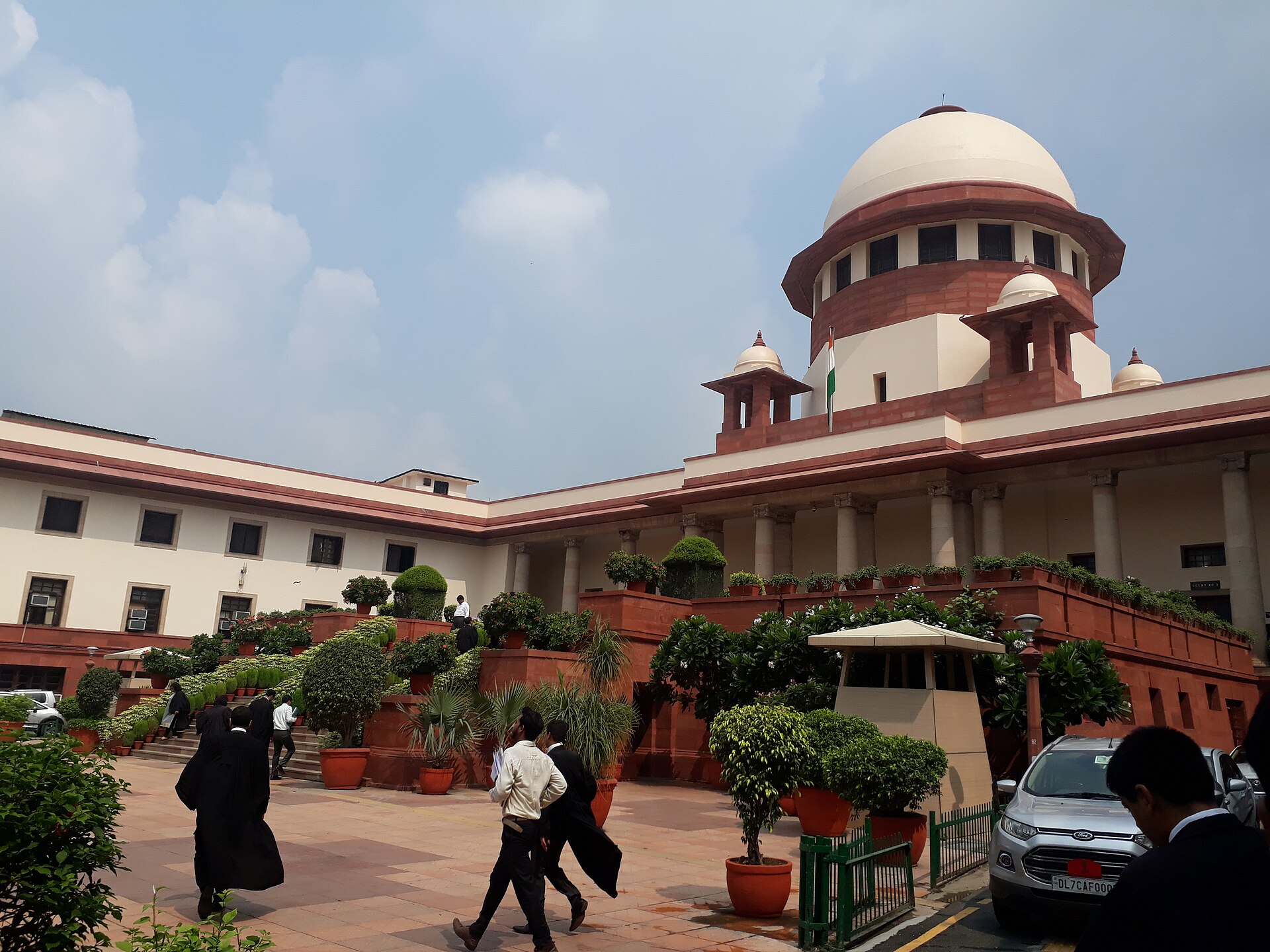
Finally, there is friction that no forum resolves. The office of Governor, appointed by the Union, has become a recurring flashpoint, particularly where the state government belongs to a party opposed to the one in power at the centre. Disputes over how long a Governor may sit on bills passed by a state legislature, over the timing of assent and reservation of bills for the President under Article 200, and over the appointment of vice-chancellors have gone repeatedly to the Supreme Court from states including Tamil Nadu, Kerala, Punjab, Telangana and West Bengal. States have also used Article 131, which gives the Supreme Court original jurisdiction in disputes between the Union and a state, to challenge central legislation directly. Cooperative federalism, in other words, is not a settled condition. It is a continuous argument conducted through institutions, and the institutions work only as well as the willingness of both sides to keep using them.
References
- Government of IndiaThe Constitution of India, Seventh Schedule
- Fifteenth Finance Commission, Government of IndiaReport for 2021-26
- GST Council, Government of IndiaAbout the GST Council
- Ministry of Home Affairs, Government of IndiaInter-State Council Secretariat
- NITI AayogOverview and Governing Council
This is a reference article, written from the sources above. It is background, not news reporting.