
Cricket and the Making of a National Mood
Reference library · 1091 words

There are few countries where a single sport so reliably determines the temper of a whole population. When India plays a knockout match in a world tournament, particularly against Pakistan or Australia, traffic thins, restaurants empty except where a screen is showing, share trading volumes dip and the following morning's newspapers rearrange their front pages. This is not a general enthusiasm for sport. India's Olympic performance has historically been modest relative to its population, and most other codes struggle for money and attention. The concentration of national feeling into cricket is a specific historical outcome that can be traced with some precision.
The game arrived with the British, first played by sailors and East India Company personnel on the western coast in the eighteenth century. The first Indian community to take it up seriously were the Parsis of Bombay, who formed clubs from the middle of the nineteenth century and sent teams to England in the 1880s. Others followed, and Bombay developed a peculiar tournament structure in which teams were organised by religion: Europeans, Parsis, Hindus, Muslims and a composite side. The Bombay Pentangular was hugely popular and was abolished in the 1940s after nationalist criticism, Mohandas Gandhi among the critics, that organising sport by community was poisonous in a country moving towards partition. The domestic first class competition that replaced it, the Ranji Trophy, began in the 1934 to 1935 season and is named after Ranjitsinhji, the Indian prince who played for Sussex and for England and who never played for India at all.
From colonial pastime to national property
India played its first Test match at Lord's in June 1932, captained by C. K. Nayudu, and did not win a Test until 1952. For four decades the national side was a respectable but rarely threatening presence, strongest in spin bowling and at home. The change came in stages. In 1971 India won series in both the West Indies and England for the first time, with Sunil Gavaskar making an extraordinary debut series. Then, on 25 June 1983, an unfancied Indian team captained by Kapil Dev defeated the West Indies, then the most dominant side in the game, in the World Cup final at Lord's. That single afternoon is the hinge of the entire modern story. It converted cricket from a game Indians played into a game Indians expected to win, it arrived at the moment when television ownership was spreading rapidly across urban India, and it made cricket the natural vehicle for consumer advertising in a market that was about to open up.
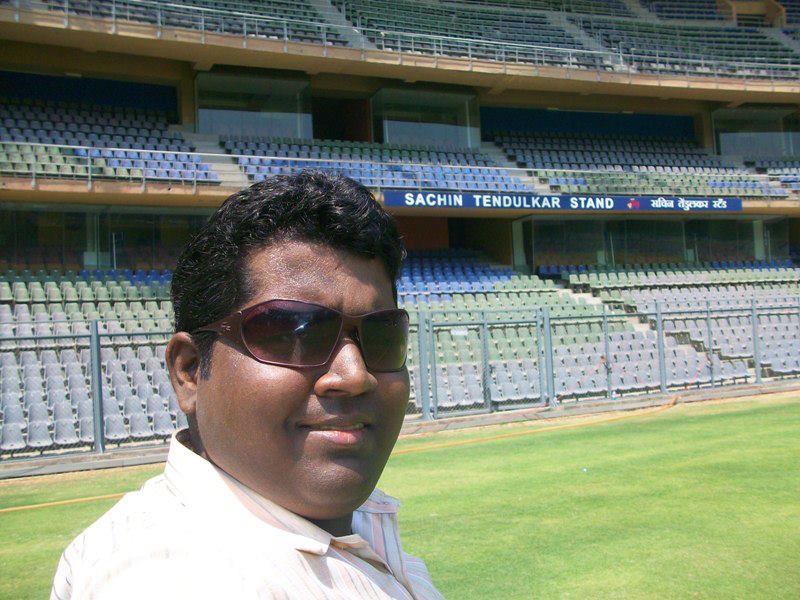
The commercial consequences ran ahead of the sporting ones. The 1987 World Cup was held in India and Pakistan, the first staged outside England. Indian administrators, notably Jagmohan Dalmiya, then set about capturing the game's revenue by selling television rights aggressively and shifting the balance of power inside the International Cricket Council away from England and Australia. Because India supplies the overwhelming majority of the sport's global audience and therefore of its broadcast income, the Board of Control for Cricket in India became by a wide margin the richest body in the sport, and its preferences now shape international schedules. The arrival of Sachin Tendulkar, who made his Test debut in 1989 at sixteen and retired in 2013, gave that commercial machine a figure of near devotional standing, and his career coincided almost exactly with the liberalisation of the Indian economy and the rise of satellite television.
Two later moments completed the transformation. India won the first Twenty20 World Cup in 2007, which persuaded the board to embrace a format it had resisted, and the Indian Premier League was launched the following year: a franchise league with city based teams, a player auction, evening scheduling for television and a fusion of cricket with film industry celebrity. It became one of the most valuable sporting properties in the world and changed the economics of the game everywhere, since players from every cricketing nation now organise their calendars around a few weeks in India. Then in April 2011 India won the World Cup at the Wankhede Stadium in Mumbai, the first host nation to win a final on home soil, producing celebrations across the country that had no equivalent outside independence day itself.
What the mood conceals
The unifying claim made for cricket deserves examination. It is true that the national side draws from most regions, languages and religions, that its captains have come from small towns as often as from metropolitan academies, and that the pathway from a district team to the national side is more open than it was when selection favoured princely patronage and Bombay clubs. The rise of players from Ranchi, Najafgarh, Baroda and rural Uttar Pradesh is genuine social mobility of a visible kind, and the money now available to a fringe professional through domestic and franchise contracts has made cricket a plausible livelihood rather than a gamble.
Against that, the intensity has costs. Matches against Pakistan carry political charge that periodically spills into harassment of Indian Muslims accused of supporting the wrong side, an ugly and recurring pattern. The dominance of cricket in sponsorship and broadcast attention leaves hockey, athletics, football and wrestling competing for what remains, and India's sporting administration outside cricket has repeatedly been criticised for underfunding and mismanagement. Governance inside cricket has not been clean either: a spot fixing scandal in the Indian Premier League in 2013 led the Supreme Court to appoint a committee headed by the former Chief Justice R. M. Lodha, whose recommendations on age limits, tenure caps, state association reform and the separation of cricket administration from politics the Court ordered implemented, over the board's resistance and with mixed results. Women's cricket, long treated as an afterthought, has advanced quickly in the last decade, with a losing World Cup final at Lord's in 2017 that drew a large Indian audience and the launch of a professional women's franchise league in 2023.
For the diaspora the game does something slightly different. Indian touring sides in Australia, England, South Africa and the Gulf now play in front of crowds that are substantially Indian, and the Border Gavaskar Trophy series in Australia has become an occasion at which a migrant population is simply and loudly visible in Melbourne and Sydney. For a family two generations out of India, a Boxing Day Test is one of the few settings where an inherited identity is expressed without explanation or apology. Cricket carries that weight partly because the alternatives, language, religion and region, divide the same population it appears to unite.
References
- Board of Control for Cricket in IndiaBCCI official site
- International Cricket CouncilICC Cricket World Cup history
- Marylebone Cricket ClubMCC and Lord's Cricket Ground
- ESPNcricinfoIndia cricket team records and statistics
This is a reference article, written from the sources above. It is background, not news reporting.