Diaspora Festivals in Foreign Cities
Reference library · 983 words
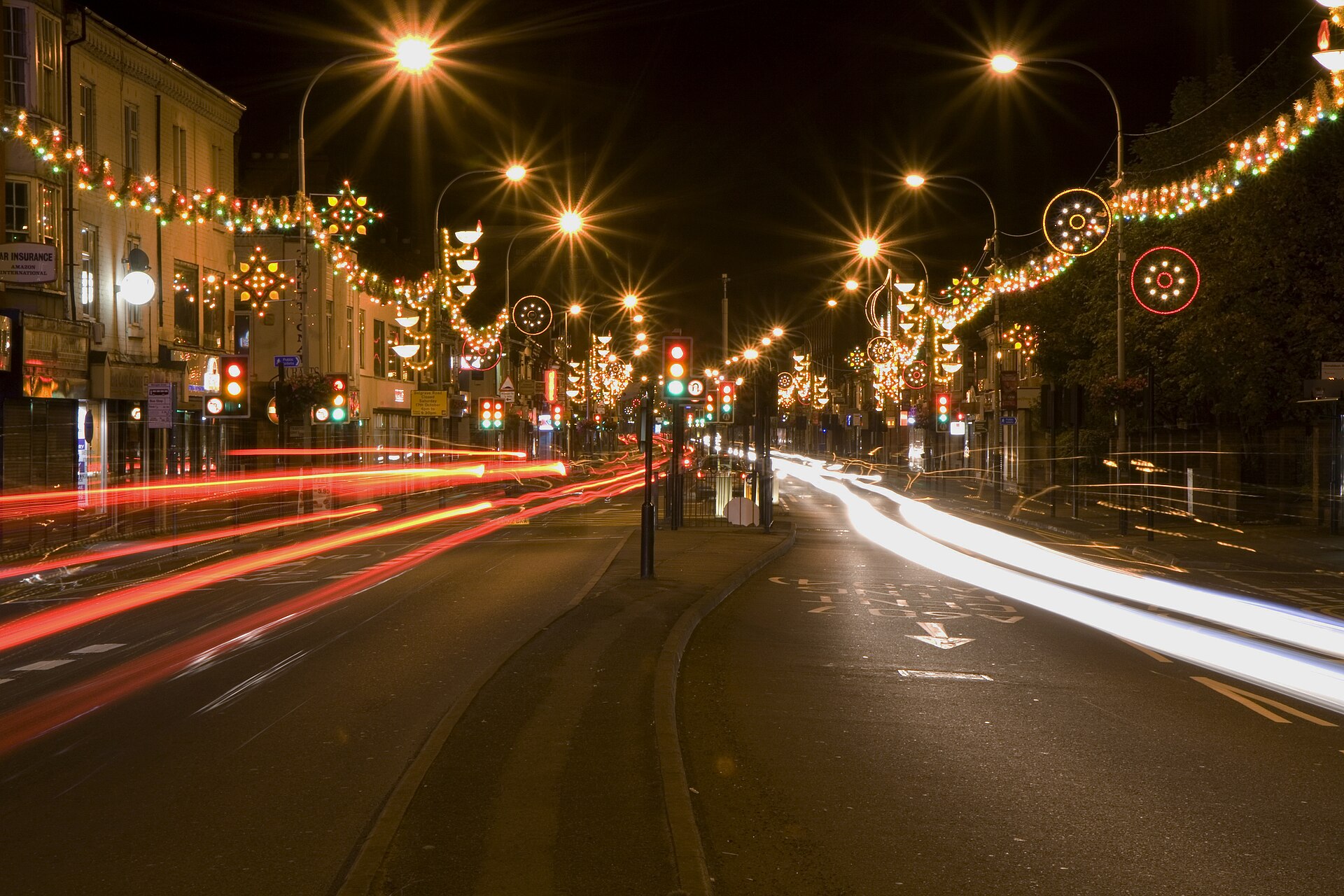

Walk through central Auckland, Birmingham, Toronto, Durban, Singapore or Melbourne at the right time of year and you will find a street closed off, a stage erected, lamps strung across a square, and several thousand people eating from stalls. Indian festivals abroad have moved a long way from the private household observance, and understanding how they changed in transit says a good deal about how migrant communities negotiate a place in a new country.
The starting difficulty is structural. In India a major festival is a public holiday, the whole surrounding society pauses, and the ritual can unfold over its proper duration at its proper time, which is often dictated by the lunar calendar and may fall in the middle of a working week. Abroad, none of that holds. Employers do not recognise the day, schools do not close, and the astronomically correct moment may be three in the morning local time. The universal adaptation is to move the public celebration to the nearest weekend while keeping the private ritual on the correct date. Families light the lamps at home on the actual night of Diwali and attend the community event the following Saturday. This double timing is now so normal that most diaspora families do not think of it as a compromise.
From temple hall to civic square
The second adaptation is a shift in venue and therefore in character. In India, a festival is distributed across thousands of households and neighbourhood temples, and there is no need for anyone to organise it centrally. Abroad, where families are dispersed across a metropolitan area, someone has to book a hall. The organising unit becomes the temple, gurdwara, mosque or cultural association, and the celebration becomes correspondingly more communal, more scheduled and more formally programmed than its domestic equivalent. It also becomes more pan Indian: a Diwali event in a Canadian suburb will draw Gujaratis, Punjabis, Tamils and Bengalis who in India would have celebrated in quite distinct ways, and the resulting programme tends to flatten regional specificity in favour of a shared repertoire.
Then comes the move outdoors and into civic space, which is the most consequential change. Britain offers the clearest examples. Leicester's Diwali celebrations along the Belgrave Road, an area long associated with the Gujarati community including many who arrived after the expulsions from Uganda in 1972, involve a formal switching on of lights by the city council and draw very large crowds, and have been described as among the largest Diwali celebrations outside India. Trafalgar Square in London has hosted an annual Diwali event organised in partnership with the Mayor of London's office. In the Caribbean, Trinidad and Tobago and Guyana, where Indians arrived as indentured labourers from the 1830s onward, Divali is a national public holiday, and the Divali Nagar site in Chaguanas in Trinidad hosts a multi day festival. Mauritius, where people of Indian origin form the majority, observes several Indian festivals as national holidays, and its Maha Shivaratri pilgrimage to the crater lake at Grand Bassin, known as Ganga Talao, draws hundreds of thousands of pilgrims annually and is among the largest Hindu observances outside India.
Australia has developed its own pattern over a much shorter period, since the Indian born population there grew rapidly only from the 1990s onward. Melbourne, Sydney, Brisbane, Perth and Adelaide all have substantial public Diwali and Holi events, Federation Square in Melbourne having hosted large Diwali gatherings, and Sikh communities across Australia hold Nagar Kirtan processions and Vaisakhi celebrations, with the Sikh langar, the free community kitchen, frequently deployed in bushfire and flood relief in ways that have brought it wider public recognition. The southern hemisphere adds an inversion that is genuinely felt: Diwali, a festival whose imagery depends on lamps against a lengthening northern autumn night, arrives in Australia and New Zealand in spring, with long evenings, while Holi, a spring festival, lands as summer ends. Communities have adapted by leaning on the aspects that translate, colour and food and music, rather than the seasonal symbolism that does not.
What is gained and what is argued about
Public festivals do political work whether or not their organisers intend it. They convert a minority community from something largely invisible into a recognised part of civic life, they attract elected officials who attend and speak, and they create a occasion on which the wider population encounters Indian culture in a form that requires no commitment. Local governments generally welcome them for tourism and community relations reasons and increasingly fund them.
That visibility carries costs and controversies that are worth stating honestly. Some within these communities argue that the festival becomes a performance for outsiders, curated into a display of food, dance and colour that leaves out the religious substance entirely. Holi abroad has been particularly affected, having been widely adopted as a colour throwing party by people with no connection to its meaning, which many practitioners find trivialising while others regard it as harmless sharing. Practical friction also occurs: Diwali fireworks generate noise and safety complaints and are restricted in many jurisdictions, and public processions require permits and policing.
There is a further tension that has become sharper in recent years. Diaspora festivals are increasingly attended by representatives of the Indian government and are sometimes framed in terms of national pride rather than religious observance, and diaspora politics in Britain, Canada, the United States and Australia has at times been fractious along the same lines as politics in India. Community events that were straightforwardly cultural have on occasion become contested. Set against that, the strongest argument for these festivals remains the ordinary one made by parents everywhere: a child raised in Perth or Vancouver who has spent a Saturday at a crowded Diwali mela, eaten the right food, heard the language and seen several thousand people who look like their family, has acquired something no amount of explanation at home would supply.
References
- Leicester City CouncilDiwali in Leicester
- Ministry of External Affairs, Government of IndiaPopulation of Overseas Indians
- Australian Bureau of StatisticsCultural diversity and country of birth data
- Government of MauritiusPublic holidays and Maha Shivaratri
This is a reference article, written from the sources above. It is background, not news reporting.