


Diaspora Professionals: Doctors, Engineers and Beyond
Reference library · 1020 words

Among the several distinct waves of Indian migration, the professional wave is the most recent and, in economic terms, the most visible. It is quite separate from the indentured labour migrations of the nineteenth century that carried Indians to Fiji, Mauritius, Trinidad, Guyana and South Africa, and separate again from the trading communities that settled along the East African coast. The professional wave began in earnest in the 1960s and consists overwhelmingly of people who left India already qualified, or who left to acquire qualifications and then stayed. Its two emblematic occupations are medicine and engineering, though the pattern now extends into finance, accounting, academia, nursing, pharmacy and information technology.
The trigger in the United States was legislative. The Immigration and Nationality Act of 1965 abolished the national origins quota system that had effectively excluded Asian immigration since the 1920s and replaced it with a preference system weighted towards family reunification and occupational skills. Indians who qualified under the occupational preferences began arriving in numbers, and the composition of that flow was unusual: it was drawn very heavily from the professional and technically trained strata of Indian society rather than being a cross section of it. Britain's story is different, shaped by Commonwealth citizenship, by the recruitment of doctors into the National Health Service from the 1950s onward, and by the arrival of East African Asians expelled from Uganda in 1972 and pressured out of Kenya and Tanzania.
The medical corridor
Doctors trained in India form a substantial share of the overseas medical workforce in several English speaking countries. The British National Health Service has depended on internationally trained doctors since its early decades, and India has consistently been among the largest single countries of origin for them. In the United States, physicians of Indian origin are represented well above their share of the population, and the American Association of Physicians of Indian Origin, founded in 1982, is one of the larger ethnic medical associations in that country. Australia, Canada, Ireland and New Zealand all draw meaningfully on Indian trained doctors, and the Gulf states rely on Indian medical staff at every level.
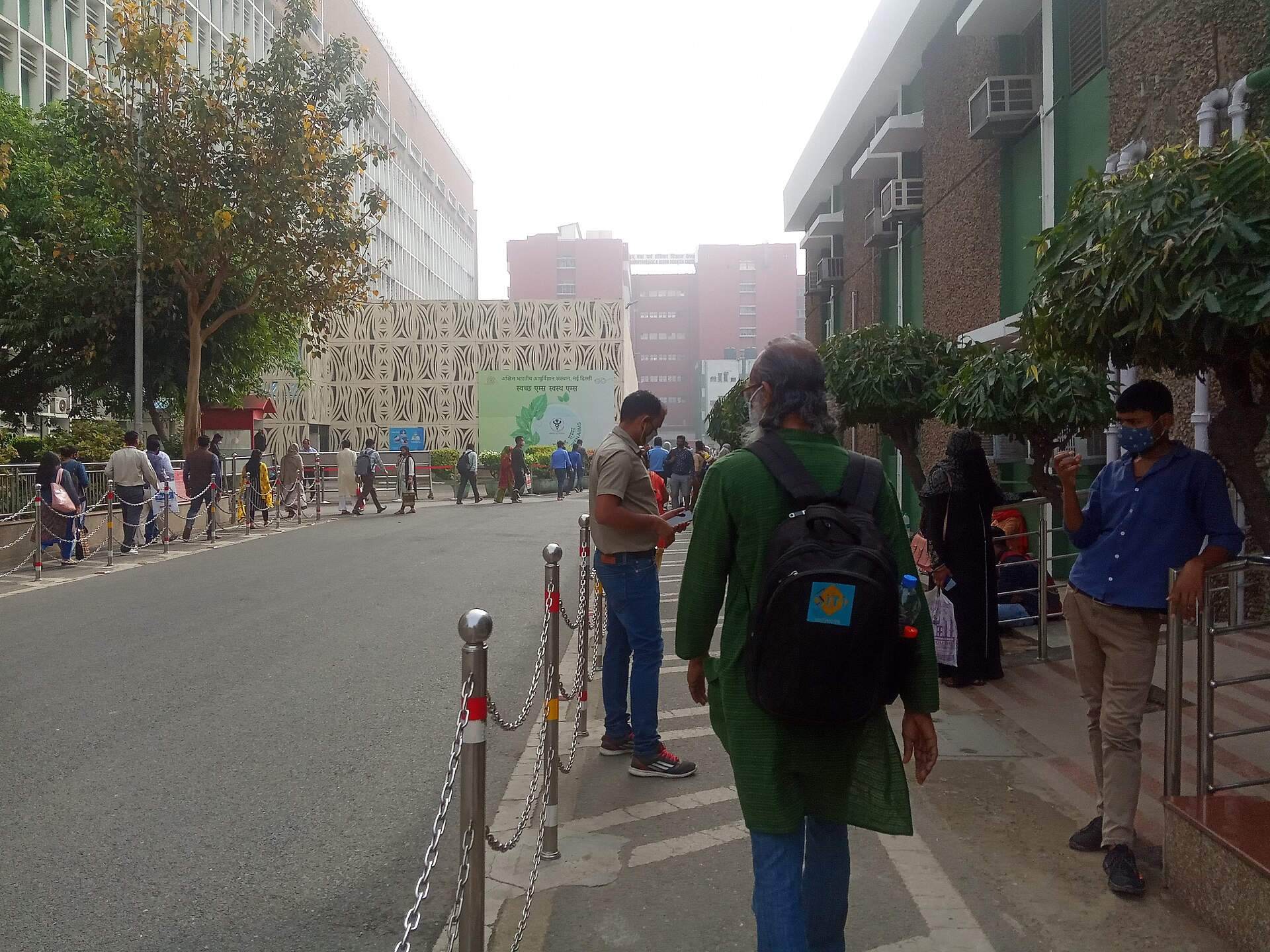
The mechanism behind this is institutional. India built a large publicly subsidised medical and engineering education system after independence, including the All India Institute of Medical Sciences in Delhi, founded in 1956, and the Indian Institutes of Technology, the first of which opened at Kharagpur in 1951, followed by Bombay, Madras, Kanpur and Delhi. These institutions trained more highly qualified graduates than the domestic economy could absorb at salaries commensurate with their training, particularly before the liberalisation of the early 1990s. Meanwhile, destination countries had persistent shortages and recognised, or could be persuaded to recognise, Indian qualifications after supplementary examinations. The result was a durable pipeline.
Nursing follows a related but distinct pattern, and it is strongly regional. Kerala has for decades been the principal source of Indian nurses working abroad, first in the Gulf and later in Britain, Ireland, Australia, the United States and elsewhere. Nursing migration from Kerala is notable because it has often been women who migrated first and whose earnings then supported family reunification, inverting the usual assumption about who leads a migration chain.
Technology, remittances and the brain drain argument
The information technology corridor is the largest by volume and the most institutionally organised. From the 1990s, Indian software services firms including Tata Consultancy Services, Infosys and Wipro built businesses that involved moving engineers to client sites overseas, while individual engineers migrated directly. In the United States the H-1B temporary visa for specialty occupations became the principal legal channel, and Indian nationals have consistently accounted for the largest share of those visas by a wide margin. Because employment based permanent residence in the United States is subject to per country limits, the backlog for Indian applicants has grown to a length measured in decades for some categories, leaving large numbers of long term residents in prolonged temporary status. This is a live and unresolved policy problem, and it has significant human consequences for children who age out of dependent status.
The economic flows attached to this migration are very large. India has for many years been the world's leading recipient of remittances, receiving over one hundred billion United States dollars annually in recent years according to World Bank estimates, more than any other country. The composition of that money has shifted: where remittances were once dominated by lower paid workers in the Gulf sending money to Kerala, Tamil Nadu and Uttar Pradesh, a growing share now comes from higher earning professionals in North America, Britain and Australia, and flows disproportionately to Maharashtra, Kerala and the southern states.
Whether this is good for India is genuinely contested. The older argument, made forcefully from the 1960s onward, was brain drain: India was subsidising the training of doctors and engineers whose productive careers benefited wealthier countries. The counter argument, which gained ground from the 1990s, is brain circulation. On this view, the diaspora generated returns to India that no domestic policy could have produced: it created a reputation for Indian technical competence that helped the software services industry win contracts, it channelled venture capital and management practice back into Bengaluru, Hyderabad and Pune, and a proportion of migrants returned with capital and networks. Both arguments contain truth, and the balance almost certainly differs by sector. It is easier to argue brain circulation for software engineers, whose skills transferred back into a booming domestic industry, than for doctors, whose departure leaves rural Indian health services short staffed in ways that no remittance flow repairs.
What is beyond dispute is the political and social visibility this wave has acquired. People of Indian origin now hold senior positions in government, business and universities across the Anglophone world, and the chief executives of several of the largest technology companies were born and initially educated in India. That visibility is often reported in India itself as national validation. It is worth noting the selection effect behind it: this is not a representative sample of Indians abroad but the outcome of immigration systems designed, quite deliberately, to admit the highly credentialled.
References
- World BankMigration and Remittances Data
- Ministry of External Affairs, Government of IndiaPopulation of Overseas Indians
- Migration Policy InstituteIndian Immigrants in the United States
- OECDInternational Migration Outlook
This is a reference article, written from the sources above. It is background, not news reporting.