Diwali: The Festival of Lights Explained
Reference library · 945 words

Diwali is the most widely observed festival on the Indian calendar and, for a great many people outside India, the most visible. It is also frequently misdescribed. It is not a single day, it does not commemorate a single event, and it is not exclusively Hindu. The name comes from the Sanskrit dipavali, a row of lamps, and the lamp is the one element common to every version: a small clay diya filled with oil and a cotton wick, set on a windowsill, a parapet, a shop counter or a temple step. Everything else, including which god is honoured and which story is told, varies by region, community and family.
The timing follows the lunisolar Hindu calendar. The central night is the new moon, amavasya, of the month of Kartika, which falls somewhere between mid October and mid November in the Gregorian calendar. That is the darkest night of the lunar month, which is the point: the lamps are lit precisely when there is no moon. In the north the sequence usually runs across five days. Dhanteras opens it, a day for buying metal, when jewellers and utensil shops record some of their best trade of the year. Naraka Chaturdashi, also called Choti Diwali, follows. Then comes the main night with Lakshmi Puja. Govardhan Puja or Annakut comes next, and the cycle closes with Bhai Dooj, when sisters mark their brothers foreheads and brothers pledge protection.
Many stories, one lamp
The story most often told to children in northern India comes from the Ramayana: Rama returns to Ayodhya after fourteen years of exile and victory over Ravana, and the citizens light the city to guide him home. In much of southern India the emphasis falls instead on Krishna defeating the demon Narakasura, which is why the pre dawn oil bath of Naraka Chaturdashi is the central ritual in Tamil Nadu, Karnataka and Andhra Pradesh rather than the evening lamps. In Bengal the same nights are given to Kali, worshipped in her fierce form, and the mood is quite different again. Across western India Lakshmi, goddess of prosperity, is the focus, and businesses close their old account books and open new ones in a ceremony called chopda pujan, which makes Diwali the practical start of the Gujarati financial year.
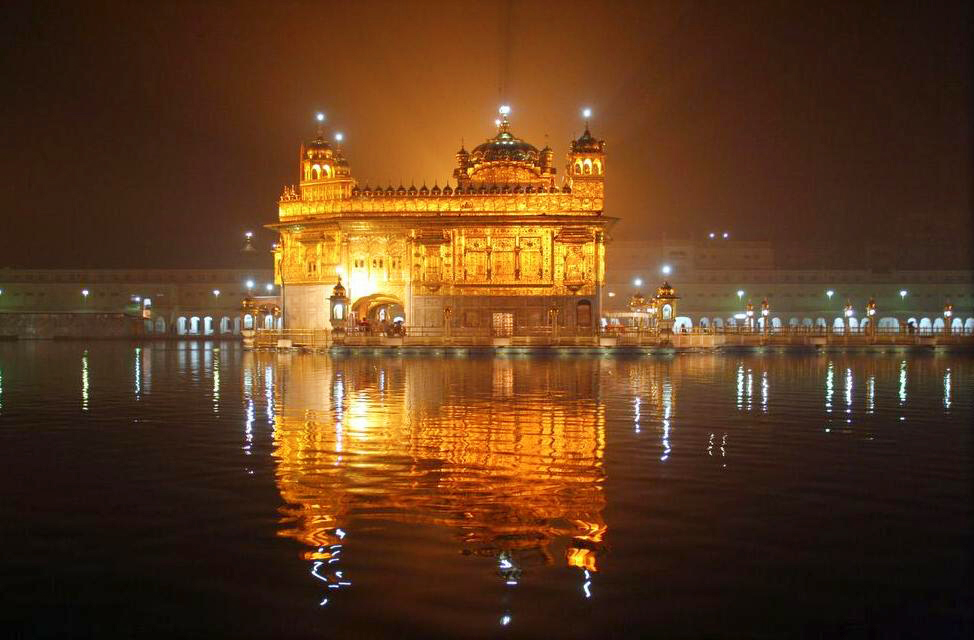
The festival is not confined to Hinduism. Jains mark the same night as the anniversary of the liberation of Mahavira, the twenty fourth Tirthankara, and the lamps are understood as replacing the light of his knowledge. Sikhs observe Bandi Chhor Divas, commemorating the release of Guru Hargobind, the sixth Guru, from imprisonment at Gwalior Fort, and his insistence that a number of Hindu princes held there be freed with him; the Golden Temple at Amritsar is illuminated and the celebration is well attested in Sikh tradition even as the precise historical details are debated. Some Newar Buddhists in Nepal observe the related festival of Tihar, with its days honouring crows, dogs and cows.
What people actually do
Practice is domestic before it is public. Houses are cleaned thoroughly in the weeks beforehand, on the understanding that Lakshmi does not enter a dirty home. Doorways are decorated with rangoli, patterns made on the floor in coloured powder, rice flour or flower petals, and marigold garlands are strung across lintels. Sweets are made or bought in quantity: ladoo, barfi, jalebi, and in the west karanji and savoury chakli. Gifts and boxes of sweets circulate between neighbours, colleagues and clients, and the retail surge around Diwali functions in India roughly as the Christmas quarter does in Europe or North America. Public displays have grown enormously: the city of Ayodhya has staged an annual Deepotsav since 2017 in which hundreds of thousands of lamps are lit along the Saryu river, an event that is both civic spectacle and, unavoidably, political statement.
Fireworks are the most contested element. They are a comparatively late addition, tied to the availability of gunpowder and later to industrial manufacture centred on Sivakasi in Tamil Nadu, and they now collide with an air quality crisis. Delhi routinely records hazardous particulate levels in the days around Diwali, worsened by winter temperature inversions and by crop residue burning in neighbouring Punjab and Haryana. The Supreme Court of India has intervened repeatedly, restricting the hours during which fireworks may be set off and permitting only lower emission formulations. How much of the pollution is attributable to the festival itself, as opposed to stubble burning, traffic and construction dust, is genuinely disputed among researchers, and the argument has become entangled with claims that a Hindu festival is being singled out.
Diwali beyond India
Wherever Indians settled in numbers, the lamps followed. Diwali is a public holiday in Fiji, Mauritius, Guyana, Trinidad and Tobago, Suriname, Singapore, Malaysia and Sri Lanka, in several cases a legacy of nineteenth century indentured migration rather than recent movement. In Britain, Leicester has staged one of the largest celebrations outside India along the Belgrave Road since the 1980s. In Australia, festivals in Melbourne and Sydney draw crowds well beyond the Indian community, and Diwali events are now a fixture of the civic calendar in cities with substantial Indian populations. Governments and corporations increasingly mark it, which brings the familiar tension between recognition and dilution.
For all that, the enduring shape of the festival is small. A family cleans the house, lights a row of lamps at dusk, eats too many sweets, and visits people it has not seen for a year. The theology varies, the fireworks are argued over, the dates shift, and the meaning is stated differently in every region. The lamp in the doorway is the constant.
References
- Encyclopaedia BritannicaDiwali, Hindu festival
- Victoria and Albert MuseumDiwali and the arts of South Asia
- BBCReligions: Hinduism, Diwali
- Ministry of Culture, Government of IndiaFestivals of India
- Central Pollution Control Board, IndiaNational Air Quality Index
This is a reference article, written from the sources above. It is background, not news reporting.