

East Africa's Indian Trading Families
Reference library · 1041 words
.jpg)
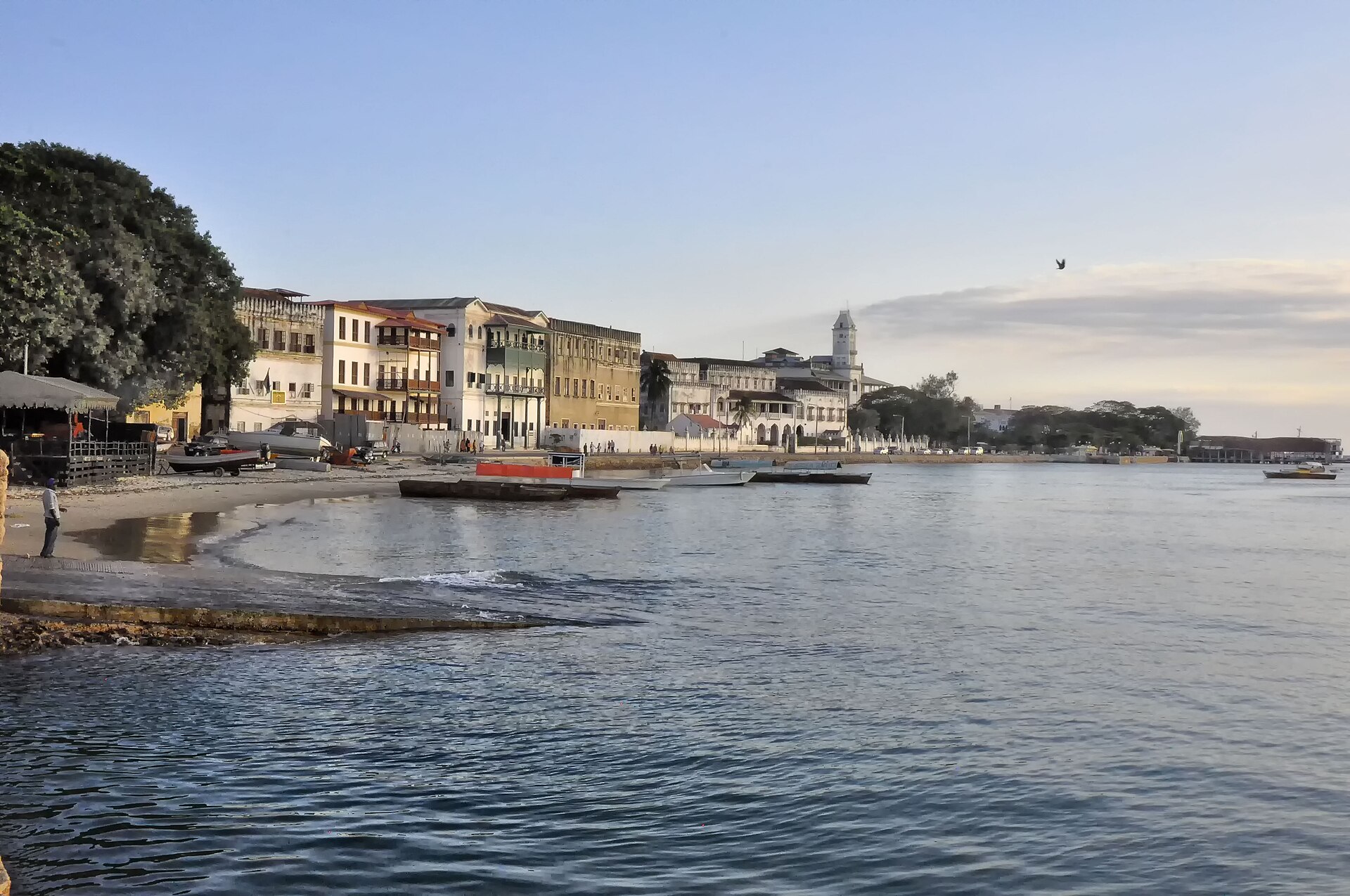
The Indian presence in East Africa is older than colonial rule, older than the Suez Canal, and older than most of the political vocabulary usually applied to it. The monsoon system of the western Indian Ocean allows a sailing vessel to run from Gujarat and Kutch to the Swahili coast on the northeast monsoon between roughly November and March and to return on the southwest monsoon between April and September. Merchants had used that rhythm for well over a thousand years, and Gujarati, Kutchi and Konkani traders were established at Mombasa, Lamu, Zanzibar and Kilwa long before any European power controlled the coast. This was not migration in the modern sense so much as a commercial system in which families kept branches at both ends.
The pivotal moment came in 1840, when the Omani ruler Seyyid Said moved his capital from Muscat to Zanzibar, building an economy around clove plantations and the caravan trade into the interior. That economy ran on Indian capital. Kutchi Bhatia and Ismaili Khoja merchant houses financed the plantations, advanced credit to Arab and Swahili caravan leaders heading inland for ivory, and, for decades, the customs of Zanzibar were farmed to an Indian merchant family, which meant the sultanate's principal revenue stream was collected by an Indian firm. Historians have also documented that Indian financiers extended credit to caravans engaged in the slave trade, an uncomfortable part of the record that is now openly discussed in East African scholarship and less openly in community memory.
Railway, dukas and the colonial middle
British rule reshaped the community. Construction of the Uganda Railway from Mombasa to Kisumu on Lake Victoria, begun in 1896 and reaching the lake in 1901, required a workforce that the colonial administration did not believe it could raise locally, so around thirty two thousand indentured labourers were recruited, mostly Punjabis and Gujaratis. Conditions were severe, thousands died of disease and accidents, and the line's most famous episode involved lions killing workers at Tsavo. Most survivors returned to India at the end of their contracts, but several thousand stayed, and it was they, together with earlier coastal merchants and later free migrants, who formed the settled community.
What followed was the spread of the duka, the general store, into the interior along the new railway and the roads that branched from it. An Indian shopkeeper, a dukawallah, would open in a small trading centre, sell cloth, sugar, paraffin and tools, buy produce, extend credit and remit profit back to a family firm on the coast or in Gujarat. Within a generation this network handled a very large share of the retail and wholesale trade of Kenya, Uganda and Tanganyika. Sikh artisans, called fundis locally, dominated skilled building and mechanical trades. Goan Catholics, English speaking and often Portuguese educated, filled the colonial clerical service. Ismaili Khojas, organised under the Aga Khan, built a distinctive institutional infrastructure of prayer halls, schools, hospitals, a bank and an insurance company that funded members' businesses and education.
Colonial society placed all of this in a formal racial hierarchy: Europeans at the top with exclusive rights to the fertile Kenya Highlands, Asians in the middle with commerce but not land, Africans at the bottom. Indians in Kenya campaigned for equal political rights and access to the highlands through the 1910s and early 1920s. The British response, the Devonshire White Paper of 1923, refused those demands while declaring that Kenya was primarily an African territory and that African interests must be paramount, a formula that simultaneously blocked Indian claims and gave later African nationalism a text to cite. Indians nonetheless supplied important elements of anti colonial politics: a Karachi born trade unionist based in Nairobi built the first significant multiracial trade union movement in Kenya in the 1940s and was among the earliest public voices to demand outright independence.
Expulsion, exile and return
Independence turned the middleman position into a liability. New governments wanted commerce in the hands of citizens, and Asians who held British passports or Indian citizenship rather than local nationality were exposed. Kenya's Trade Licensing Act of 1967 restricted non citizens from trading in specified areas and goods, and tens of thousands left, mostly for Britain. That movement produced a crisis in London, where the Commonwealth Immigrants Act of 1968 was passed at speed specifically to restrict the entry of British passport holders without an ancestral connection to the United Kingdom, a measure that has been widely judged as racially motivated in effect if not in text. Tanzania's Arusha Declaration of 1967 and the nationalisation of rental buildings in 1971 hit Asian property owners hard.
The sharpest rupture came in Uganda. On the fourth of August 1972 Idi Amin announced that Asians would be expelled, and gave them ninety days to leave. Something in the range of sixty thousand to eighty thousand people left, abandoning businesses, homes and bank accounts that were redistributed to Amin's supporters and in most cases ruined within a few years. Roughly twenty seven thousand went to Britain, where they were settled largely in Leicester and outer London, others to Canada, which accepted several thousand under an airlift, and smaller numbers to India, Kenya and the United States. The Ugandan economy lost most of its commercial and industrial management at once, and the country's manufacturing base collapsed.
The expelled communities largely prospered elsewhere. Leicester's Belgrave Road became one of the best known South Asian commercial districts in Europe. Canadian Ismaili settlement, encouraged by the federal government of the day, established a community that has since built major institutions in Toronto and Vancouver.
The story did not end with departure. Uganda passed legislation in 1982 providing for the return of expropriated property, and from the early 1990s the government actively encouraged Asian families to come back and reclaim assets. Several major industrial groups founded by Gujarati families in the early twentieth century, particularly in sugar, resumed operations and are again among Uganda's largest private employers. Kenya formally recognised Asians as a distinct community in 2017. The result is a diaspora with an unusually complicated geography: family networks that run simultaneously through Gujarat, Nairobi, Kampala, Leicester, Toronto and Dubai, and a shared history that is neither straightforwardly colonial nor straightforwardly victimised, but sits awkwardly between the two.
References
- Encyclopaedia BritannicaExpulsion of Asians from Uganda
- The National Archives (United Kingdom)Uganda Asians and the 1972 expulsion
- BBCUganda country profile
- School of Oriental and African Studies, University of LondonSOAS University of London
- United Nations High Commissioner for RefugeesUNHCR
This is a reference article, written from the sources above. It is background, not news reporting.