


Engineers on the Move: A Migration Story
Reference library · 1098 words

The single largest professional migration of the past half century has been the movement of Indian engineers out of India. It is unusual among migrations because the people involved were not fleeing anything, because their departure was in a sense planned by the state that lost them, and because the country they left has since built a large industry out of the same skills. Understanding how it happened requires starting not with visas but with a policy decision taken in Delhi in the years after independence, when the government concluded that the new republic needed a domestic capacity to design dams, power stations, steel plants and machine tools, and that this required institutions modelled on the best technical schools abroad.
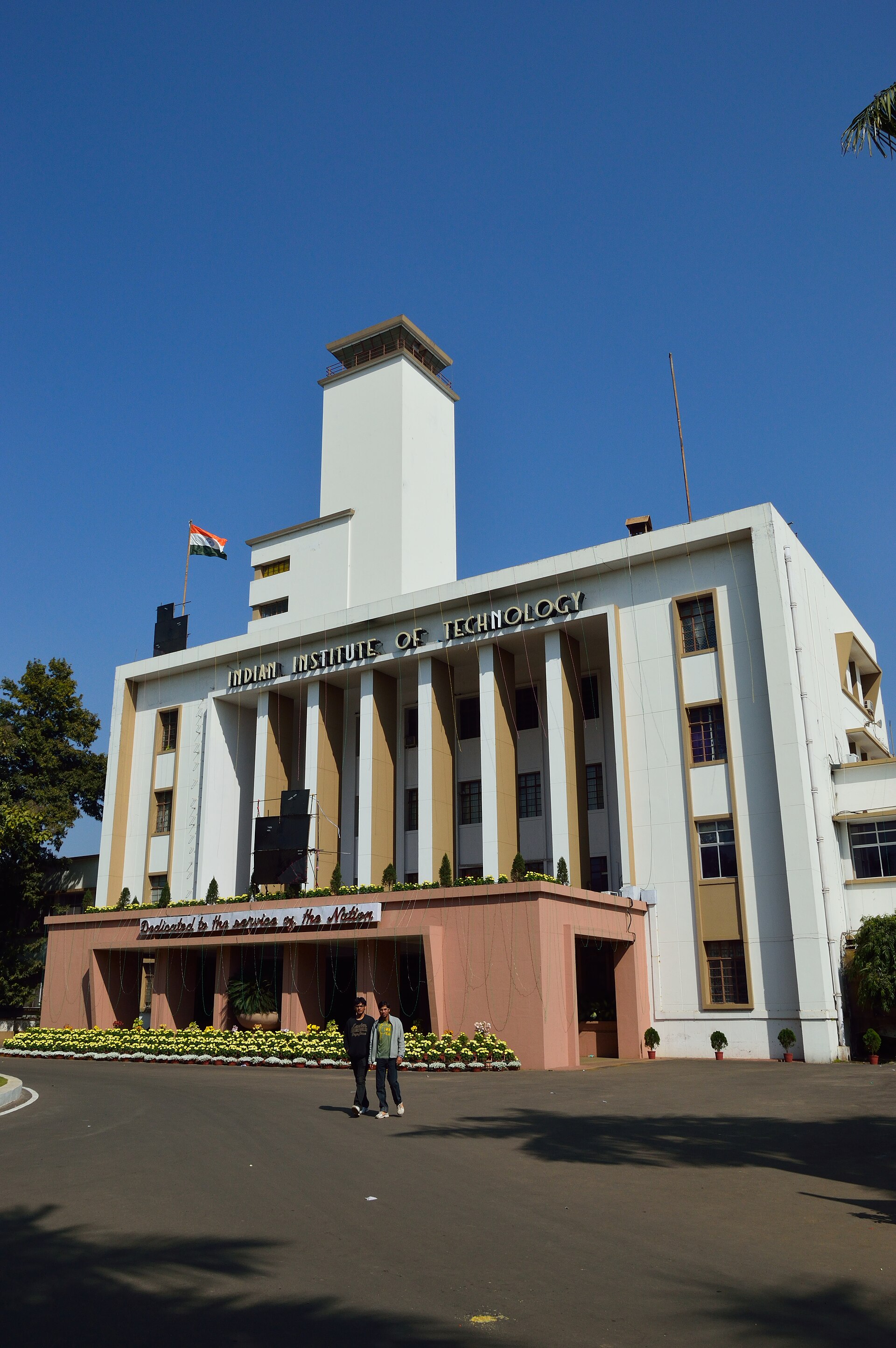
The result was the Indian Institutes of Technology. The first opened at Kharagpur in West Bengal in 1951, on the site of a former colonial detention camp. Four more followed within a decade, each built with foreign technical partnership: Bombay with Soviet assistance, Madras with West German assistance, Kanpur through a consortium of American universities, and Delhi with British involvement. Admission was by a single national examination of legendary difficulty, and the schools were deliberately residential, elite and heavily subsidised. Alongside them sat the regional engineering colleges, later the National Institutes of Technology, and a growing number of state and private institutions. India accordingly began producing, from the 1960s onward, far more rigorously trained engineers than its own slow growing, licence bound industrial economy could employ at salaries commensurate with the training. That gap between supply and domestic demand is the engine of the whole story.
Where they went, and what let them in
The receiving door opened first in the United States. The Immigration and Nationality Act of 1965 abolished the national origins quota system that had effectively excluded Asian migration and replaced it with preferences based on family ties and occupational skills. Indian engineers and physicians were among the immediate beneficiaries, and a first cohort arrived through graduate school, took doctorates, and stayed. The second and much larger wave came through a channel created by the Immigration Act of 1990, which established the H-1B visa for workers in speciality occupations requiring a degree. Demand for the H-1B rose sharply through the 1990s as American firms sought programmers, and Indian nationals have consistently received the large majority of these visas since. The timing coincided with the remediation of the year 2000 date problem in legacy software, an enormous, labour intensive and deadline driven task that Indian service companies took on at scale and that established their credibility with Western clients.
Those companies had been building capability quietly for decades. Tata Consultancy Services was founded in 1968, HCL in 1976, Infosys in Pune in 1981 by seven engineers with very little capital, and Wipro converted from vegetable oils into computing in the same period. Liberalisation of the Indian economy from 1991, the creation of Software Technology Parks with dedicated satellite links and tax concessions, and the laying of undersea fibre optic cable made it possible to do the work in Bengaluru or Hyderabad rather than to fly the worker to New Jersey. The industry accordingly developed two limbs at once: an onsite limb that moved engineers abroad on temporary visas, and an offshore limb that kept them in India serving foreign clients. Both grew, and they are not alternatives but complements, since the onsite staff manage the client relationship that makes offshore delivery possible.
Other destinations followed different logics. Canada built a points based permanent residence system, later reorganised as Express Entry, that rewards young degree holders with English and work experience, and India has become its single largest source country for new permanent residents. Australia's skilled migration programme works on a similar points basis, with occupation lists, employer sponsorship pathways and a skills assessment conducted for engineers by Engineers Australia; recognition is smoothed by the Washington Accord, the international agreement on the mutual recognition of engineering degrees, to which India's accreditation body was admitted in 2014. Germany and several other European states created dedicated skilled worker permits. The Gulf states took a different kind of engineer altogether: civil, mechanical and petroleum specialists on fixed term contracts with no route to citizenship, working on construction and energy projects in Dubai, Abu Dhabi, Doha, Riyadh and Kuwait.
Loss, gain, and the queue
Whether this movement has harmed India is genuinely contested and the argument has changed sides over time. In the 1960s and 1970s it was described as a brain drain: a poor country was subsidising the education of engineers who then produced value for rich ones, an outright transfer of human capital in the wrong direction. From the 1990s a competing account, developed most influentially by the scholar AnnaLee Saxenian in her work on Silicon Valley, argued for brain circulation: emigrant engineers built the reputations, client networks and venture capital connections that allowed an Indian technology industry to exist at all, and many returned or invested. Both accounts are supported by evidence. What is clear is that the flows now run in several directions, with multinational firms operating very large engineering centres in Bengaluru, Hyderabad, Pune and Chennai that do original design work rather than back office support, and with a steady if modest return of senior people.
For individuals, the sharpest problem is not entry but permanence. United States law caps the share of employment based permanent residence visas that may go to nationals of any single country, regardless of that country's size. Because Indian applicants vastly outnumber the cap, the queue for a green card in the main employment categories has lengthened into decades, leaving skilled workers on renewable temporary visas for much of a career, with children who age out of dependent status and spouses whose right to work has been repeatedly litigated. Elsewhere the friction is different: in Australia, Britain and Canada the complaint is more often credential recognition and the experience of qualified engineers driving taxis or working in unrelated jobs while assessments, licensing and local experience requirements are satisfied.
The composition of the flow is also changing. Where the classic route ran through a master's degree in the United States, a large share of current movement is of students going directly to Canada, Australia, Germany and Britain for coursework degrees, with post study work rights as the real object. That makes the migration more sensitive to policy shifts in the destination country than to conditions in India, which is why a change to a post study visa rule in Ottawa or Canberra can alter enrolment patterns in Hyderabad within one admissions cycle.
References
- United States Citizenship and Immigration ServicesH-1B Specialty Occupations
- Department of Home Affairs, AustraliaSkilled migration visas
- Engineers AustraliaMigration skills assessment
- Ministry of Education, Government of IndiaIndian Institutes of Technology
- Immigration, Refugees and Citizenship CanadaExpress Entry
This is a reference article, written from the sources above. It is background, not news reporting.