Family Gatherings and the Rhythm of Celebration
Reference library · 952 words
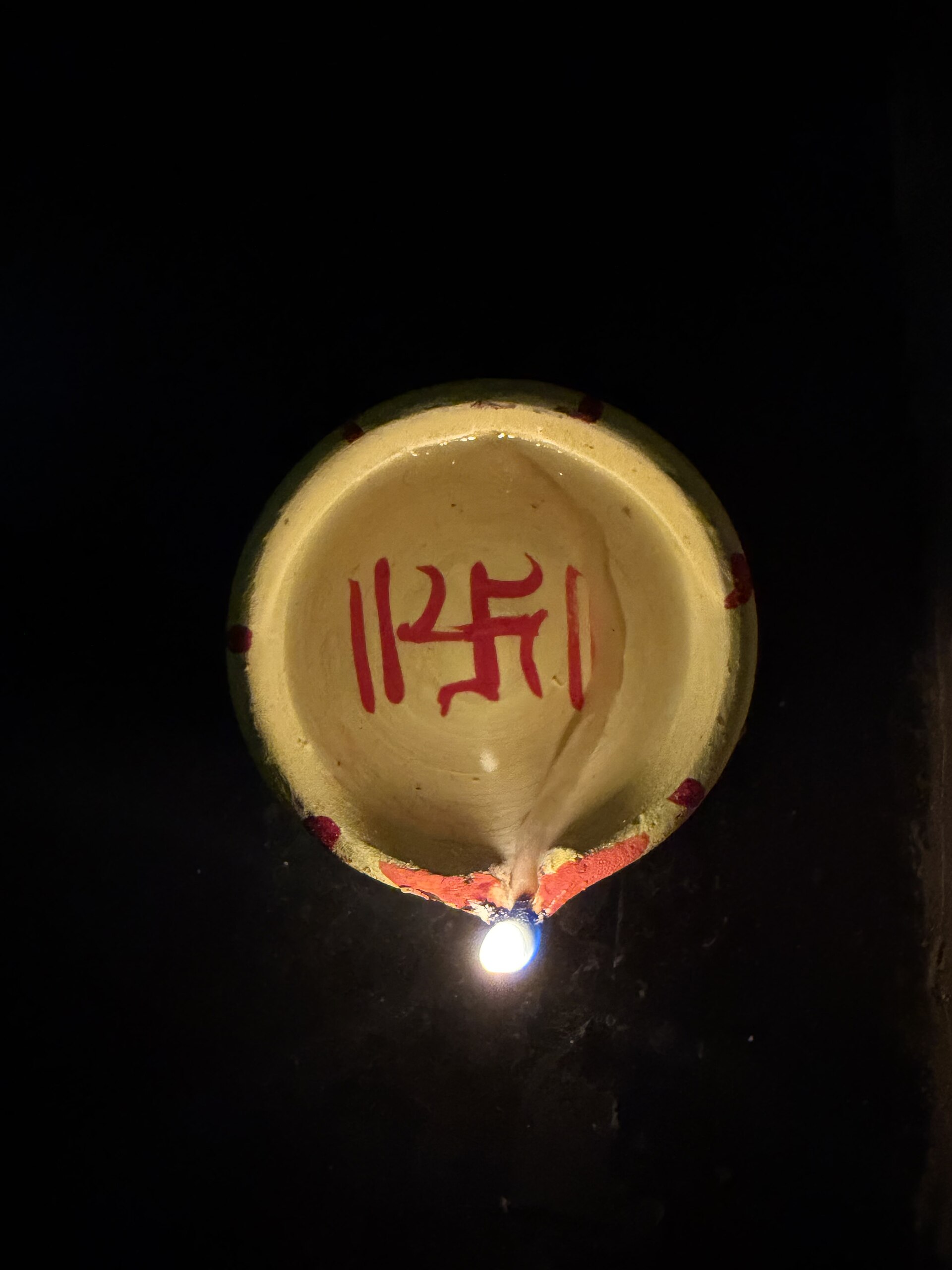

Ask someone from India what the year looks like and you will rarely get an answer organised around January to December. The felt shape of the year is a sequence of gatherings: the festival that brings the household together, the wedding season that empties offices, the harvest celebration that draws people back to a village they may no longer live in. These are not simply holidays. They are the occasions on which extended families physically assemble, and in a society where kinship networks remain economically and socially load bearing, that assembly does real work.
The calendar itself is the first thing to grasp. Most Indian festivals follow lunisolar reckoning rather than the Gregorian calendar, which is why their dates move each year. Diwali, the festival of lights, falls on the new moon of the month of Kartik, usually in October or November. Holi, the spring festival of colour, falls on the full moon of Phalguna, usually in March. Islamic festivals including Eid al-Fitr and Eid al-Adha follow the purely lunar Hijri calendar and therefore move backwards through the seasons by around eleven days a year. Christmas and Easter follow the church calendar, and are public occasions in Goa, Kerala, parts of the northeast and among Christian communities everywhere. Regional new years cluster in April: Baisakhi in Punjab, Vishu in Kerala, Puthandu in Tamil Nadu, Bihu in Assam, Pohela Boishakh in Bengal, and Ugadi in the Telugu and Kannada speaking states, all within a few days of one another because they share a solar reckoning.
What a gathering actually involves
The structure of a large family occasion is remarkably consistent even where the religion, region and cuisine differ. There is a period of preparation in which the house is cleaned and often repainted, new clothes are bought, and food is cooked in quantities that assume unannounced guests. There is a ritual core, which may be a puja performed at home, a visit to a temple, gurdwara, mosque or church, or a specific act such as lighting lamps at Diwali or tying a thread at Raksha Bandhan. There is an exchange, of sweets, of gifts, of money in envelopes to children and younger relatives. And there is a long, unhurried period of sitting together which is, in practice, the point.
Food carries much of the meaning and it is aggressively local. Diwali in Maharashtra means faral, an assortment including chakli, chivda, karanji and ladoo. Onam in Kerala means the sadhya, a vegetarian feast of many small dishes served on a banana leaf in a fixed order. Eid means sheer khurma or biryani depending on the household and region. Pongal in Tamil Nadu is named after the dish itself, rice boiled with milk and jaggery until it overflows the pot, the overflow being the auspicious moment. Lohri in Punjab means groundnuts, popcorn and rewri thrown into a bonfire in January. Almost every one of these involves a large amount of unpaid labour, overwhelmingly by women, which is one of the reasons contemporary discussion of festivals in Indian media increasingly includes an argument about who is actually doing the work.
Weddings deserve separate mention because they are the largest gatherings most families ever host and the most economically consequential. An Indian wedding commonly runs across several days with distinct named events, and guest lists in the hundreds are unremarkable across a wide range of income levels. The wedding season is concentrated in periods considered auspicious, largely avoiding the four months of Chaturmas and clustering from late autumn through winter and again in the pre monsoon months, which produces visible seasonal spikes in demand for gold, textiles, catering, transport and hotel capacity. Wedding expenditure is a significant driver of household borrowing, and the practice of dowry, though prohibited by the Dowry Prohibition Act of 1961, persists in many communities and remains a serious social problem rather than a historical curiosity.
The rhythm under migration
Internal and international migration has stretched these rhythms without breaking them. Within India, the great festival travel surges are among the largest annual movements of people anywhere: Indian Railways runs additional trains for Diwali and Chhath Puja, the latter drawing enormous numbers of workers from Delhi, Mumbai and Punjab back to Bihar and eastern Uttar Pradesh. Chhath is a demanding festival involving fasting and offerings to the setting and rising sun on a riverbank, and its rise to national visibility over recent decades tracks the movement of Bihari labour into other states.
For families abroad, the adaptation is more thorough. Festivals move to the nearest weekend because employers do not recognise them. Temples, gurdwaras and community halls take over functions the extended household used to perform, which means the celebration becomes more communal and less domestic. Time zones split the ritual from the phone call home. In the southern hemisphere, the seasonal logic inverts entirely: Diwali, a festival of lights against the lengthening nights of a northern autumn, falls in the Australian spring, and Holi, a spring festival, arrives as Australian summer ends. Communities in Sydney, Melbourne, Auckland, Johannesburg and Durban have simply absorbed the mismatch, and the local celebration develops its own character.
What tends to survive migration most durably is not the ritual detail but the obligation to gather. Second and third generation families who have lost the Sanskrit, the fasting rules and much of the regional cooking will still assemble a large number of relatives at a particular time of year and eat together for several hours. Anthropologists studying diaspora communities have often noted that the food and the gathering outlast the theology by a generation or more. Whether that counts as continuity or as attenuation is a matter on which families themselves disagree, frequently at the gatherings in question.
References
- Ministry of Culture, Government of IndiaFestivals of India
- UNESCODurga Puja in Kolkata, Intangible Cultural Heritage
- Encyclopaedia BritannicaDiwali
- National Portal of IndiaGazetted and restricted holidays
This is a reference article, written from the sources above. It is background, not news reporting.