
Fiji's Indian Chapter
Reference library · 982 words

On 14 May 1879 a sailing ship called the Leonidas anchored off Levuka in Fiji carrying more than four hundred indentured labourers recruited in India. That date is now a public holiday in Fiji, Girmit Day, declared in 2023, and it marks the beginning of a migration that would reshape the country. Between 1879 and 1916 something over sixty thousand Indians were brought to Fiji under indenture. Their descendants, together with later free migrants, became at times close to half the population of the islands, and the relationship between them and indigenous Fijians has dominated the country's politics for more than a century.
Girmit
The system was called indenture, and the labourers called themselves girmitiyas, from girmit, a Fiji Hindi rendering of the English word agreement. The contract ran for five years of labour, with the right to a return passage only after a further five years of residence. Recruitment was concentrated in the eastern districts of the United Provinces, present day Uttar Pradesh, and in Bihar, with recruiting depots at Calcutta; from 1903 a substantial minority, perhaps a quarter of the total, were recruited through Madras from the Tamil and Telugu speaking south and shipped from there.
Work was overwhelmingly in sugar. The Colonial Sugar Refining Company, an Australian firm, dominated Fiji's sugar industry from the 1880s and for decades was effectively a second government in the cane districts of Viti Levu and Vanua Levu. Labourers were assigned tasks by the day, fined or prosecuted for failing to complete them, and housed in barracks called lines. The sex ratio was heavily skewed toward men, which produced acute social strain. Conditions on the estates became a scandal in India after investigations including the report prepared by the missionary Charles Freer Andrews and W. W. Pearson in 1916, and a nationalist campaign led in part by Gandhi pressed the imperial government to act. Recruitment for indenture was halted in 1917 and existing contracts were cancelled on 1 January 1920. Most labourers did not return to India. They stayed, and became farmers.
A separate and smaller migration came independently. Gujarati traders and tailors and Punjabi artisans and farmers arrived in the early twentieth century as free passengers, not under contract, and formed a commercially distinct community with its own languages, associations and, for a long time, a certain social distance from girmitiya descendants.
Land, language and faith
After indenture ended, Indo-Fijians could not simply buy the land they farmed. Colonial policy, formalised through the Native Land Trust Board established in 1940, reserved the great majority of Fiji's land as inalienable native land held communally by indigenous Fijian clans. Indo-Fijian cane farmers therefore worked as tenants on leases negotiated through the board. When those leases, governed from 1976 by the Agricultural Landlord and Tenant Act, began expiring in large numbers from 1997, thousands of farming families lost their holdings. Land tenure is the material core of Fiji's ethnic politics, and no account that treats the conflict as simply cultural is adequate.
Language went its own way. Speakers of Awadhi, Bhojpuri, Magahi and other regional forms, thrown together on the estates, developed a common speech now called Fiji Hindi or Fiji Baat, based largely on Awadhi and Bhojpuri with English and Fijian loanwords and a simplified grammar. It is a genuine koine, mutually intelligible with standard Hindi only up to a point, and it was named as an official language in the 1997 constitution. Standard Hindi and Urdu remained the languages of religion, schooling and the press.
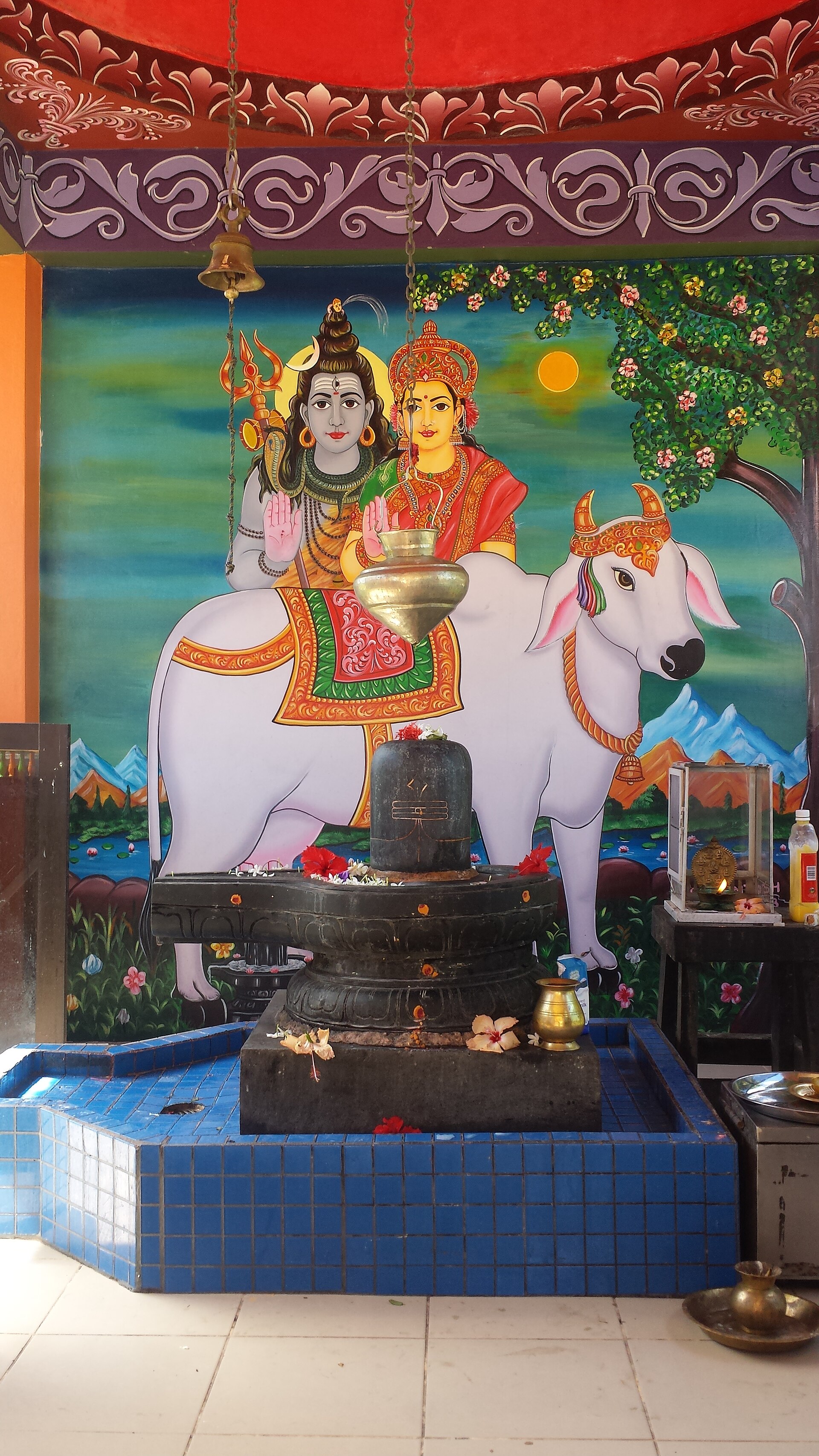
Religious life reproduced Indian divisions and created new ones. Most Indo-Fijians are Hindu, and the reformist Arya Samaj and the orthodox Sanatan Dharm organisations competed vigorously through schools and public debates from the early twentieth century. Roughly a fifth of the community is Muslim, with its own schools and the Fiji Muslim League, and there is a Christian minority, largely the result of Methodist and other missionary work among South Indian labourers. These institutions, and particularly the schools they built, are among the most durable legacies of the period.
Numbers, coups and departure
By the middle of the twentieth century Indo-Fijians outnumbered indigenous Fijians, and at the 1986 census they were around forty eight per cent of the population. Fiji became independent in 1970 with a constitution that carefully balanced communal electoral rolls. In April 1987 a coalition supported by most Indo-Fijian voters won office under Timoci Bavadra, an indigenous Fijian. Within a month Lieutenant Colonel Sitiveni Rabuka led a military coup, followed by a second later that year, and Fiji was declared a republic and expelled from the Commonwealth. A 1990 constitution entrenched indigenous political dominance. A revised constitution in 1997 restored a more open system, and in 1999 Mahendra Chaudhry became Fiji's first Indo-Fijian prime minister. In May 2000 he and members of his government were taken hostage in the parliament building in an armed takeover fronted by George Speight, and the government was removed. A further coup followed in 2006, this one directed against an indigenous led government.
The consequence was emigration on a large scale. Indo-Fijians left for Australia, New Zealand, Canada and the United States in successive waves after 1987 and again after 2000, taking with them a disproportionate share of the country's professionals. The Indo-Fijian share of Fiji's population has fallen from near half to somewhere around a third. Sydney's western suburbs and Auckland now contain substantial Fiji Indian communities with their own temples, mandirs, sports competitions and Fiji Hindi radio, and a second diaspora has formed out of the first.
Fiji's 2013 constitution abolished communal rolls, established a common electoral roll and made Fijian the national name for all citizens, with the term iTaukei used for indigenous Fijians. Whether that has resolved the underlying question of belonging, or simply changed its vocabulary while land tenure remains unaltered, is argued about in Fiji itself and is not something an outside observer can settle.
References
- Encyclopaedia BritannicaFiji
- National Archives of FijiIndenture records and Girmit history
- The University of the South PacificPacific studies and Fiji history collections
- BBCFiji country profile
- Australian National University PressPublications on Fiji and the Pacific
This is a reference article, written from the sources above. It is background, not news reporting.