
Franchising: A Growing Model for Indian Retail
Reference library · 959 words
.jpg)
India has long been described, accurately, as a nation of shopkeepers. The great majority of retail selling still happens through small independently owned outlets, the kirana stores that occupy a ground floor room in almost every neighbourhood and stock everything from lentils to mobile phone credit. Against that backdrop, franchising looks like an unlikely import. Yet over the past three decades it has become one of the main ways that branded retail, food service, education and healthcare have reached Indian consumers beyond the largest cities. The reason has less to do with fashion than with a specific problem franchising solves: how to expand into a country of enormous geographic and regulatory variety without owning every square metre of it.
A franchise is a contract, not a shop type. The franchisor owns a brand, a set of operating procedures and usually a supply arrangement, and licenses these to a franchisee who supplies the capital, the premises and the local management, paying an initial fee and a continuing royalty on sales. The franchisor gains distribution without the capital cost of building it. The franchisee gains a recognised brand and a tested system instead of the high failure rate of an independent start. In India both sides of that bargain are unusually attractive. Commercial property is expensive and its acquisition is entangled in state level land and tenancy rules that differ from one state to the next. Local knowledge is genuinely valuable, because pricing, taste and even the acceptable form of a menu vary sharply between Punjab, Tamil Nadu and Assam.
Why foreign brands arrived through partners
The regulatory history matters. After the liberalisation of 1991 India opened progressively to foreign investment, but retail remained one of the most politically sensitive sectors, because organised foreign retailers were widely feared as a threat to the livelihoods of millions of small traders. For years foreign companies wishing to sell to Indian consumers under their own brand faced restrictions on direct ownership of retail operations, and the practical route in was through a local partner: a franchise or a joint venture. That constraint shaped the market. It is why so many familiar global names entered India in partnership with Indian conglomerates rather than as wholly owned subsidiaries, and why several Indian groups built substantial businesses purely as operators of other people's brands.
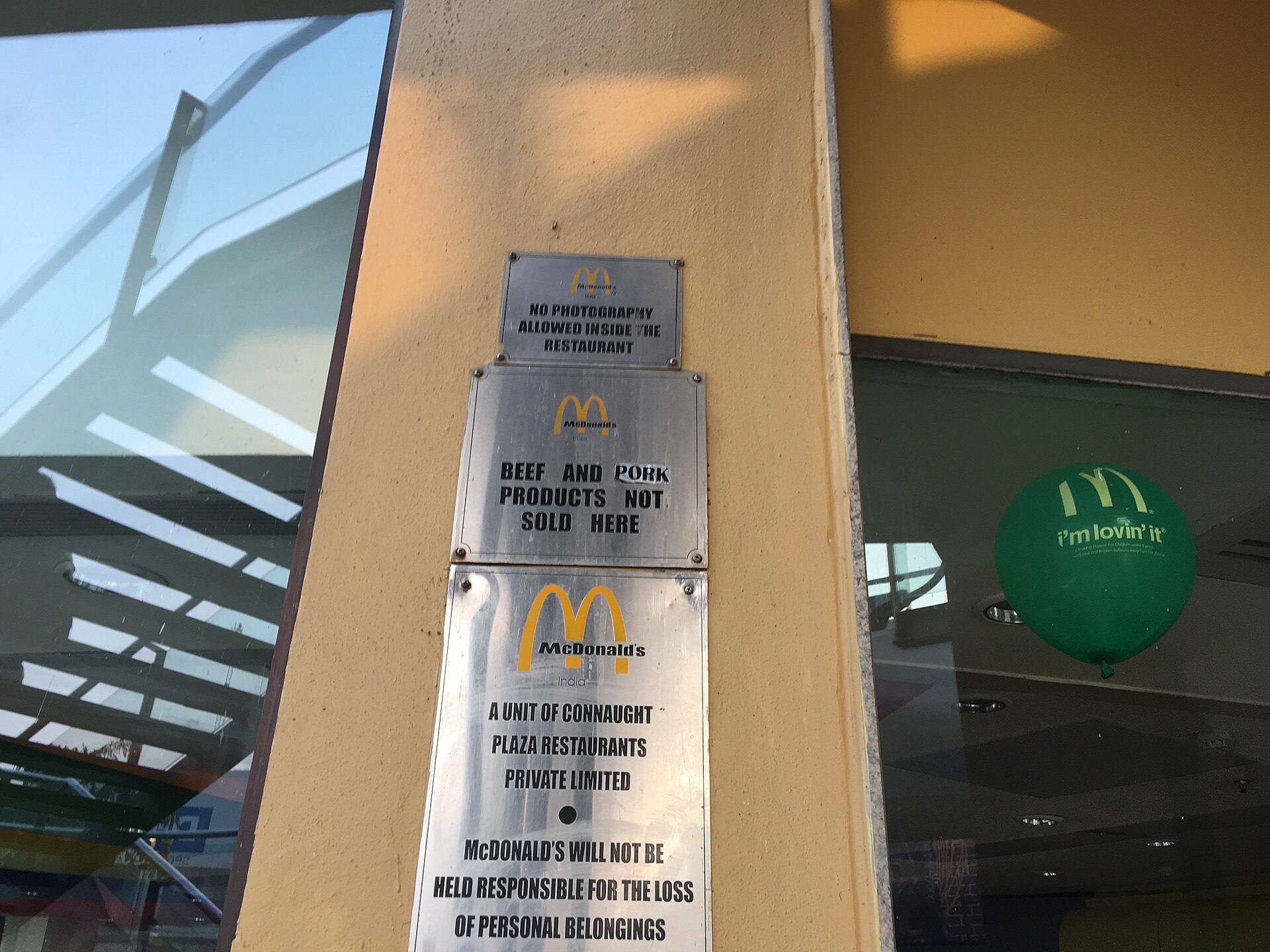
The clearest illustration is food service. McDonald's entered India in 1996 through joint ventures with Indian partners covering the north and west and the south and east respectively, and adapted the menu profoundly, removing beef and pork entirely and building a vegetarian range with separate preparation lines, a decision driven by religious observance rather than marketing whim. Domino's Pizza in India has been operated by Jubilant FoodWorks, an Indian company holding the master franchise, and grew to a store count larger than in most of the countries where the brand originated. Yum Brands, Subway and Starbucks all entered through partnerships, Starbucks through a joint venture with Tata that sources coffee from Indian estates in Karnataka and Kerala. These are not marginal adjustments. A master franchise arrangement transfers real operational authority to the Indian partner, who decides where to open, what to charge and often what to serve.
Beyond food: the sectors that grew fastest
Food service is the visible face of franchising, but it is not the largest field. Education has been transformed by franchised networks: preschool chains, coaching institutes preparing students for engineering and medical entrance examinations, spoken English academies and computer training centres operate through thousands of locally owned branches carrying a central brand and curriculum. Healthcare has followed, with diagnostic laboratory chains running collection centres on a franchise basis and pharmacy chains expanding the same way. Fitness studios, salon chains, courier and logistics agencies, and mobile phone retail all use the model. In each case the underlying logic repeats: the brand supplies standards and marketing, the local owner supplies capital, premises and the willingness to work long hours in a market the head office does not understand.
The model has real weaknesses and they should not be glossed over. Indian law has no dedicated franchising statute of the kind found in the United States or Australia, so the relationship rests on ordinary contract law together with trademark, competition and consumer protection legislation, and on the tax treatment of royalties. This leaves franchisees with less mandated disclosure before signing than they would receive in several other jurisdictions, and disputes over territory, supply pricing and renewal are common. Quality control across hundreds of independently owned outlets is genuinely hard, and a single poorly run branch damages a brand nationally. There is also a persistent asymmetry of information: an aspiring franchisee is often a first time business owner investing family savings against projections supplied by the party selling the franchise.
What franchising has changed, whatever its flaws, is the standardisation of everyday commerce in cities well outside the traditional metropolitan tier. A shopper in Indore, Coimbatore, Guwahati or Lucknow now encounters air conditioned outlets with printed prices, uniform staff, hygiene protocols and receipts, in categories that were previously served entirely by informal traders. Whether that is progress depends on where you stand. It has created hundreds of thousands of formal sector jobs and given small town entrepreneurs a route into organised business. It has also intensified competition for the kirana store, though the evidence so far is that these have proved remarkably resilient, partly because they extend informal credit and deliver to the door, two services that a franchised chain finds difficult to replicate at the same cost. The likeliest future is not the replacement of one by the other but a continuing coexistence, with the franchised outlet taking the branded, standardised and aspirational purchase and the neighbourhood shop keeping the daily one.
References
- Government of India, Department for Promotion of Industry and Internal TradeConsolidated FDI Policy
- Invest IndiaRetail Sector in India
- Reserve Bank of IndiaForeign Investment in India
- Encyclopaedia BritannicaFranchise (business)
This is a reference article, written from the sources above. It is background, not news reporting.