Gujarati: A Language of Trade and Travel
Reference library · 1028 words
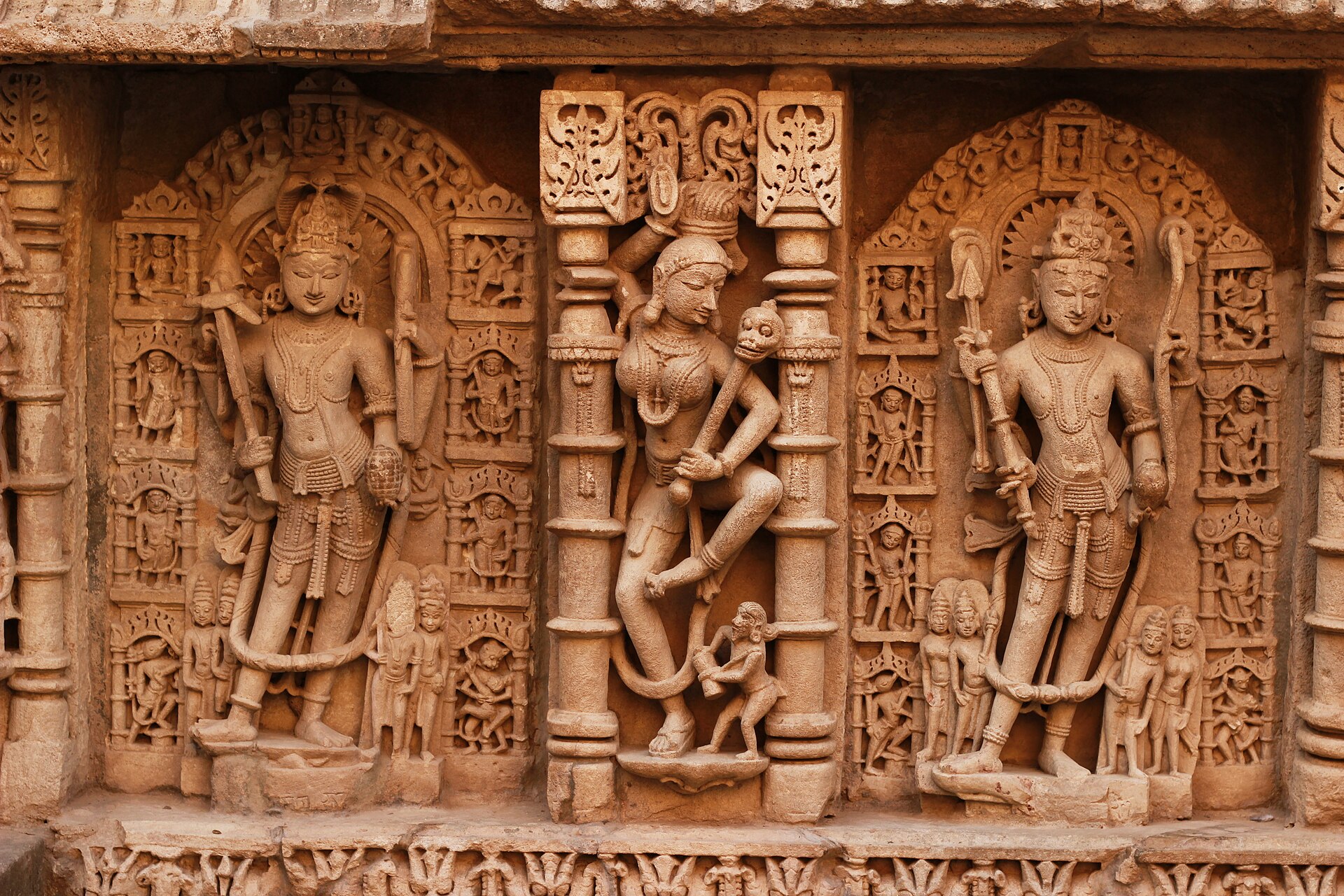

Gujarati is spoken by something over fifty five million people, according to the 2011 Census of India, principally in the state of Gujarat and in the union territories of Daman, Diu, Dadra and Nagar Haveli, with very large communities in Mumbai. It is an Indo-Aryan language descended from the Apabhramsha speech of the Gurjara region, and it separated into a recognisable form around the twelfth century, with the intermediate stage often labelled Old Gujarati or Old Western Rajasthani, a common ancestor it shares with Rajasthani.
Its script is the most immediately visible marker. Gujarati writing uses letters derived from Devanagari but drops the horizontal headstroke, the shirorekha, that runs across the top of Hindi and Marathi text. The reason is practical rather than aesthetic: the script developed in the hands of merchants and accountants writing quickly with a reed pen, and omitting the top bar is faster. It was long known as the bankers script or the accountants script before print standardised it in nineteenth century Bombay and Ahmedabad.
Merchants, oceans and diaspora
No Indian language is more thoroughly associated with commerce, and the association is not a stereotype but a matter of geography. Gujarat has a long, indented coastline with the Gulf of Khambhat and the Gulf of Kutch, and its ports faced directly across the Arabian Sea toward Aden, Hormuz, the Red Sea and the Swahili coast. Khambhat, known to Europeans as Cambay, was one of the great emporia of the medieval Indian Ocean, and Surat in the seventeenth century was the busiest port of the Mughal empire and the point from which pilgrims sailed to Mecca. Gujarati speaking merchant communities that carried this trade included Hindu bania castes, Jains, and several Muslim trading communities: the Bohras, the Khojas and the Memons. Gujarati was also the household language of the Parsis, the Zoroastrian community that settled in Gujarat after leaving Iran, and Parsi Gujarati developed into a recognisable variety of its own with its own theatre and press.
These networks placed Gujarati speakers in Muscat, Aden, Zanzibar, Mombasa and the ports of Mozambique long before European colonial migration schemes. Under British rule the movement intensified, especially into East Africa, where Gujarati traders and clerks became central to the commercial life of Kenya, Uganda and Tanganyika. In August 1972 Idi Amin ordered the expulsion of Uganda's Asian population, and tens of thousands, a large share of them Gujarati speaking, left within ninety days. Many resettled in Britain, which is why Leicester, Wembley and parts of north west London now support Gujarati newspapers, temples and grocery trades. A separate American story produced the well documented concentration of Gujarati families, disproportionately bearing the surname Patel, in the independent motel business. In Australia, Gujarati is among the faster growing Indian languages recorded in the census, sustained by recent skilled and student migration rather than by an older settlement.
A literature of devotion and reform
Gujarati literature begins in devotional poetry. Narsinh Mehta, a fifteenth century poet of Junagadh, is regarded as its founding figure, and his bhajan beginning Vaishnav jan to, which defines a good person as one who feels the pain of others, was Mahatma Gandhi's favourite hymn and is sung at official commemorations to this day. The devotional strand continued with Premanand in the seventeenth century and Dayaram in the early nineteenth.
The nineteenth century brought reform and self conscious modernisation. Narmadashankar Dave, known simply as Narmad, wrote essays and poetry and compiled the Narmakosh, an early Gujarati dictionary, arguing for prose that could carry argument rather than only devotion. Govardhanram Tripathi's long novel Saraswatichandra, published in four parts between 1887 and 1901, is usually treated as the major work of the period and as a study of a society caught between inherited duty and individual choice. In the twentieth century Umashankar Joshi and Pannalal Patel both received the Jnanpith Award, India's principal literary prize, for work in Gujarati. The Gujarati Sahitya Parishad, founded in 1905, remains the language's chief literary body.
Gandhi's own relationship with the language deserves emphasis, because it is often obscured by the fact that most people read him in English. He wrote Hind Swaraj in Gujarati in 1909 and translated it himself. His autobiography was serialised in Gujarati in his weekly Navjivan before appearing in English. In 1920 he founded the Gujarat Vidyapith in Ahmedabad as a national university outside the colonial education system, with instruction in the vernacular. For Gandhi, using Gujarati was a political argument about who education was for.
Dialects, grammar and present pressures
The language is not uniform. Kathiawadi is spoken in the Saurashtra peninsula, Charotari in the central districts, Surti in the south, and there are distinct varieties in the tribal belt along the eastern hills. Kutchi, spoken in the Kutch district, is usually written in the Gujarati script and often called a dialect of Gujarati, but linguistically it is closer to Sindhi, which is a good illustration of how script and politics can obscure descent.
Two grammatical features stand out for a reader coming from English. Gujarati has three genders, masculine, feminine and neuter, and adjectives and verbs agree with them. It also uses an ergative construction: in past tense sentences with a transitive verb, the subject takes a special marker and the verb agrees with the object rather than the subject. This is shared with Hindi and Punjabi but is thoroughly alien to English and is one of the harder things for learners to internalise.
Gujarat became a separate state on 1 May 1960, when the bilingual Bombay State was divided along linguistic lines into Gujarat and Maharashtra, and Gujarati is listed in the Eighth Schedule of the Constitution. Its present difficulty is not political recognition but urban schooling. Enrolment in Gujarati medium schools in Ahmedabad, Surat and Vadodara has been falling as middle class parents choose English medium instruction, a pattern common to most Indian regional languages. Whether this represents a genuine threat to the language or simply a change in the domains where it is used, with Gujarati remaining dominant in the home, in business and in a very active press, is argued about by educationists in the state and has no settled answer.
References
- Encyclopaedia BritannicaGujarati language
- Office of the Registrar General and Census Commissioner, IndiaCensus of India: Language
- Gujarat VidyapithAbout Gujarat Vidyapith
- Encyclopaedia BritannicaGujarat
- BBCUganda Asians expulsion, 1972
This is a reference article, written from the sources above. It is background, not news reporting.