
Hindi: A Language of the North and Beyond
Reference library · 988 words

Hindi is usually introduced with a number: it is among the most spoken languages on earth, ranking in the top handful alongside English, Mandarin and Spanish. The number is doing a great deal of concealed work. Depending on how the boundaries are drawn, Hindi is either a single enormous language, a standardised variety with a cluster of related dialects, or an administrative label wrapped around several distinct tongues whose speakers do not necessarily understand each other. Which definition one uses is not a technical matter. It has determined census results, state boundaries, school curricula and, at moments, whether people took to the streets.
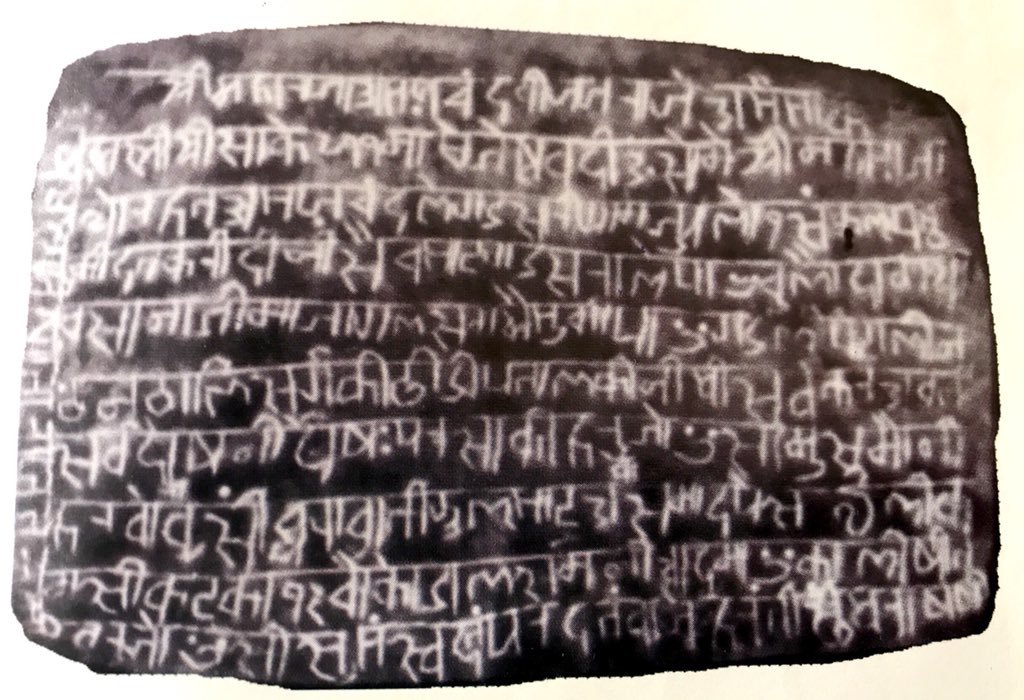
Linguistically, Hindi belongs to the Indo Aryan branch of the Indo European family, which makes it a distant relative of English, Greek and Persian and a close relative of Bengali, Punjabi, Gujarati and Marathi. Its ancestry runs from Old Indo Aryan, of which Vedic and Classical Sanskrit are the literary forms, through the Middle Indo Aryan Prakrits and the later Apabhramsha stages, to the New Indo Aryan vernaculars that took shape from roughly the tenth century onward. The specific ancestor of standard Hindi is Khari Boli, the speech of the region around Delhi and western Uttar Pradesh. It is written in the Devanagari script, an alphasyllabary in which each consonant sign carries an inherent vowel that is modified by marks, and in which the characters hang from a continuous horizontal line.
Hindi, Urdu, and Hindustani
The most consequential fact about Hindi is that at the level of everyday speech it is essentially the same language as Urdu. The grammar is shared, the core vocabulary of household, body, kinship and number is shared, and two speakers discussing the weather or the price of vegetables would not be able to say which language they were using. The languages diverge in script (Devanagari against a Perso Arabic script written right to left), in higher register vocabulary (Hindi draws on Sanskrit for technical and formal terms, Urdu on Persian and Arabic), and above all in the communities and institutions that adopted them.
That divergence was consolidated in the nineteenth century. A shared north Indian vernacular, often called Hindustani, had been the practical lingua franca of courts, armies and markets under the Mughals and their successors. Under British rule, campaigns for the recognition of Devanagari in the courts of the North Western Provinces, culminating in an order permitting its use in 1900, ran alongside a growing association of Urdu with Muslim cultural identity and Hindi with Hindu identity. Mohandas Gandhi and others promoted Hindustani precisely as a way of holding the two together; Partition in 1947 ended that project, with Hindi becoming central to independent India and Urdu the national language of Pakistan, even though Urdu remains an Indian language with millions of speakers and its own Eighth Schedule recognition.
What the census counts
The inflation problem is real and worth understanding. The Indian census permits respondents to name a mother tongue, then groups thousands of returned names into a smaller set of scheduled languages. A great many varieties are counted under Hindi that are, by ordinary criteria of mutual intelligibility, separate languages: Bhojpuri, spoken by tens of millions in eastern Uttar Pradesh and Bihar and carried by indentured migration to Mauritius, Fiji, Trinidad and Suriname; Awadhi, the language of Tulsidas great sixteenth century Ramcharitmanas; Braj Bhasha, the medium of Krishna devotional poetry and the dominant literary language of north India before Khari Boli displaced it; Magahi, Rajasthani, Chhattisgarhi, Haryanvi, Marwari and others. Maithili, once counted under Hindi, was recognised as a separate scheduled language by constitutional amendment in 2003, which demonstrates how political the boundary is.
The result is that the widely quoted speaker totals for Hindi are best treated as a range rather than a figure, and that headline comparisons with Mandarin or English are not comparing like with like. This matters beyond statistics: representation in the Eighth Schedule affects funding for literature, eligibility in public examinations, and the language of primary schooling for children whose home speech may differ substantially from the classroom standard.
Official language, not national language
The Constitution adopted in 1950 declares, in Article 343, that the official language of the Union shall be Hindi in the Devanagari script, with English to continue for official purposes for fifteen years. India has no national language; the distinction is frequently blurred in public argument but is legally clear. The fifteen year clock ran out on 26 January 1965, and the prospect of Hindi becoming the sole language of central administration produced serious unrest in Madras State, where anti Hindi agitation had precedents going back to protests against compulsory Hindi teaching in 1937. The 1965 protests involved student demonstrations, self immolations and deaths in police action, and they reshaped Tamil politics decisively, contributing to the DMK victory in 1967 and to the durable non Congress character of the state.
The resolution was the Official Languages Act of 1963, amended in 1967, which provides that English may continue indefinitely alongside Hindi for official Union purposes, and that a change would require the consent of states that have not adopted Hindi. India therefore operates a three language formula in schooling, in theory teaching a regional language, Hindi and English, though implementation varies and Tamil Nadu has largely declined to teach Hindi. Periodic central proposals to expand Hindi in administration or examinations reliably provoke objection from Tamil Nadu, Karnataka, Kerala, West Bengal and the north east.
Outside officialdom, Hindi has spread by other means: through Hindi cinema, which reaches audiences far beyond the Hindi belt and into the Gulf, Central Asia, Africa and the diaspora, through television serials, and through the internal migration of workers from Bihar and Uttar Pradesh to every Indian city. Abroad it survives in changed forms, most distinctively as Fiji Hindi, a koine descended from the Bhojpuri and Awadhi of the girmitiyas, and in Caribbean Hindustani. The language keeps escaping the definitions used to administer it.
References
- Office of the Registrar General and Census Commissioner, IndiaLanguage data, Census of India
- Ministry of Home Affairs, Government of IndiaDepartment of Official Language
- Encyclopaedia BritannicaHindi language
- SOAS University of LondonSouth Asian languages research
- National Council of Educational Research and TrainingNational Curriculum Framework and language policy
This is a reference article, written from the sources above. It is background, not news reporting.