
Hindustani and Carnatic Music: Two Classical Traditions
Reference library · 1045 words
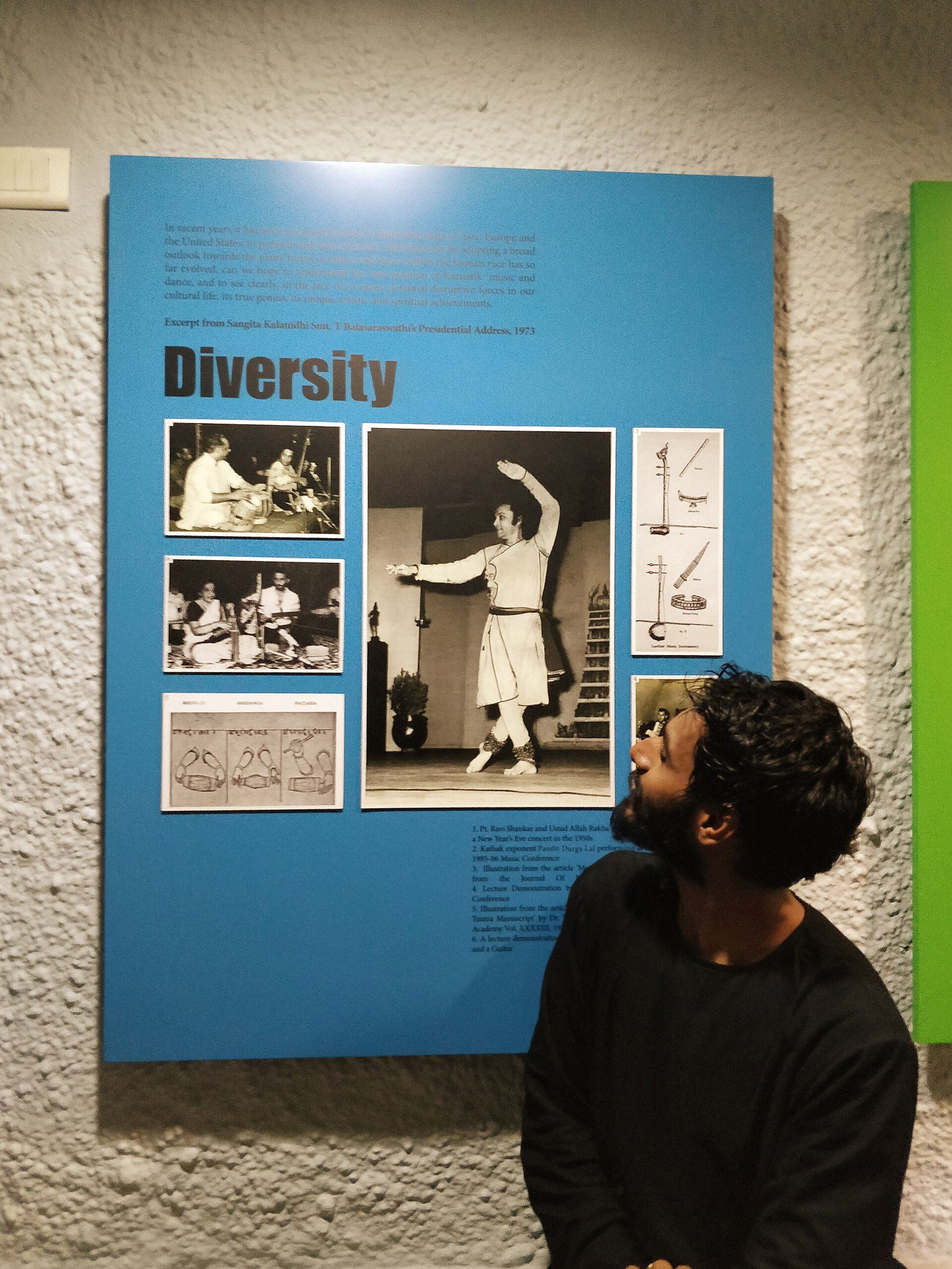

India has not one classical music but two, and the difference between them is not a matter of regional accent. Hindustani music, associated with the north and with Pakistan, Nepal and Bangladesh as well, and Carnatic music, associated with the four southern states of Tamil Nadu, Karnataka, Andhra Pradesh, Telangana and with Kerala, share a common theoretical ancestry and then diverge in almost every practical respect: in repertoire, in instruments, in the shape of a concert, in the balance between what is composed and what is invented on the spot. A listener who loves one can find the other faintly alien on first hearing. Understanding why requires going back several centuries.
Both traditions rest on the same two organising ideas. The first is raga, which is not a scale and not a tune but something in between: a set of permitted notes, characteristic phrases, rules about which notes may be approached from which direction, and a mood or hour of the day that convention attaches to it. Two ragas can use exactly the same notes and remain completely distinct because the phrases that define them differ. The second is tala, the cyclical rhythmic framework. A tala has a fixed number of beats grouped in a fixed pattern, and every phrase a musician plays is measured against the return of the first beat of the cycle, called the sam in the north. Both systems use the same seven syllables, sa, re or ri, ga, ma, pa, dha and ni, and both place the music over a continuous drone, usually from a tanpura, which fixes the tonic and makes every interval audible in relation to it.
Why the traditions parted
The shared inheritance is documented in Sanskrit treatises, most importantly the Sangita Ratnakara written by Sharngadeva in the thirteenth century at the Yadava court of Devagiri in the Deccan, a text that both traditions still cite. From roughly the same period the northern courts came under Persian and Central Asian cultural influence through the Delhi Sultanate and later the Mughal empire. Court patronage in Delhi, Agra, Lucknow, Gwalior and the princely states shaped a music that absorbed Persian aesthetics, borrowed instrument designs, and became strongly associated with hereditary professional musician families, many of them Muslim. The poet and courtier Amir Khusrau is credited by tradition with several innovations, although scholars treat most of those attributions as later legend rather than established fact.
In the south, the temple and the devotional song remained the centre of gravity. The theoretical system was reorganised in the seventeenth century by Venkatamakhin at Thanjavur into the melakarta scheme, a rigorously logical classification of seventy two parent scales from which all other ragas are derived. Nothing in the north matches its systematic completeness. Vishnu Narayan Bhatkhande's ten thaat classification, devised in the early twentieth century, was an attempt to give Hindustani music a comparable framework, and musicians still argue about how well it fits the actual repertoire.
How a concert differs
A Hindustani vocal or instrumental recital in the dominant khyal style typically begins with an unmetred alap, in which the artist explores the raga slowly and alone over the drone, with no percussion at all. This can last a long time. The tabla enters when a composition, usually short, is introduced, and the rest of the performance elaborates that composition at gradually increasing speed. The older dhrupad style, sustained across generations by families such as the Dagars, keeps a longer alap and uses the barrel drum called pakhawaj instead of tabla. Lighter classical forms including thumri, dadra and the Punjabi tappa allow more emotional directness and more freedom with the raga. Musicians identify with gharanas, lineages of style named after the towns where they took shape, among them Gwalior, Agra, Kirana, Jaipur Atrauli and Patiala.
A Carnatic concert is built differently. Its core unit is the kriti, a composed devotional song with three named sections, and a recital moves through a sequence of them, opening conventionally with a varnam that warms up voice and audience. Improvisation is threaded through the composed material rather than preceding it: raga alapana explores the raga, niraval improvises on a single line of text, and kalpanaswaram improvises in solfa syllables. The centrepiece of a serious concert is the ragam tanam pallavi, an extended free form structure. Near the end the percussionists take a solo exchange called the tani avartanam. The repertoire is dominated by the compositions of three men born within a few years of each other in the eighteenth century at or near Tiruvarur in Tamil Nadu, Tyagaraja, Muthuswami Dikshitar and Syama Sastri, known collectively as the trinity, who wrote mainly in Telugu and Sanskrit.
The instruments differ accordingly. Hindustani music is carried by the sitar, sarod, sarangi, bansuri and santoor, with tabla for rhythm. Carnatic music uses the Saraswati veena, the violin (adopted from Europe in the colonial period and completely naturalised, played seated with the scroll resting on the ankle), the bamboo flute, the double reed nadaswaram for temple and wedding occasions, and a percussion section of mridangam, ghatam, kanjira and the jaw harp called morsing.
Where the music lives now
Carnatic music has an unusually concentrated public season. Every December and January, Chennai hosts hundreds of concerts across dozens of member societies called sabhas, with the Music Academy the most watched of them, in what is often described as one of the largest annual gatherings of classical performance anywhere. Hindustani music has no single equivalent, but it has long standing festivals including the Harivallabh gathering at Jalandhar in Punjab, which claims a lineage stretching back to the mid nineteenth century, and the Sawai Gandharva Bhimsen Mahotsav in Pune.
Both traditions have travelled. Ravi Shankar's collaborations in the 1960s made the sitar internationally recognisable, and the vocalist M. S. Subbulakshmi sang at the United Nations General Assembly in 1966. Diaspora communities in Australia, North America, Britain, Singapore and the Gulf now sustain teaching networks, examination systems and full concert circuits of their own. The traditions are also argued over from within, particularly regarding caste and access in the Carnatic world, where critics point to the narrow social base of both performers and audiences, and defenders point to a widening pool of students. That argument is unresolved and worth stating plainly rather than smoothing over.
References
- Encyclopaedia BritannicaSouth Asian arts: music
- Encyclopaedia BritannicaRaga
- The Music Academy, MadrasThe Music Academy
- UNESCOIntangible Cultural Heritage Lists
This is a reference article, written from the sources above. It is background, not news reporting.