
How Many Languages Does India Really Speak
Reference library · 1028 words

There is no single correct answer to this question, and the reason is not that the data is poor. The reason is that the boundary between a language and a dialect is not a scientific fact but a decision, and in India that decision has consequences for money, schooling, official status and political recognition. Depending on where the line is drawn, India speaks twenty two languages, or one hundred and twenty one, or several hundred, or many thousand. Each of those figures is defensible and each comes from a real counting exercise.
The 2011 census asked every respondent to name a mother tongue and recorded close to twenty thousand distinct raw answers. Census linguists then rationalised these, treating obvious spelling variants and local names as the same thing, and arrived at roughly fourteen hundred mother tongues. These were then grouped into one hundred and twenty one languages, which is the figure most often quoted, but the group only includes languages with at least ten thousand speakers. Everything below that threshold, which is where most of the country's endangered speech communities sit, disappears from the headline number. The People's Linguistic Survey of India, a non governmental effort led by the scholar Ganesh Devy that sent researchers into the field between about 2010 and 2013, counted around seven hundred and eighty living languages and concluded that a substantial number had been lost within living memory.
Four families and a few outliers
The languages of India do not descend from a common ancestor. Four unrelated families divide most of the country. Indo-Aryan, a branch of Indo-European and therefore a distant relative of English, Greek and Persian, covers the north, west and east, and accounts for roughly three quarters of the population. It includes Hindi, Bengali, Marathi, Gujarati, Punjabi, Odia, Assamese, Sindhi, Kashmiri and Nepali. Dravidian occupies the south and includes Tamil, Telugu, Kannada, Malayalam and Tulu, with the outlier Brahui spoken far away in Balochistan, a fact that has fuelled long running speculation about earlier distributions. Austroasiatic, represented by Santali, Ho, Mundari and Khasi, is spoken by tribal communities in eastern and central India and is related to Khmer and Vietnamese. Tibeto-Burman languages, part of the Sino-Tibetan family, cover the Himalayan belt and the north east, where a single state such as Nagaland or Arunachal Pradesh may contain dozens of mutually unintelligible languages. The Andaman Islands hold remnants of language families related to nothing else known, and the last fluent speaker of Bo, one of the Great Andamanese languages, died in 2010.
The most contentious number in the census is Hindi. In 2011 more than five hundred million people were recorded as Hindi speakers, over forty per cent of the population, which makes Hindi look overwhelmingly dominant. But the census category Hindi is a container. It absorbs Bhojpuri, Magahi, Rajasthani, Chhattisgarhi, Haryanvi, Awadhi, Braj and dozens of others, several of which have their own literature and tens of millions of speakers and are not straightforwardly intelligible to a speaker of standardised Delhi Hindi. Bhojpuri alone was returned by around fifty million people. Whether these are dialects of Hindi or languages in their own right is exactly the political question described above, and campaigns to have several of them recognised separately have been running for decades.
Status, scripts and schooling
The Eighth Schedule of the Constitution lists the languages the Union is obliged to develop and draw on. It began with fourteen. Sindhi was added in 1967, Konkani, Manipuri and Nepali in 1992, and Bodo, Dogri, Maithili and Santali in 2003, bringing the total to twenty two. Inclusion brings representation on official language bodies, eligibility for use in national public service examinations and a claim on development funding, which is why more than thirty further languages have pending demands.
A separate designation, classical language status, carries research funding and prestige. Tamil was recognised first in 2004, followed by Sanskrit, then Kannada and Telugu, then Malayalam and Odia. In 2024 the government extended the status to Marathi, Pali, Prakrit, Assamese and Bengali. Each addition has been accompanied by arguments among philologists about whether the criteria were applied consistently or adjusted to fit.
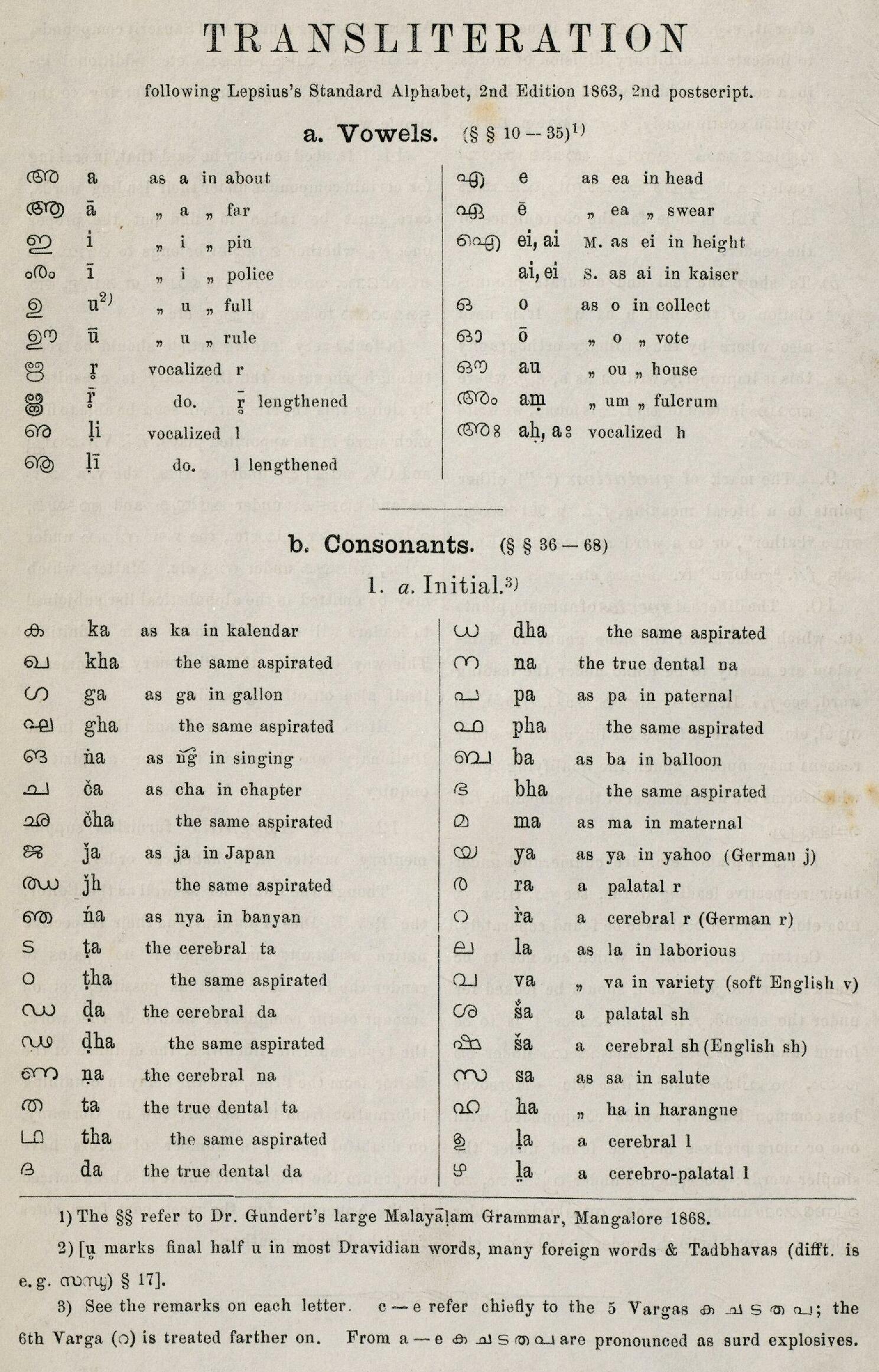
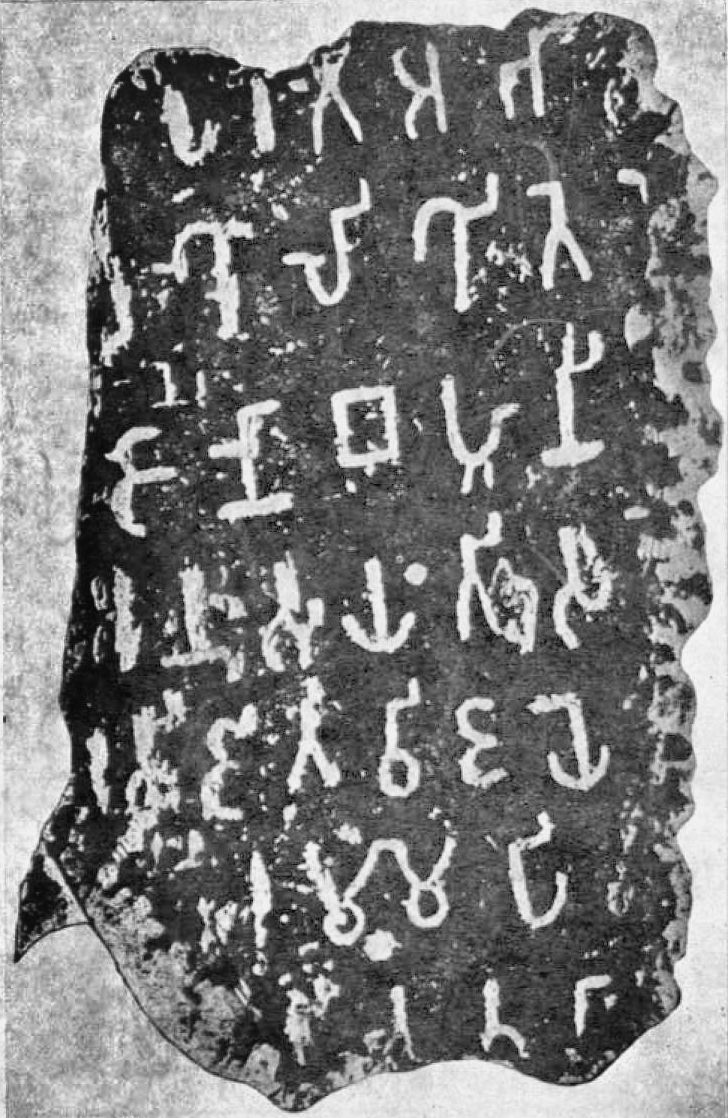
Scripts are a further layer. Most Indian writing systems descend from the ancient Brahmi script and therefore share a common logic, in which a consonant carries an inherent vowel that is modified by attached marks, but they look nothing alike: Devanagari, Bengali-Assamese, Gurmukhi, Gujarati, Odia, Tamil, Telugu, Kannada and Malayalam are all separate systems. Urdu, Kashmiri and Sindhi use Perso-Arabic scripts. Some communities have created scripts as acts of assertion, notably Ol Chiki, devised in the 1920s by Raghunath Murmu for Santali, which is now taught in schools in Jharkhand and West Bengal.
The politics of official language have shaped the republic. Article 343 made Hindi in the Devanagari script the official language of the Union, with English to continue for a transitional period of fifteen years. As that period expired in 1965, Tamil Nadu erupted in anti-Hindi agitations in which people died, and the Official Languages Act was amended in 1967 to guarantee that English would continue indefinitely alongside Hindi. The three language formula, promoted in national education policy since 1968 and restated in the National Education Policy of 2020, recommends that students learn a regional language, Hindi and English, or an equivalent combination. Tamil Nadu has never accepted it and teaches two languages, Tamil and English. The dispute recurs whenever a new education policy is drafted.
Underneath the official arithmetic, the everyday reality is that a very large share of Indians are functionally multilingual without thinking of it as an achievement. A worker in Mumbai may use Marathi in the street, Hindi at work, a home language with family and English in writing. What is genuinely at risk is not multilingualism but the smaller languages: those with a few thousand speakers, no script, no place in a classroom and no economic use. UNESCO's assessments have listed a large number of Indian languages as vulnerable or endangered, and the mechanism of loss is consistent everywhere: parents make a rational calculation that their children will do better in a bigger language, and one generation later the choice is no longer available.
References
- Office of the Registrar General and Census Commissioner, IndiaCensus of India
- Constitution of India project, CLPRConstitution of India: Eighth Schedule
- Ministry of Education, Government of IndiaNational Education Policy 2020
- UNESCOWorld Atlas of Languages
This is a reference article, written from the sources above. It is background, not news reporting.