
India's Insurance Sector Comes of Age
Reference library · 1072 words

Insurance in India has been through three distinct regimes in seventy years: a fragmented private market, four decades of state monopoly, and since 2000 a regulated open market that is now among the fastest growing anywhere. Each transition was driven by a specific failure of the arrangement before it, and the current phase is defined by a target that the regulator has stated openly, namely universal insurance cover by 2047, the centenary of independence. Whether that is achievable is a serious question, but the direction of travel is not in doubt.
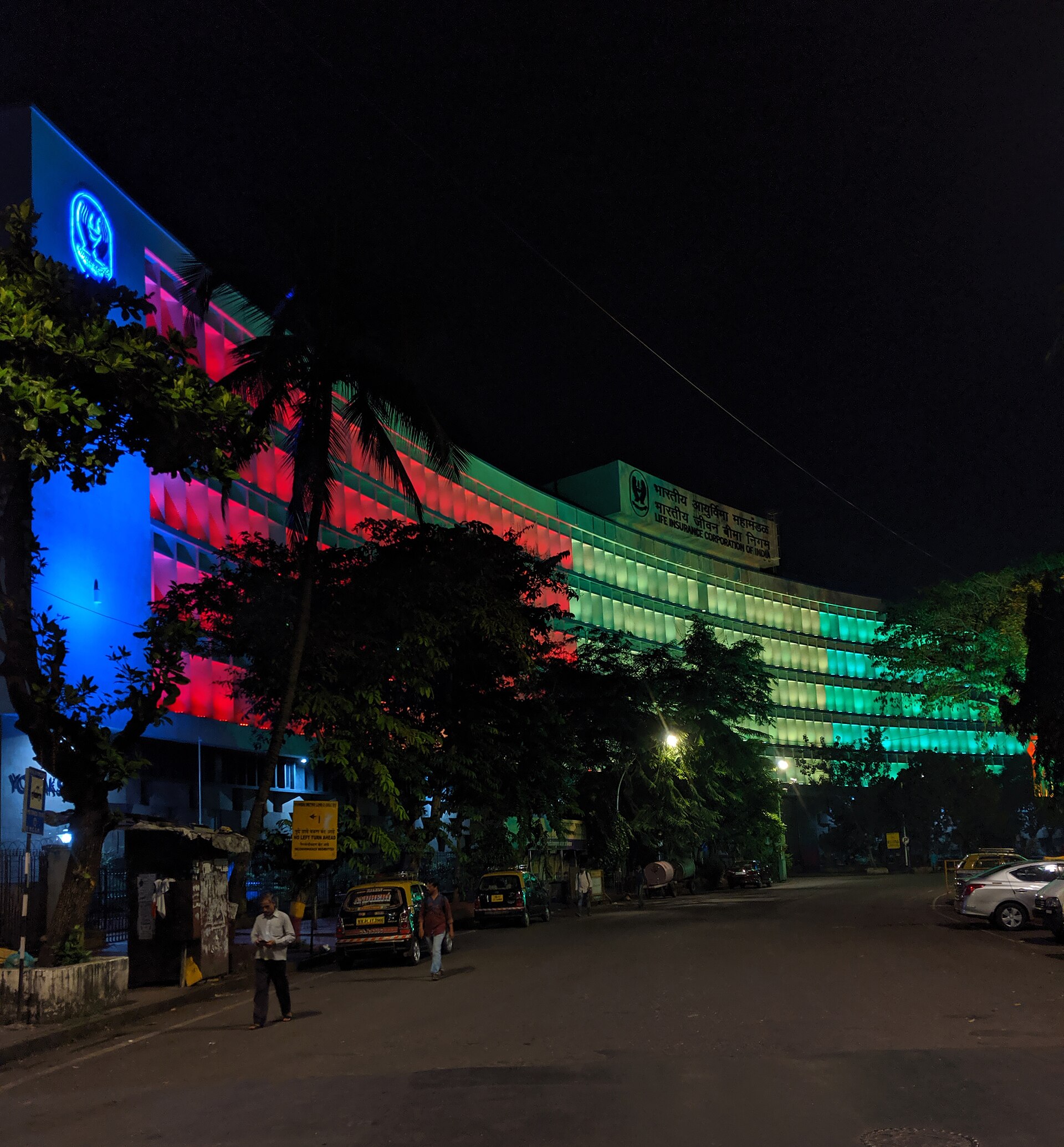
The private market that existed before nationalisation was large in number and weak in substance. By the mid 1950s hundreds of life insurers operated with wide variation in solvency, and failures had left policyholders without recourse. The government's response was the Life Insurance Corporation Act of 1956, which nationalised the industry and merged some two hundred and forty five insurers and provident societies into a single entity, the Life Insurance Corporation of India. General insurance followed sixteen years later under the General Insurance Business Nationalisation Act of 1972, which consolidated more than a hundred companies into the General Insurance Corporation and four subsidiaries, National Insurance, New India Assurance, Oriental Insurance and United India Insurance. The rationale was mobilisation of long term savings for national development and protection of policyholders from insolvent operators, and on the first count the state monopoly succeeded: LIC became one of the largest institutional investors in Indian markets, and remains so.
The costs of monopoly appeared over time as low product innovation, slow claims processing and, most importantly, a penetration rate that stayed far below what income levels would predict. The committee chaired by R. N. Malhotra, a former Reserve Bank Governor, reported in the mid 1990s recommending that the sector be opened to private and foreign participation under an independent regulator. That recommendation produced the Insurance Regulatory and Development Authority Act of 1999 and the establishment of the regulator, now the Insurance Regulatory and Development Authority of India, headquartered in Hyderabad. Private insurers began operating from 2000, almost all as joint ventures pairing an Indian financial or industrial group with a foreign insurer supplying technical capability.
Opening up, in stages
Foreign ownership has been liberalised gradually and contentiously. The initial cap on foreign direct investment in an Indian insurer was twenty six per cent. It was raised to forty nine per cent in 2015, with the requirement that the company remain Indian owned and controlled, and to seventy four per cent by the Insurance Amendment Act of 2021, while insurance intermediaries such as brokers and third party administrators were permitted full foreign ownership from 2019. Each step was argued on the same grounds: Indian insurers are capital constrained, growth requires capital, and foreign partners will supply it along with actuarial and underwriting expertise. Each was resisted on the grounds that insurance holds household savings and long term national assets and should not pass to foreign control. The compromise has generally been to raise the ceiling while retaining conditions on management control and on the repatriation of profits.
The other structural change has been the partial privatisation of the state incumbent. The Life Insurance Corporation was converted for listing and floated on Indian exchanges in May 2022, with the government selling a small minority stake in what was at the time the largest initial public offering in Indian market history. The share price performed poorly against its issue price for a considerable period afterwards, which fuelled debate about whether the valuation had been set to meet a fiscal disinvestment target rather than a market one.
Reach, products and the gap that remains
Measured as premium as a share of gross domestic product, insurance penetration in India sits at roughly four per cent, with life insurance accounting for the greater part and non life for around one per cent. Both figures are low by the standards of comparably sized economies, and the non life number in particular indicates very large uninsured exposure to health costs, property loss and natural catastrophe. Closing that gap is the substance of the regulator's 2047 ambition, and the tools are threefold: mandatory cover, subsidised cover and distribution reform.
Mandatory cover already exists in one large area. Third party motor insurance has been compulsory for every vehicle on Indian roads under the Motor Vehicles Act of 1988, and premiums for that class are set by the regulator rather than by insurers, which makes motor the largest single line in general insurance and a persistent source of underwriting losses. Subsidised cover has expanded dramatically since 2014. Two flagship micro insurance schemes launched in 2015 provide very low premium life and personal accident cover through bank accounts, distributed at scale through the financial inclusion drive that opened hundreds of millions of basic accounts. Crop insurance was restructured in 2016 into the Pradhan Mantri Fasal Bima Yojana, with premiums heavily subsidised and the farmer share capped at low percentages of the sum insured, though the scheme has faced continuing disputes with state governments over premium sharing and with farmers over claim settlement delays. In health, Ayushman Bharat, launched in 2018, provides hospitalisation cover for a very large number of poorer households, funded by government and delivered partly through insurers and partly through trust models run by states.
Distribution remains the weakest link and the largest source of consumer harm. Life insurance in India has historically been sold rather than bought, through agents and through bank branches under bancassurance arrangements, and commission driven selling has produced two well documented problems: mis selling of investment linked products to buyers who wanted savings or protection, and poor persistency, meaning that a substantial share of policies lapse within a few years, leaving the buyer worse off than if they had never purchased. The regulator has responded with commission caps, expenses of management limits, standardised product templates such as simple term and health covers with uniform features, and a push toward digital marketplaces intended to let buyers compare and purchase without an intermediary. Taxation is a live dispute: the goods and services tax applied to insurance premiums has been criticised as a levy on protection in a country with minimal cover, and relief for health and life premiums has been repeatedly debated. The underlying test is straightforward. An industry that grows by selling complicated products to people who do not understand them will hit premium targets and fail the 2047 objective entirely.
References
- Insurance Regulatory and Development Authority of IndiaAnnual Report
- Life Insurance Corporation of IndiaAbout LIC and corporate history
- Government of IndiaThe Insurance (Amendment) Act, 2021
- National Health AuthorityAyushman Bharat PM-JAY
This is a reference article, written from the sources above. It is background, not news reporting.