


India's IT Services Export Engine
Reference library · 1104 words

India earns more foreign exchange from writing and maintaining other countries software than from any other single export category of services, and the industry that does it employs several million people. It is the most visible success of the post 1991 Indian economy and, simultaneously, the subject of a long running argument about whether it represents genuine technological capability or a very large and very profitable labour arbitrage that is now running out of road. Both descriptions have evidence behind them.
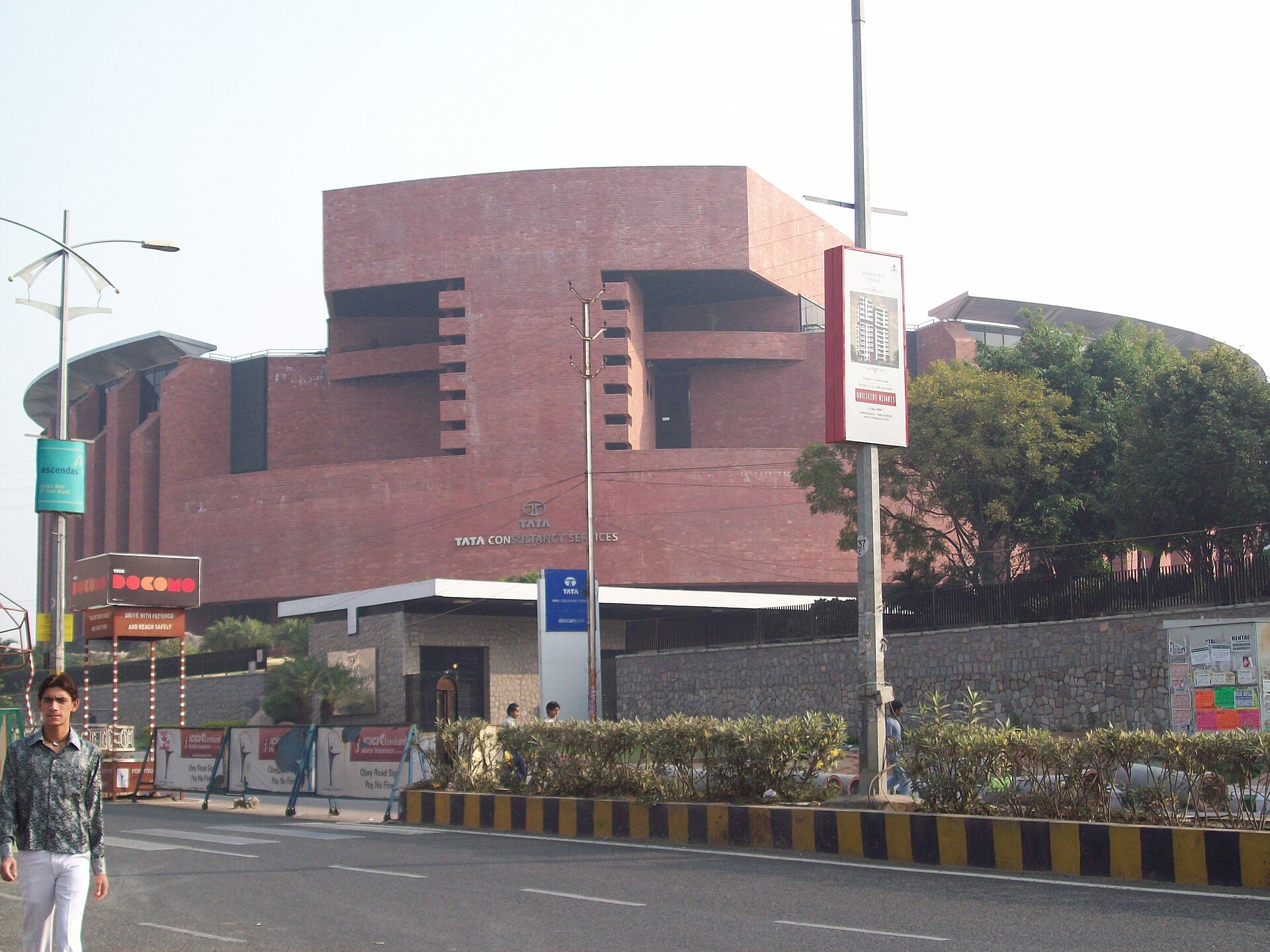
The origins are earlier than the boom suggests. Tata Consultancy Services was founded in 1968 as a division of Tata Sons, initially to handle data processing for group companies, and took on overseas work in the following decade at a time when importing a computer into India required navigating an import licensing regime of extraordinary obstruction. Under the Foreign Exchange Regulation Act, foreign companies were pressed to dilute their shareholdings, and IBM chose to leave India in 1978 rather than comply, which had the unintended effect of creating a domestic market for maintaining orphaned hardware. Wipro, a vegetable oil company, moved into computing in that gap. Infosys was founded in 1981 by seven engineers with very little capital, and spent its early years struggling with the same licensing system, reportedly waiting long periods for permission to import equipment or travel.
How the model was built
The first export model was what the industry itself called body shopping: Indian firms placed engineers on client sites abroad, principally in the United States, billing for their time at rates below local salaries but far above Indian ones. This produced revenue but little leverage, and left value concentrated where the client was. The decisive shift was the move to offshore delivery, in which the bulk of the work was done in India and only a small onsite team managed the client relationship. That shift required three things India did not have in 1985: reliable international bandwidth, credible quality assurance, and permission.
Policy supplied the third. The Software Technology Parks of India scheme, established in 1991 alongside broader liberalisation, gave exporters duty free import of equipment, single window clearances and dedicated satellite data links, and Section 10A of the Income Tax Act granted long tax holidays on export income. Telecommunications reform supplied the first: the state monopoly on international gateways held by VSNL was progressively dismantled around 2002, and the laying of undersea fibre optic cable across the Indian Ocean collapsed the cost of moving data. Quality assurance was supplied by the industry itself, through aggressive adoption of the Capability Maturity Model developed at Carnegie Mellon University; Indian firms accumulated a disproportionate share of the world assessments at the highest level, which functioned as a signal to nervous foreign buyers that work sent ten thousand kilometres away would come back to specification.
Then came a windfall. The Year 2000 problem required the inspection and remediation of vast quantities of legacy code written in COBOL and similar languages, work that was tedious, urgent, labour intensive and perfectly suited to an offshore model. Indian firms took a large share of it, and in doing so acquired direct relationships with the information technology departments of hundreds of major Western corporations. When the remediation ended, those relationships did not. Infosys listed on Nasdaq in 1999, the first Indian company to do so, and TCS held a large public offering in India in 2004.
Geography and the shape of the workforce
The industry clustered. Bengaluru, chosen partly because of the concentration of public sector defence, aerospace and electronics research establishments built there after independence and the engineering colleges that fed them, became the centre, with Electronics City and Whitefield as its best known campuses. Hyderabad developed HITEC City with strong state government backing in the 1990s. Chennai, Pune, Gurugram, Noida and Kolkata followed. The campus became the emblem: landscaped and air conditioned, with its own power and water supply, an island of working infrastructure in cities whose roads and drainage lagged badly.
Two features of the workforce deserve note. The first is the pyramid: profitability depended on hiring very large numbers of fresh engineering graduates cheaply, training them in house, and billing them against a much smaller layer of experienced staff. The second is gender. The sector employs a substantially higher proportion of women than most of Indian formal industry, and for a generation of women from middle class families it provided a socially acceptable route into paid professional work, though representation thins sharply at senior levels.
The export model also created a dependency that is now a chronic political risk. Onsite delivery in the United States runs largely on the H-1B specialty occupation visa, created by the Immigration Act of 1990, and Indian nationals receive the large majority of those visas each year. Every tightening of the rules, every increase in fees, every rise in the number of denials, and the extreme backlog in employment based permanent residence for Indian applicants caused by per country caps, feeds directly into the operating model of the largest Indian firms.
What comes next, and the argument about it
Two structural shifts are under way. The first is the growth of Global Capability Centres: rather than outsourcing to an Indian vendor, multinationals now build their own engineering and analytics centres in India, employing directly. India hosts well over a thousand such centres, and they compete for the same talent as the traditional service firms while doing work that is often further up the value chain. The second is automation, including cloud infrastructure that removes routine maintenance work and, more recently, generative artificial intelligence tools that write and review code. If a substantial fraction of the routine programming and testing that fills the base of the pyramid can be automated, the relationship between headcount and revenue that has defined the industry for thirty years breaks.
Critics have argued for decades that India built a services industry rather than a products industry: that it sells effort rather than intellectual property, spends little on research relative to revenue, and produced no global software product company comparable to those of the United States, Germany or Israel. Defenders point out that the industry created formal white collar employment on a scale nothing else in India managed, generated the foreign exchange that made India creditworthy, seeded a start up ecosystem through founders and capital, and produced the digital public infrastructure, including the Aadhaar identity system and the Unified Payments Interface, that runs at a scale no other country has attempted. Which of these framings looks correct in twenty years depends almost entirely on what the industry does as its original arbitrage narrows.
References
- Reserve Bank of IndiaBalance of payments and services exports data
- Ministry of Electronics and Information Technology, Government of IndiaSoftware Technology Parks of India
- NASSCOMIndian technology industry research
- United States Citizenship and Immigration ServicesH-1B specialty occupations
- Encyclopaedia BritannicaEconomy of India
This is a reference article, written from the sources above. It is background, not news reporting.