

India's Software Story: From Back Office to Boardroom
Reference library · 986 words

In the early 1980s, a visitor to Bangalore would have found a pleasant provincial capital known for public sector engineering works, a botanical garden and a mild climate that had once made it a retirement town. Four decades later the same city anchors an industry that employs millions of people, earns the greater part of India's services export income, and supplies software and back office processing to banks, airlines, insurers and retailers on every continent. The transformation is often told as a story of cheap labour meeting a global shortage of programmers. That is part of it, but the fuller account involves state policy, undersea cables, an accident of alphabet and time zone, and a slow climb from routine work toward genuine command.
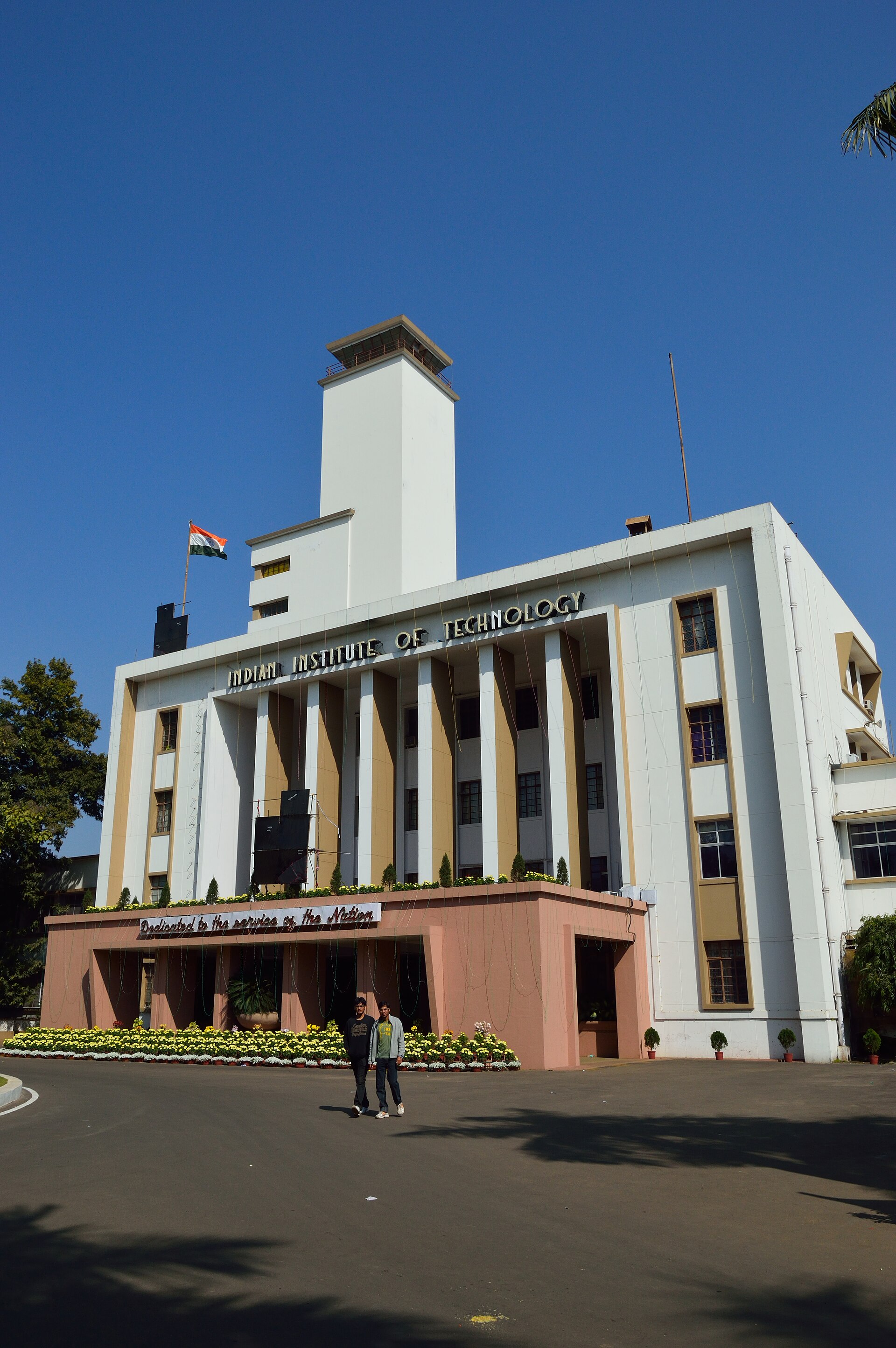
The industry's foundations were laid before anyone knew what they were building. From the 1950s onward India invested heavily in technical higher education, most visibly through the Indian Institutes of Technology, the first of which opened at Kharagpur in West Bengal in 1951, followed by campuses at Bombay, Madras, Kanpur and Delhi. Regional engineering colleges multiplied alongside them. The result by the 1980s was an annual output of English speaking engineering graduates far larger than the domestic economy could absorb, because Indian manufacturing was constrained by import licensing and capital controls. A surplus of trained technical people with no domestic outlet is an unusual economic condition, and it was the raw material of what followed.
Bodyshopping, then offshore delivery
The first commercial model was not glamorous. Indian firms sent engineers abroad on temporary visas to work on client sites, a practice known in the trade as bodyshopping. The revenue was billed per person per hour, the margins were thin, and the intellectual property stayed with the client. Tata Consultancy Services, founded in 1968 as a division of the Tata group, worked this way for years, as did Infosys after its founding in Pune in 1981 by a group of engineers who later moved the company to Bangalore. Wipro, originally a vegetable oil business, entered computing in the 1980s when the departure of IBM from India in 1978 left a gap in hardware and services.
Two changes turned bodyshopping into an industry. The first was policy. From 1991 India dismantled much of its import licensing regime, and software technology parks established from 1991 onward gave exporters duty free imports of equipment and, crucially, dedicated satellite data links at a time when the national telephone network was unreliable. The second was bandwidth. As international fibre capacity expanded through the 1990s, and dramatically after the laying of large capacity submarine cables around the turn of the century, it became possible to do the work in India and deliver it electronically rather than flying people to the client. This is the shift from bodyshopping to offshore delivery, and it changed the economics completely, because a firm could now serve many clients from one campus.
The Year 2000 date problem gave the industry its breakthrough moment. Legacy systems written in older languages had to be inspected and corrected line by line before the century rolled over, a task that was urgent, enormous, low in prestige and perfectly suited to a large disciplined workforce. Indian firms took a very large share of that work. The value was less in the fees than in the relationships: a bank that had trusted an Indian supplier with its core systems once was far easier to persuade the second time. Business process outsourcing followed, moving call centres, claims processing, payroll and accounting to Indian cities where the working day conveniently overlapped the European morning and the American night.
Moving up the value chain
Critics of the model, inside India as much as outside, have long argued that it locked the country into low margin service work while the design decisions and the profits stayed elsewhere. The complaint has force. For much of its history the Indian industry sold effort rather than products, and its billing model rewarded adding people rather than automating tasks. Whether that has changed is genuinely contested. On one side, global firms now run large research and development centres in India rather than mere delivery units, and Indian engineers lead significant product teams. On the other, the share of world software product revenue held by Indian owned products remains modest compared with the country's share of software services.
The boardroom part of the story is less ambiguous. Executives who trained in Indian engineering colleges and passed through this industry now run some of the largest technology companies in the world, among them Satya Nadella at Microsoft and Sundar Pichai at Alphabet, along with senior figures across finance, consulting and semiconductors. This is partly a numbers effect, since a very large cohort of technically trained migrants over several decades will produce leaders, and partly a selection effect, since those who left were often the most mobile and ambitious. It is also a product of the industry itself, which taught a generation to manage distributed teams and demanding foreign clients, skills that transfer directly to running a multinational.
The domestic consequences have been uneven. The industry concentrated in a handful of cities, Bangalore, Hyderabad, Pune, Chennai, Gurugram and Noida foremost among them, driving property prices and traffic far beyond what municipal infrastructure could carry, while contributing relatively little direct employment in the states that supply most of India's poor. It employs a workforce measured in millions in a country whose labour force is measured in hundreds of millions. Its future is now shaped by two pressures at once: automation, including generative artificial intelligence, which threatens exactly the routine coding and processing work that built the sector, and immigration politics in client countries, which periodically restricts the visa categories that Indian firms have relied on. The industry has reinvented itself before, from onsite bodies to offshore delivery to platform work. Whether it does so again is the open question of its fifth decade.
References
- Reserve Bank of IndiaReserve Bank of India Publications
- World BankIndia Country Overview
- Ministry of Electronics and Information Technology, Government of IndiaSoftware Technology Parks of India
- Encyclopaedia BritannicaBengaluru
This is a reference article, written from the sources above. It is background, not news reporting.