Kannada: Language of the Deccan Plateau
Reference library · 1065 words
.jpg)
Kannada is the language of Karnataka, a state that stretches from the Arabian Sea coast up onto the dry, rocky uplands of the Deccan plateau, and it is spoken as a first language by something in the region of forty five million people. Like Tamil, Telugu and Malayalam it belongs to the Dravidian family, and within that family it sits closest to Tamil and Tulu on one side and to Telugu on the other. It is one of the six languages first recognised by the Government of India as classical, receiving that designation in 2008, and the case for it rests on an unusually deep documentary record: Karnataka has yielded tens of thousands of inscriptions in Kannada, more early epigraphic material than almost any comparable region in the world.
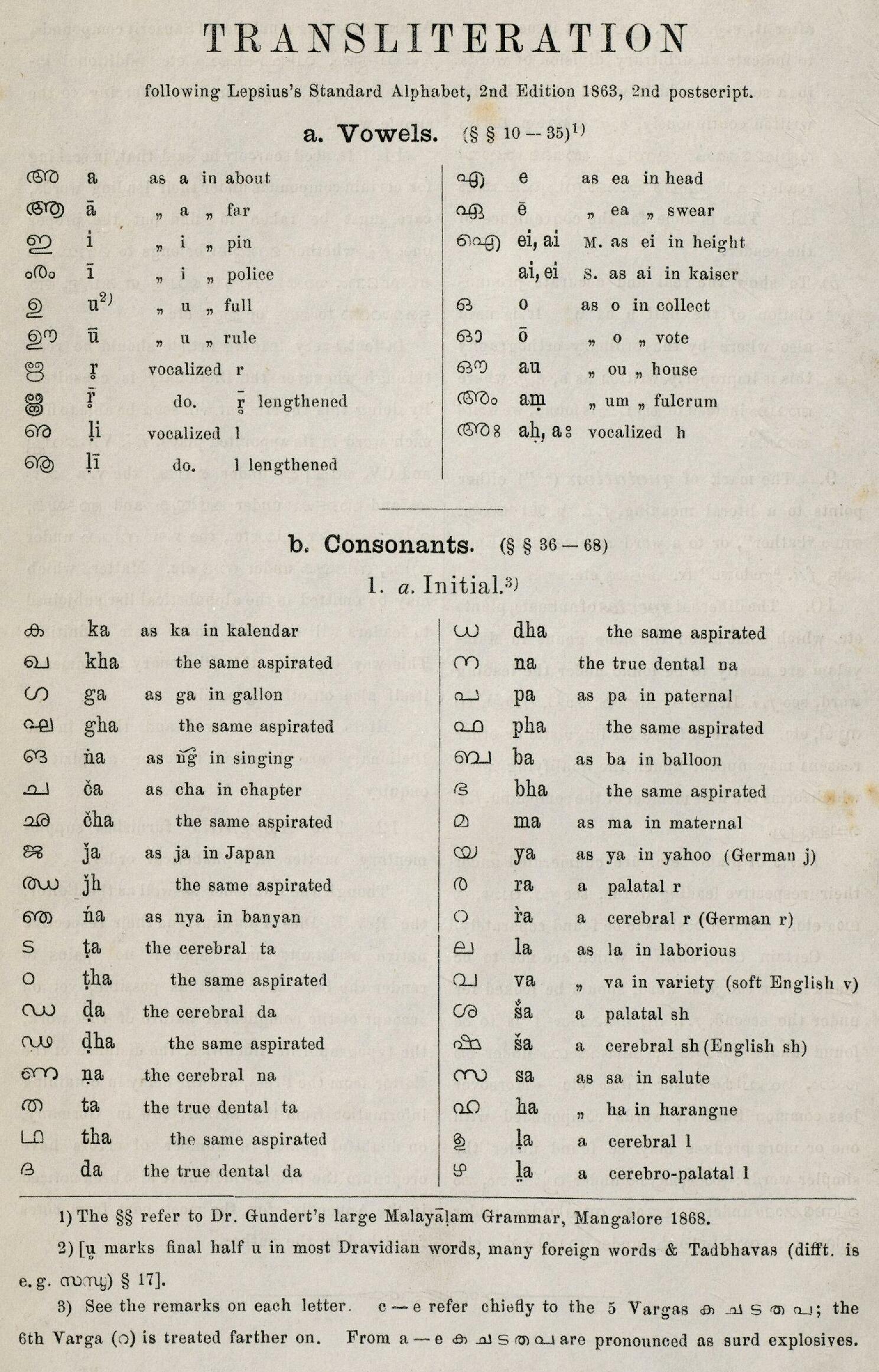
The earliest inscription written wholly in Kannada is generally taken to be the Halmidi inscription, a short stone record from a village in Hassan district conventionally dated to around the middle of the fifth century, which commemorates a grant to a warrior. Kannada words appear in Prakrit inscriptions earlier than that, and there are references to the language in older sources, so the date marks the first surviving continuous text rather than the beginning of the language. The script descends through the Kadamba and Old Kannada alphabets from Brahmi, and it shares its immediate ancestry with the Telugu script, which is why the two look so similar to an outsider: they were effectively a single script until a few centuries ago.
An old literature, repeatedly reinvented
The oldest surviving Kannada literary work is the Kavirajamarga, a treatise on poetics from about the middle of the ninth century, produced at the Rashtrakuta court and attributed either to the emperor Amoghavarsha the First or to a court poet writing under his name. It is important for more than literary reasons. It describes a Kannada country lying between the Kaveri and the Godavari rivers, and praises its people as skilled in poetry, which makes it one of the earliest self conscious statements of a regional linguistic identity anywhere in India. It also makes clear that a body of Kannada writing already existed that the treatise was codifying.
Under Rashtrakuta and Chalukya patronage, Jain poets produced the classical canon. Pampa, writing around the middle of the tenth century, composed both a version of the Mahabharata that recast its hero as his own royal patron and a life of the first Jain teacher; he is remembered with Ponna and Ranna as one of the three gems of early Kannada. The language then took a radically different turn in the twelfth century with the Vachana movement centred on Basavanna, a minister in the Kalachuri court at Kalyana. The Sharanas, as its participants were called, wrote short, sharp prose poems in ordinary spoken Kannada, rejected temple ritual and caste hierarchy, admitted women and people from the lowest castes as authors, and were eventually scattered by violent reaction. Their verses, including those of Akka Mahadevi and Allama Prabhu, are among the most widely quoted lines in the language and are the foundation of the Lingayat or Veerashaiva tradition, which remains a major social force in Karnataka.
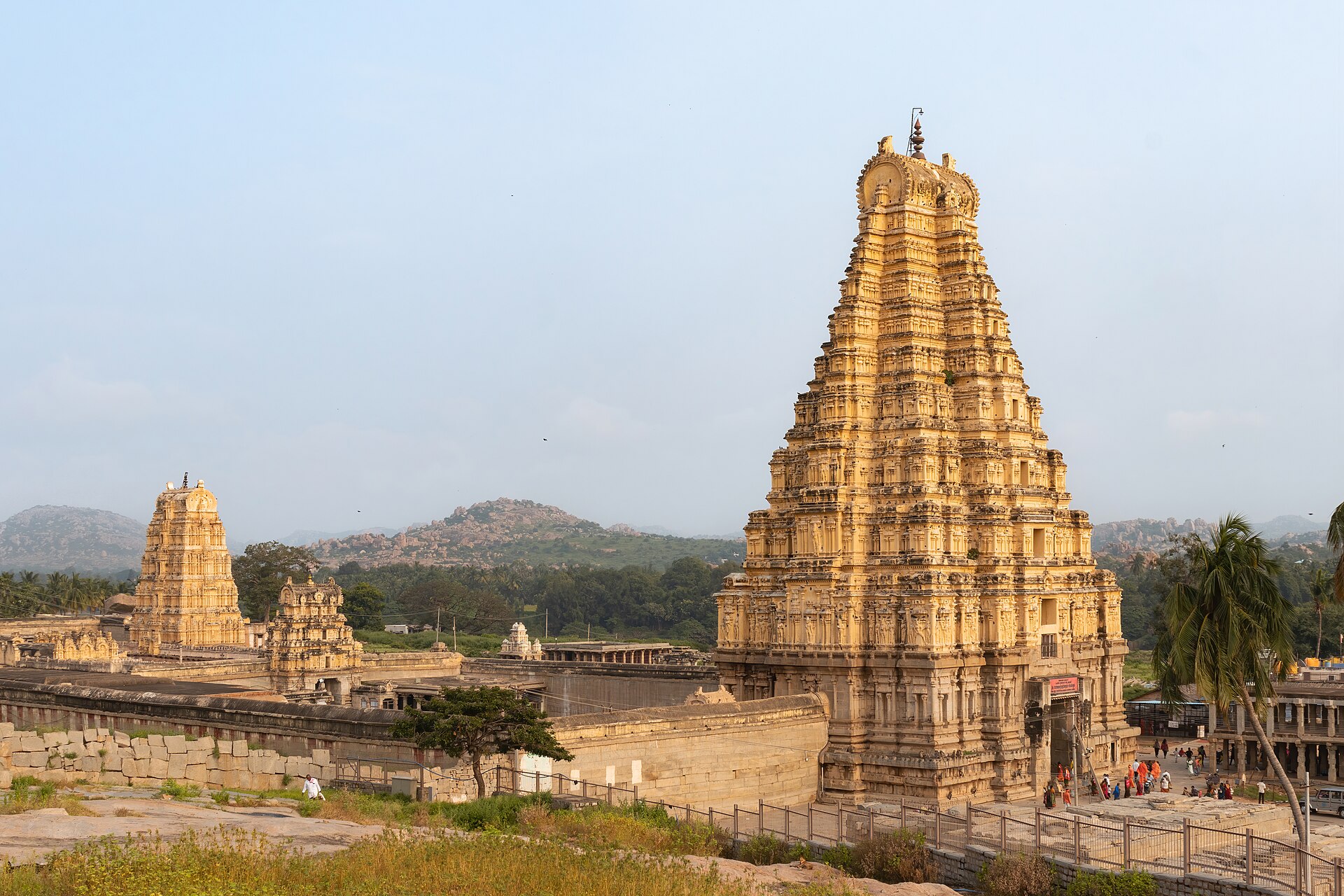
The Vijayanagara empire, ruling from Hampi on the Tungabhadra between the fourteenth and sixteenth centuries, patronised Kannada alongside Sanskrit and Telugu, and the devotional Haridasa movement that flourished under it produced sung compositions that shaped Carnatic music. Purandara Dasa, working in Kannada, is conventionally credited with systematising the basic exercises still used to teach that music, and is called its grandfather. Kanakadasa, from a herding community, wrote devotional verse that attacked caste pride directly.
Unification, boundaries and the modern state
By the nineteenth century Kannada speakers were divided among more administrations than any other major Indian linguistic group: the princely state of Mysore, the Bombay Presidency, the Madras Presidency, the Nizam's dominions of Hyderabad, and the small territory of Coorg. The movement to bring them together, the Ekikarana movement, began in the early twentieth century with literary associations and newspapers rather than political parties, and the Kannada Sahitya Parishat, founded in 1915, played a central role. Unification came with the States Reorganisation Act of 1956, which created a Mysore State covering most Kannada speaking territory. The state was renamed Karnataka on the first of November 1973, a date now celebrated as Rajyotsava.
One boundary was never settled. The city of Belgaum, now Belagavi, and the surrounding district have a large Marathi speaking population and were transferred to Mysore in 1956 over Maharashtra's objection. A commission headed by Mehr Chand Mahajan reported in 1967 and its recommendations satisfied neither side. Maharashtra took the dispute to the Supreme Court in 2004, where it remains unresolved, and the Karnataka legislature has since held sessions in Belagavi partly to assert the point. The dispute periodically produces street protests and bus burnings, and it is a live illustration of the fact that drawing state boundaries by language leaves ragged edges wherever populations actually mix.
Modern Kannada writing has been unusually decorated. Writers in the language have received the Jnanpith Award, India's principal literary prize, eight times, more than for any other Indian language, beginning with the poet Kuvempu in 1967 and including the poet D.R. Bendre, the novelist Shivaram Karanth, the short story writer Masti Venkatesha Iyengar, the critic V.K. Gokak, the novelist U.R. Ananthamurthy, the playwright Girish Karnad and the poet and dramatist Chandrashekhara Kambara. The Navya, or modernist, movement of the mid twentieth century and the Bandaya and Dalit writing that followed it made Kannada literature a serious vehicle for argument about caste and religion, sometimes at real personal cost to its authors.
The pressures now are demographic and economic. Bengaluru's growth as a technology centre has drawn very large numbers of migrants from other states, and in many parts of the city English and Hindi are more useful than Kannada for daily transactions. The state has responded with rules on the proportion of Kannada on commercial signage, with language requirements in schooling that have repeatedly been litigated, and with a politics in which the status of the language is a reliable mobilising issue. Kannada is spoken by tens of millions of people and has a documented history stretching back fifteen centuries, so its survival is not in question. Its position in the everyday commercial life of its own capital genuinely is, and that is the argument Karnataka is having.
References
- Encyclopaedia BritannicaKannada language
- Government of KarnatakaGovernment of Karnataka
- Archaeological Survey of IndiaArchaeological Survey of India
- Ministry of Culture, Government of IndiaClassical Languages of India
- UNESCOGroup of Monuments at Hampi
This is a reference article, written from the sources above. It is background, not news reporting.