
Language Policy Since Independence
Reference library · 1093 words

India has no national language. This surprises many people, including many Indians, but it is the plain constitutional position. What India has is an official language of the Union, Hindi in the Devanagari script, alongside English retained for official purposes, plus official languages chosen separately by each state, plus a list of scheduled languages given special recognition for development and for recruitment examinations. The arrangement is not tidy, and it is not tidy on purpose. It was assembled to hold together a country in which the 2011 census recorded more than 120 languages with substantial speaker populations, and several hundred mother tongues below that threshold.
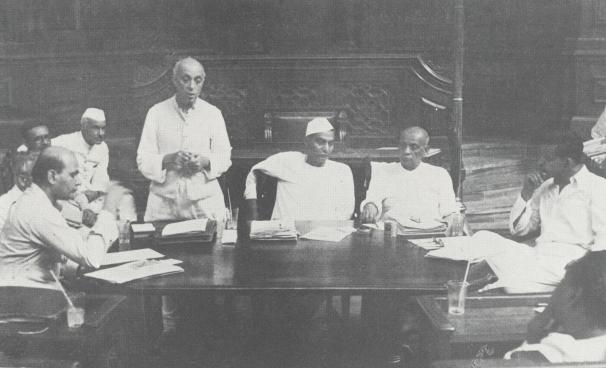
The compromise was struck in the Constituent Assembly in September 1949, after some of the most bitter debates of the entire drafting process. One camp wanted Hindi installed immediately as the national language, arguing that a free country needed an Indian language of state. Another, drawn largely from the south and the east, warned that this would hand permanent advantage to native Hindi speakers in the civil service and in national politics. The resolution, named after K. M. Munshi and N. Gopalaswami Ayyangar, avoided the phrase national language altogether. Article 343 made Hindi in Devanagari the official language of the Union while providing that English would continue for all official purposes for fifteen years from the commencement of the Constitution, that is until 1965. Article 344 provided for a commission and a parliamentary committee to review progress. Article 351 laid a directive on the Union to promote the spread of Hindi and to enrich it by drawing on Sanskrit and other Indian languages. Article 345 let each state adopt its own official language or languages, and Article 350A required states to provide primary education in the mother tongue for children of linguistic minority groups.
The 1965 crisis and the two clocks
The fifteen year deadline turned out to be the central fact of Indian language politics. As January 1965 approached, opinion in Tamil Nadu in particular hardened around the fear that English would lapse and that Hindi would become the sole language of central recruitment and administration. Protests spread across the state, escalating into weeks of violence and deaths, including self immolations. The Union government retreated. The Official Languages Act of 1963 had already envisaged that English "may" continue after 1965; the amendment passed in 1967 made the position far stronger, providing that English would continue as an associate official language, and that the relevant provisions could not be altered until every legislature of a state that had not adopted Hindi as its official language had resolved in favour of the change and both Houses of Parliament had agreed. In practice this gave the non Hindi states a veto, and English has continued at the Union level ever since.
The second instrument was educational. The three language formula, endorsed by the Union education ministry and then by the National Policy on Education of 1968, proposed that schoolchildren in Hindi speaking states learn Hindi, English and a modern Indian language preferably from the south, while children in non Hindi states learn their regional language, Hindi and English. The symmetry was never achieved. Hindi belt states largely substituted Sanskrit for a southern language, so the reciprocity that would have justified the formula did not materialise. Tamil Nadu rejected it outright and has taught a two language formula, Tamil and English, since the late 1960s. The National Education Policy of 2020 restated the three language formula while removing any requirement that a specific language be included, and the argument promptly resumed, with Tamil Nadu treating it as compulsion by another route and the Union government denying that any language is being imposed. This dispute is genuinely unresolved and recurs at intervals.
The Eighth Schedule, classical status and what recognition buys
The Eighth Schedule to the Constitution lists languages that the Union must draw upon in developing Hindi, and which carry practical benefits: candidates may sit central recruitment examinations in them, and they attract institutional funding and representation on official bodies. The list began with fourteen languages. Sindhi was added in 1967, in recognition of a language whose speakers had been dispersed by Partition and which had no home state in India. Konkani, Manipuri and Nepali were added in 1992, and Bodo, Dogri, Maithili and Santali in 2003, bringing the total to twenty two. Numerous other language communities, including speakers of Bhojpuri, Tulu, Rajasthani and Garo, have campaigned for inclusion for decades without success, and the Union has not adopted transparent criteria for admission. Recognition is a political decision made under political pressure.
A separate track exists in classical language status, which brings funding for research centres, scholarly awards and archival projects. Tamil was recognised in 2004 after a long campaign, Sanskrit in 2005, Kannada and Telugu in 2008, Malayalam in 2013 and Odia in 2014, with several further languages added in 2024. Linguists have often observed that the criteria, which turn on antiquity of texts and independence of literary tradition, are applied loosely and that the designation is more honorific and political than analytical.
Counting speakers is itself contested. The census asks for mother tongue, and returns are then grouped into languages by the Registrar General's office. Because dozens of distinct speech varieties across the northern plains, including Bhojpuri, Magahi, Awadhi, Chhattisgarhi, Rajasthani and Haryanvi, are counted within Hindi, the reported share of Hindi speakers is far larger than it would be under a narrower definition. In the 2011 return, Hindi so defined accounted for a little over two fifths of the population, while Bengali, Marathi, Telugu and Tamil each accounted for several per cent. Critics of the grouping argue it manufactures a majority; defenders argue that speakers themselves returned those mother tongues as Hindi. Both statements can be true.
Two further currents complicate the picture. One is the rise of English as an aspirational language of mobility rather than of colonial administration. Demand for English medium schooling has grown fastest among poorer households, and some Dalit intellectuals have argued explicitly that English is a ladder out of caste bound local hierarchies, a position that puts them at odds with regional language nationalists. The other is the pressure on small languages: many of India's languages have few speakers, no script, no place in schooling and no census visibility, and linguists working on the People's Linguistic Survey of India have argued that a substantial number have disappeared within living memory. Constitutional recognition, in other words, protects the languages that already have political weight. The rest depend on households continuing to speak them.
References
- Government of IndiaThe Constitution of India, Part XVII and Eighth Schedule
- Department of Official Language, Government of IndiaThe Official Languages Act, 1963
- Office of the Registrar General and Census Commissioner, IndiaCensus of India: Language Atlas and abstract of speakers' strength
- Ministry of Education, Government of IndiaNational Education Policy 2020
This is a reference article, written from the sources above. It is background, not news reporting.