



Manufacturing's New Momentum
Reference library · 1001 words

For most of the past three decades, India has been an unusual kind of economy: one that grew quickly by selling services rather than goods. Software exports, back office processing and, more recently, the global capability centres that multinationals run in Bengaluru, Hyderabad and Pune carried the country's growth story. Manufacturing, by contrast, stayed stubbornly close to a sixth of national output, a share that barely moved through boom and slump alike. That stagnation is the problem policymakers have been trying to solve since at least 2014, and the reason a cluster of programmes with names like Make in India, Gati Shakti and the Production Linked Incentive scheme now dominate industrial policy in New Delhi.
Why the factory floor stayed small
The explanations are old and well documented. India liberalised its economy in 1991 by dismantling industrial licensing, but it left in place a thicket of rules that made large factories awkward to run. Labour law was the most cited example: for decades, an establishment employing more than one hundred workers needed government permission to retrench any of them, which encouraged firms to stay just below the threshold or to lean on contract labour. Land was the second constraint. Acquiring a contiguous parcel large enough for an assembly plant meant negotiating with hundreds of small holders under state rules that varied wildly, and the compensation and consent requirements introduced in the 2013 land acquisition law raised costs further while offering landowners real protections that had previously been missing.
Logistics was the third. Moving a container from an inland factory to a port in India has historically cost more, and taken longer, than the equivalent journey in China or Vietnam, because road freight dominated, rail capacity was consumed by passenger services, and paperwork multiplied at every state border. Until the Goods and Services Tax took effect on 1 July 2017, trucks queued at checkposts to pay entry taxes, and companies located warehouses to minimise tax exposure rather than to shorten delivery times. The GST replaced a tangle of central and state levies with a single crediting chain, and whatever its administrative frustrations, it did make the country a genuine common market for goods for the first time.
The incentive turn
The current strategy leans heavily on money. Beginning in 2020, the government rolled out Production Linked Incentive schemes across roughly fourteen sectors, from mobile phones and pharmaceutical ingredients to automobiles, textiles, food processing, drones, advanced chemistry batteries and solar modules. The mechanism is deliberately simple: a firm commits to invest and to hit rising output targets, and if it does, the government pays it a percentage of the incremental sales made in India over a fixed number of years. Unlike older subsidy regimes, nothing is paid for merely building a plant. The payout follows verified production, which shifts the risk of a white elephant back onto the investor.
The most visible success has been electronics assembly. Apple's contract manufacturers built and expanded plants around Sriperumbudur near Chennai and Narasapura near Bengaluru, and Indian handset exports climbed from a rounding error to one of the country's larger export lines within a few years. Samsung's plant at Noida is among the biggest phone factories anywhere. The change is real, but its depth is contested. Much of the work is final assembly of imported components, so the value added inside India is a modest slice of each device's price, and imports of parts rose alongside exports of finished phones. Supporters argue this is exactly how electronics manufacturing began in South Korea and China, with assembly first and component ecosystems following. Sceptics reply that the deepening has to be demonstrated, not assumed.
Results elsewhere have been mixed enough that the government quietly narrowed the programme rather than extending it. Textiles and some other sectors disbursed far less than budgeted, partly because firms could not meet investment milestones and partly because the schemes were designed around large integrated players in industries dominated by small ones. Semiconductors are the most expensive bet of all. A fabrication plant at Dholera in Gujarat, backed by the Tata group with a Taiwanese technology partner, and an assembly and test facility at Sanand built by the American memory firm Micron, are both supported by very large public subsidies. Fabs take years to reach commercial yields, and India has attempted and abandoned chip fabrication before, so judgement should wait for output rather than announcements.
What still has to change
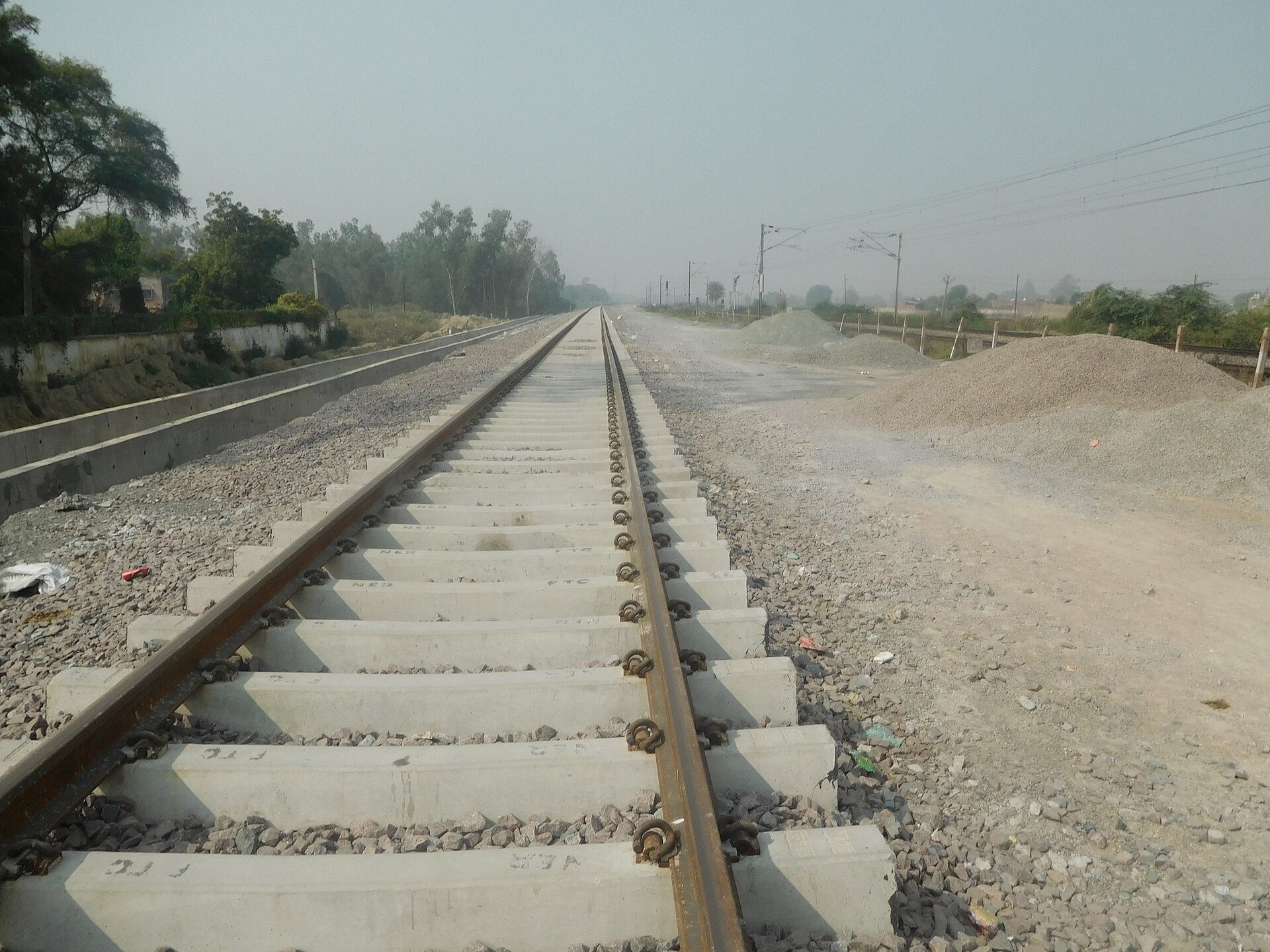
Infrastructure is the quiet part of the story and possibly the most consequential. The Dedicated Freight Corridors, separate rail lines built purely for goods between the western ports and the northern plains and between the eastern coalfields and Punjab, remove freight from tracks shared with passenger trains and cut transit times substantially. The PM Gati Shakti plan launched in 2021 is essentially a shared digital map that forces ministries and states to plan roads, rail, power and pipelines against the same geography, addressing the familiar problem of a new highway being dug up months later for a gas line. The National Logistics Policy of 2022 set the goal of pulling India's logistics costs down toward levels seen in competing economies.
Labour law reform remains unfinished. Parliament consolidated dozens of statutes into four labour codes in 2019 and 2020, raising the retrenchment threshold and simplifying compliance, but labour is a concurrent subject and implementation depends on states drafting rules, which happened slowly and unevenly. Skills are a further constraint: employers routinely report that graduates of the industrial training system need months of retraining. And the external environment cuts both ways. Global firms genuinely want manufacturing capacity outside China, but Vietnam, Mexico, Thailand and Indonesia are competing for the same investment, often with simpler approvals and lower tariffs on imported inputs. India's own tariff rates on components have risen in places, which protects domestic suppliers but raises costs for exporters. Whether the current momentum becomes a structural shift or another cycle of enthusiasm depends less on new schemes than on whether these unglamorous frictions keep falling.
References
- Government of India, Ministry of Commerce and IndustryMake in India
- Reserve Bank of IndiaHandbook of Statistics on the Indian Economy
- World BankIndia Country Overview
- Government of India, Ministry of Statistics and Programme ImplementationNational Accounts Statistics
- ReutersIndia business and economy coverage
This is a reference article, written from the sources above. It is background, not news reporting.