Marathi: Language of Western India
Reference library · 1016 words

Marathi is the principal language of Maharashtra, the state that contains Mumbai, Pune and Nagpur, and it is spoken by roughly eighty three million people according to the 2011 Census of India. That makes it the third most widely spoken language in the country after Hindi and Bengali. It belongs to the Indo-Aryan family, which means it descends from the same ancient stock as Hindi, Bengali and Punjabi, but it sits at the southern edge of that family and has borrowed heavily from its Dravidian neighbours, Kannada and Telugu, in vocabulary and in sentence habits. A reader who knows Hindi will recognise perhaps half of a Marathi sentence and be baffled by the rest.
The language grew out of Maharashtri Prakrit, a spoken register used across the western Deccan in the early centuries of the common era and preserved in drama and in Jain religious writing. One of the oldest surviving lines of recognisable Marathi is carved at Shravanabelagola in Karnataka, at the base of the colossal Gommateshwara statue, and is usually dated to around the end of the tenth century. The literary tradition proper begins in the thirteenth century with Dnyaneshwar, whose commentary on the Bhagavad Gita, the Dnyaneshwari, was composed around 1290. Writing philosophy in the vernacular rather than in Sanskrit was itself a political act: it put a closed body of learning into the hands of farmers and weavers.
Saints, kings and clerks
That democratising impulse became the Varkari movement, a devotional tradition centred on the temple of Vitthal at Pandharpur on the banks of the Bhima river. Its poets, among them Namdev, Eknath and above all Tukaram in the seventeenth century, wrote short verses called abhangas in ordinary speech. Their songs are still sung by the hundreds of thousands of pilgrims who walk to Pandharpur each year in the Ashadhi wari. Marathi therefore carries a strong memory of religious writing that was deliberately plain, sceptical of priestly authority and open to people of low caste standing.
The second great shaping force was the state. Shivaji, who founded the Maratha polity in the seventeenth century, ruled through an administration that had inherited a thick layer of Persian vocabulary from the Deccan sultanates. In 1676 he commissioned the Rajvyavaharakosha, a lexicon that supplied Sanskrit-derived replacements for Persian administrative terms. It is an early and very self conscious example of language planning. Under the Peshwas, who governed from Pune in the eighteenth century, Marathi records were kept in a cursive script called Modi, designed for speed with a quill and unreadable to most people today without training. The upright Devanagari script used for print and schooling, known as Balbodh, gradually displaced Modi during the nineteenth century, and the Government of Maharashtra formally set Modi aside for official use after independence.
Print changed the language again. Darpan, generally regarded as the first Marathi newspaper, was started in 1832 by Balshastri Jambhekar in Bombay. Reform, orthodoxy and nationalism all fought their battles in Marathi prose across the rest of the century. Bal Gangadhar Tilak founded Kesari in 1881 and used it to build a mass political constituency, and it was Tilak who converted the household worship of Ganesh into the public street festival that now fills Mumbai and Pune every autumn. Marathi thus acquired an unusually direct link between the printed page and crowd politics.
A state built on a language
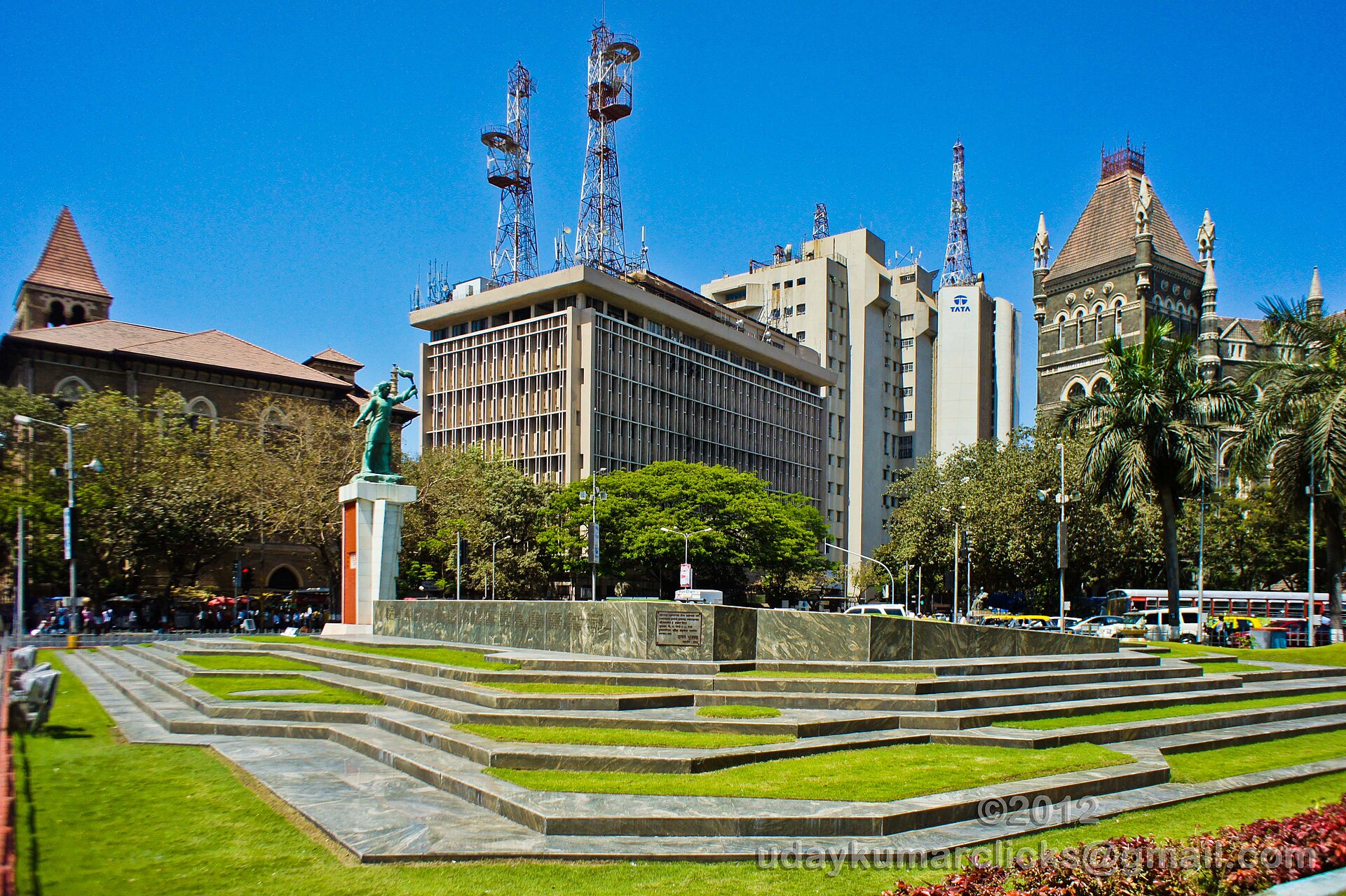
When the Indian republic redrew its internal boundaries, Marathi speakers found themselves inside a bilingual Bombay State shared with Gujarati speakers. The Samyukta Maharashtra movement demanded a separate Marathi speaking state with Bombay as its capital, and the agitation of the late 1950s turned violent. Police firing in Mumbai killed a number of demonstrators, commemorated today at Hutatma Chowk, the Martyrs Square near Flora Fountain. On 1 May 1960 Bombay State was divided, and Maharashtra and Gujarat came into being on the same day. Language, in other words, is not an ornament in this part of India. It is the constitutional basis of the state itself.
Marathi is one of the languages listed in the Eighth Schedule of the Constitution, which guarantees it a place in official business and in the recruitment examinations of the Union. In October 2024 the Union Cabinet added Marathi to the small group of languages officially designated as classical, a status that brings central funding for scholarship and archives. The language is not uniform. Varhadi is spoken in the Vidarbha region around Nagpur and Amravati, Ahirani or Khandeshi in the north west, and the coastal Konkan has its own varieties. Konkani, once treated by some scholars as a dialect of Marathi, is now recognised as a separate language in the Eighth Schedule, an outcome that was argued over for decades and still stirs feeling in Goa.
Two grammatical features are worth knowing because they mark Marathi off from its northern relatives. It retains three genders, including a neuter that Hindi has lost, and it distinguishes an inclusive from an exclusive first person plural: aapan includes the person being addressed, aamhi excludes them. Speakers use the difference constantly and often cannot explain it, which is a good sign that it is deeply embedded rather than borrowed.
Culturally the language sustains a theatre tradition older than Indian cinema, including the sung form known as sangeet natak, and an annual literary gathering, the Akhil Bharatiya Marathi Sahitya Sammelan, whose presidential elections are followed like political contests. Marathi cinema has had a second life since the 2004 film Shwaas was chosen as India's submission to the Academy Awards, and the 2016 rural love story Sairat became one of the highest earning Marathi films ever made. Outside India, Marathi is held together by Maharashtra Mandal associations in Australia, North America, the Gulf and Britain, which run Ganeshotsav, language classes for children and the annual Gudi Padwa new year. Whether those classes can hold the second generation is genuinely uncertain: as in Mumbai itself, English and Hindi press hard on Marathi in daily urban use, and the question of how much ground the language is losing in its own cities is disputed among educationists rather than settled.
References
- Encyclopaedia BritannicaMarathi language
- Office of the Registrar General and Census Commissioner, IndiaCensus of India: Language
- Government of India, Ministry of Home AffairsThe Eighth Schedule to the Constitution
- Encyclopaedia BritannicaMaharashtra
- Government of MaharashtraDirectorate of Languages, Maharashtra
This is a reference article, written from the sources above. It is background, not news reporting.