Mauritius: An Island Built by Migration
Reference library · 1098 words
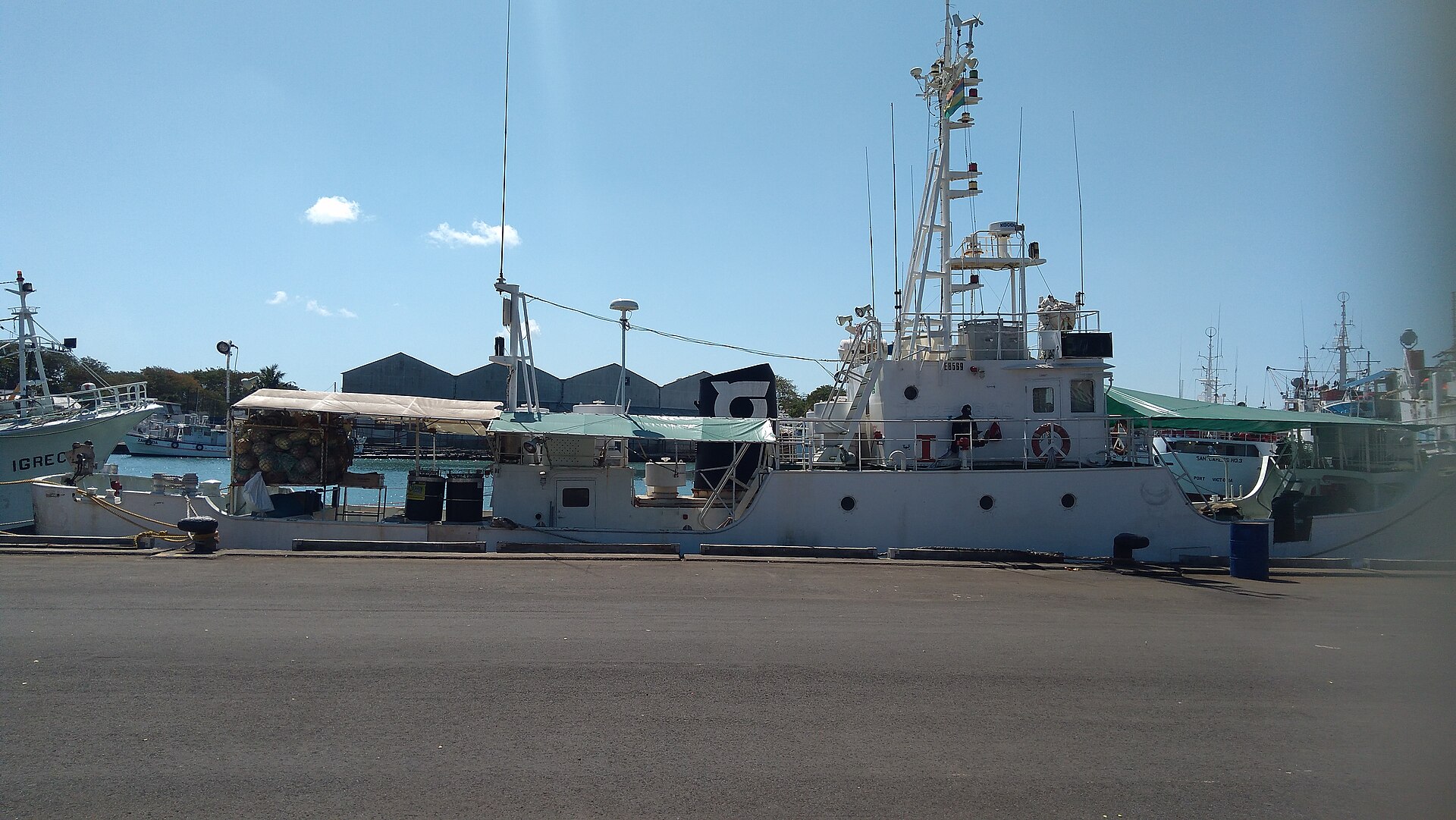

Mauritius is one of the few inhabited places on earth with no indigenous population. When Dutch sailors landed in 1598 and named the island after Prince Maurice of Nassau, nobody was there. Everyone who lives on the island today descends from someone who arrived by ship, and in most cases arrived under compulsion or under contract. That fact explains almost everything about the country: its languages, religions, politics, constitutional arrangements and its unusually strong ties to India, some two thousand nautical miles to the north east.
The Dutch stayed intermittently until 1710, cut down the ebony forests, introduced sugar cane and rats, and left behind the extinction of the dodo, a flightless bird that had evolved without predators and did not survive their arrival. The French took possession in 1715, renamed the island Isle de France, and built it into a functioning colony: Port Louis was founded in the 1730s under the governorship of Mahe de La Bourdonnais, and a plantation economy was established using enslaved people brought mainly from Madagascar, Mozambique and the East African coast. Britain captured the island in 1810 during the Napoleonic Wars and kept it under the 1814 Treaty of Paris, retaining French civil law and the French speaking planter class while installing British administration, which is why the island still runs on a French based creole with English as the language of law and parliament.
The Great Experiment
Slavery was abolished across the British empire in 1834, with compensation paid to owners and none to the enslaved. The planters of Mauritius, facing the loss of a coerced workforce on which sugar depended, turned to indentured labour from India, and Mauritius became the first large scale test of the system. On 2 November 1834 a ship named the Atlas landed at Port Louis carrying indentured workers from India, a date now commemorated annually. British officials described the scheme as the Great Experiment, intended to demonstrate that free labour could produce sugar as cheaply as slave labour.
Over roughly the following eighty five years, in the region of four hundred and fifty thousand indentured workers arrived, most through the immigration depot on the Port Louis waterfront now known as Aapravasi Ghat, which UNESCO inscribed as a World Heritage Site in 2006 because it is the physical origin point of a global system. Recruitment drew heavily on Bihar and eastern Uttar Pradesh, shipping workers through Calcutta, and smaller numbers through Madras and Bombay. A contract typically bound the worker for five years at a fixed wage, with rations and a return passage promised, which many never took. The same system, tested here, was then extended to British Guiana, Trinidad, Fiji, Natal, Suriname and Reunion, which is why Mauritius matters far beyond its own size.
Conditions were contested at the time and remain so among historians. The system was not slavery: it involved a contract, a wage and a nominal freedom to refuse. It also involved recruiters who misrepresented the destination and the work, indebtedness, penal sanctions for breach of contract that turned labour disputes into criminal matters, mortality on the voyage, and a pass system restricting movement on the island. A royal commission of inquiry in the early 1870s documented serious abuses in the Mauritian system. Where a reader lands between the descriptions coerced and voluntary depends on which features are weighted, and it is more honest to set out the mechanisms than to pick a single word.
What the migration produced
Modern Mauritius has a population of roughly 1.3 million on a small volcanic island. People of Indian descent make up around two thirds of it, with Creoles, descended largely from enslaved Africans and Malagasy, forming the next largest group, alongside smaller Sino-Mauritian and Franco-Mauritian communities. Hindus are the largest religious group, followed by Christians and Muslims. Indian regional origins remain socially legible: Bhojpuri speaking north Indian descendants, Tamil, Telugu and Marathi communities with their own associations and temples, and Muslim communities largely of north Indian and Gujarati origin.
Language shows the layering clearly. Mauritian Creole, built on a French lexical base and shaped in the plantation, is the everyday language of nearly everyone regardless of ancestry. French dominates broadcasting and the press. English is the official language of parliament and the courts. Bhojpuri, once the working language of the Indian labour lines and still the marker of rural Indo-Mauritian identity, has declined sharply across generations, and its songs and oral traditions have been the subject of heritage recognition efforts precisely because everyday transmission is weakening. Hindi, Tamil, Telugu, Marathi, Urdu and Mandarin are taught in schools as ancestral languages, a policy that maintains cultural affiliation more than it produces fluent speakers.
The most visible expression of the Indian inheritance is the annual Maha Shivaratri pilgrimage to Grand Bassin, a crater lake in the highlands renamed Ganga Talao, to which very large numbers of devotees walk carrying decorated wooden structures. It is among the largest Hindu gatherings anywhere outside the Indian subcontinent.
Independence and its arrangements
Mauritius became independent on 12 March 1968 under Seewoosagur Ramgoolam, a doctor of Bihari descent, and became a republic within the Commonwealth in 1992. The transition was peaceful but not consensual: independence was opposed by many in the Creole and Franco-Mauritian communities who feared domination by the Indo-Mauritian majority, and communal violence preceded the handover. The constitution addressed the fear with an unusual mechanism, the best loser system, which allocates a small number of additional parliamentary seats on the basis of community to correct under representation. It has been criticised for entrenching the very categories it manages, and its future has been repeatedly litigated.
Mauritius is often cited as one of Africa's clearest development successes, having moved from sugar monoculture to export processing textiles in the 1970s, then tourism, then financial services. That last sector connects the two countries in a modern way. A double taxation avoidance agreement signed with India in 1982 made Mauritius the leading declared source of foreign direct investment into India for years, a position that owed more to tax structuring than to Mauritian capital, and the treaty was renegotiated by protocol in 2016 to allow India to tax capital gains, substantially reducing the flow. A separate and long unresolved question shadows the state: the Chagos Archipelago, detached from Mauritius by Britain before independence and the site of the Diego Garcia military base, whose population was removed. The International Court of Justice held in a 2019 advisory opinion that the detachment was unlawful and that decolonisation of Mauritius had not been lawfully completed, and negotiations between Britain and Mauritius over sovereignty have continued since.
References
- UNESCO World Heritage CentreMauritius World Heritage properties
- Government of MauritiusGovernment of Mauritius portal
- The National Archives (UK)The National Archives
- International Court of JusticeLegal Consequences of the Separation of the Chagos Archipelago from Mauritius in 1965
This is a reference article, written from the sources above. It is background, not news reporting.