Migration Corridors Across the Decades
Reference library · 1140 words
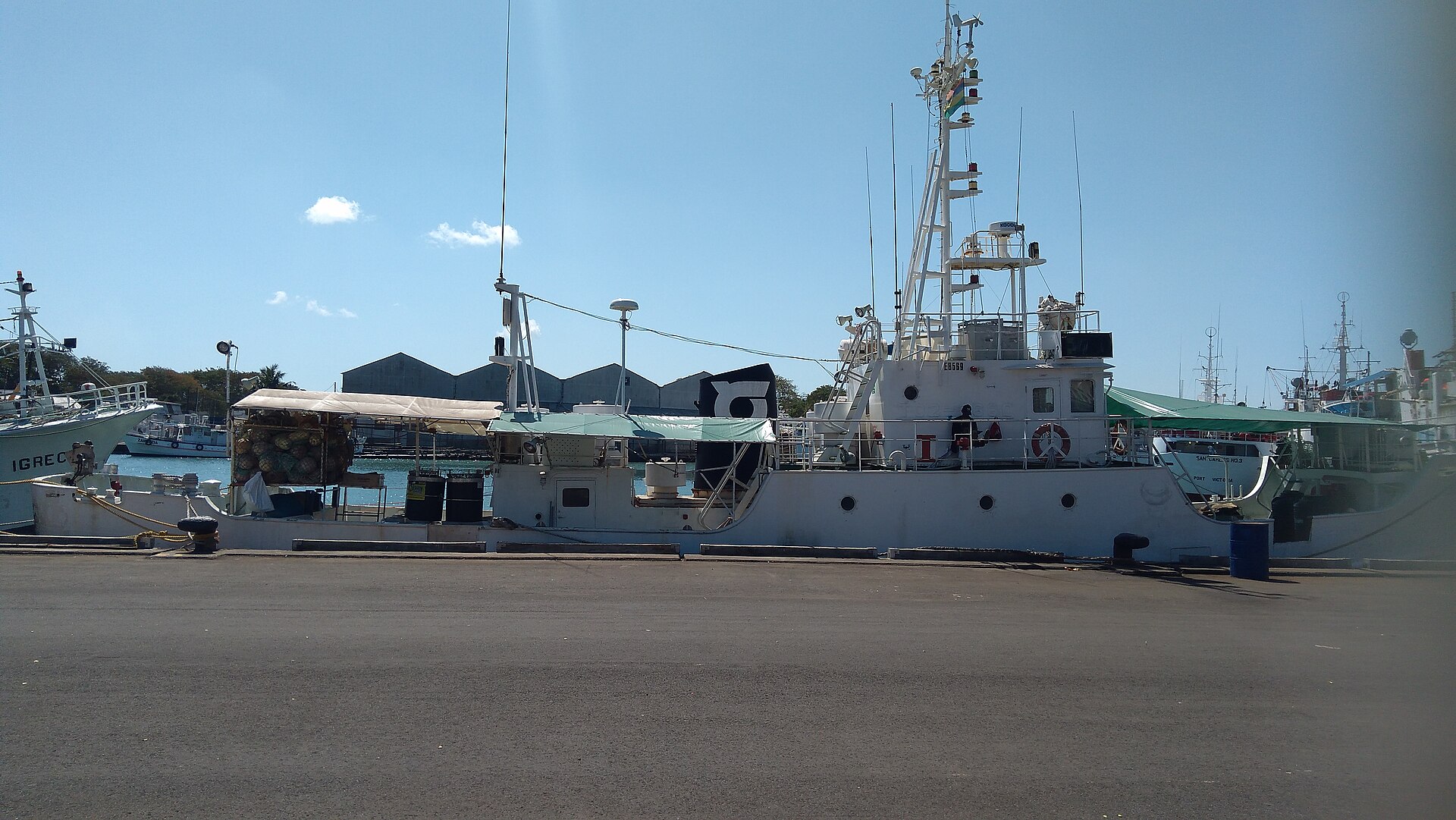

The Indian diaspora is usually described as the largest in the world, numbering somewhere above thirty million people if citizens abroad and people of Indian origin are counted together. That number conceals the fact that it is not one diaspora but a series of distinct movements, each produced by a push at home, a demand abroad and a legal gate that opened for a period and then closed. Understanding those gates is the only way to make sense of why a Punjabi family ends up in British Columbia, a Tamil family in Malaysia, a Malayali family in Sharjah and a Telugu family in New Jersey.
Indenture and the first corridors
The first mass movement was engineered. When slavery was abolished across the British Empire from 1834, sugar colonies faced a labour shortage and turned to indentured Indian workers on fixed term contracts, a system known in the workers' own speech as girmit, from the word agreement. The first shipload arrived at Port Louis in Mauritius in November 1834; the immigration depot there, the Aapravasi Ghat, was inscribed as a UNESCO World Heritage site in 2006 because it was the point of arrival for the experiment then exported everywhere else. Over roughly eighty years well over a million people left, mostly from Bihar, eastern Uttar Pradesh and the Tamil districts, for Mauritius, British Guiana, Trinidad, Natal from 1860, Suriname under a Dutch agreement from 1873, and Fiji from 1879.
Related but legally distinct systems moved even larger numbers within Asia. The kangani system took Tamil labour to Ceylon's tea estates and to Malayan rubber, and the maistry system took workers to Burma, where a Tamil Chettiar banking network also became central to the rice economy. Indenture was formally ended after sustained campaigning in India, with recruitment halted in 1917 and the legal framework wound up in the following years. Its legacy is a set of societies, from Trinidad to Fiji, where people of Indian descent form a very large share of the population and where relations between communities have been, in several cases, the central fault line of national politics.
Alongside indenture ran a smaller merchant migration that proved disproportionately influential. Gujarati and Kutchi traders moved along the Indian Ocean to Zanzibar, Mombasa, Kampala and Durban, financing and staffing much of East African commerce. That network brought to Natal in 1893 the young lawyer whose experience of racial exclusion there shaped his later politics.
The twentieth century reopening
The white settler democracies spent the first half of the twentieth century shutting Indians out. The United States barred immigration from most of Asia under the Immigration Act of 1917 and, in the Supreme Court's 1923 decision in United States v. Bhagat Singh Thind, held that Indians were not white for the purposes of naturalisation, stripping citizenship from some who already held it. Canada turned back the Komagata Maru, chartered to test its continuous journey rule, from Vancouver harbour in 1914, and Australia's Immigration Restriction Act of 1901 achieved the same end through a dictation test.
These gates reopened, one by one, in the middle decades of the century. Britain's Nationality Act of 1948 gave Commonwealth citizens the right to enter and work, and Punjabi and Gujarati migrants filled labour shortages in West Midlands foundries, Bradford textile mills and London transport, building the communities now visible in Southall and Leicester. That door narrowed with the Commonwealth Immigrants Acts of 1962 and 1968 and closed substantially with the Immigration Act of 1971. A distinct group arrived under duress: when Idi Amin expelled Uganda's Asian population in 1972, tens of thousands of people, many of them second or third generation East Africans with no direct experience of India, came to Britain within ninety days. They are often called twice migrants, and their success in British retail and manufacturing is a documented case of a group arriving with business skills rather than labour.
The United States changed course with the Immigration and Nationality Act of 1965, which replaced national origin quotas with a preference system weighted towards skills and family reunion. Because the gate that opened was a professional one, the Indian migration that followed was unusually highly educated from the start: doctors, engineers and academics, later joined by a very large software cohort using the H-1B specialty occupation visa after the 1990s. Canada's introduction of a points based system in 1967 had a comparable effect. Australia dismantled its racial exclusions between the mid 1960s and 1973, and Indian migration accelerated sharply after 2000 through a pathway running from student visas to skilled permanent residence; by the 2021 census India was the second largest country of birth among Australia's overseas born population after England, and Punjabi among the fastest growing languages spoken at home.
The Gulf, and students as the newest corridor
The largest single movement of the past fifty years went not west but across the Arabian Sea. The oil price rise of 1973 funded a construction boom in the Gulf states, and Kerala, with its high literacy, coastal trading links and limited local industry, supplied much of the workforce, followed by Tamil Nadu, Andhra Pradesh, Uttar Pradesh and Bihar. This corridor is legally temporary by design: employment is tied to a sponsor, there is no route to citizenship, and workers return. That structure produces the defining feature of the corridor, which is remittance. India has for years been the world's largest recipient of remittances, with annual inflows above one hundred billion United States dollars, and in Kerala these transfers have visibly reshaped housing, education spending and household consumption, a phenomenon documented over decades by the migration surveys conducted from Thiruvananthapuram.
It is also the corridor with the clearest abuses. Recruitment agents charge fees that put workers into debt before they leave, contracts are substituted on arrival, and wage theft is common. India regulates emigration for a defined list of occupations through clearance requirements under the Emigration Act of 1983, now administered online, and maintains welfare funds and embassy shelters, but enforcement against unregistered village agents is weak and reform of the Act has been discussed for years without conclusion.
The newest corridor is educational. India is now the largest or second largest source of international students for the United States, Canada, Australia and the United Kingdom, and for many families the student visa is understood, quite openly, as the first step in a migration plan rather than purely as education. That makes the corridor unusually sensitive to policy: a change to post study work rights, a cap on dependants or a tightening of financial requirements in one destination can redirect tens of thousands of people to another within a single admissions cycle. The mechanism is the one that has operated since 1834. A demand opens abroad, a legal gate defines who may pass through it, and networks of family and village do the rest.
References
- UNESCO World Heritage CentreAapravasi Ghat
- Ministry of External Affairs, Government of IndiaPopulation of Overseas Indians
- World BankMigration and Development Brief (Remittances)
- The National Archives (UK)Commonwealth Immigrants Act 1962 and post-war migration
- Australian Bureau of StatisticsCultural diversity: Census 2021
This is a reference article, written from the sources above. It is background, not news reporting.