
Monsoon Celebrations and Seasonal Renewal
Reference library · 1089 words

For most of the Indian subcontinent, the year does not really begin in January. It begins when the wind reverses. Some time around the first days of June, the south west monsoon makes landfall on the coast of Kerala, and the India Meteorological Department, which has tracked and announced that arrival since the nineteenth century, declares the onset. Over the following six weeks the rain sweeps north and east across the peninsula, reaching Mumbai in the second week of June and the plains of Punjab by early July. It brings, in a matter of weeks, the great majority of the water that the country will receive all year. Agriculture, reservoirs, hydroelectricity, the price of vegetables and the mood of the bond market all wait on it. So, unsurprisingly, does a very large part of the festival calendar.
The mechanism behind the monsoon is simple to state and fiendish to predict. Through spring the landmass of northern India and the Tibetan Plateau heats far faster than the Indian Ocean to the south. Hot air rises over the land, pressure falls, and moist air is drawn in off the sea to replace it. The Earth's rotation bends that inflow, so the wind arrives from the south west, laden with water it has picked up over thousands of kilometres of ocean. When it strikes the Western Ghats, the mountain wall running down India's western flank, it is forced upward, cools, and dumps enormous quantities of rain on the windward slopes. This is why Kerala and coastal Karnataka are drenched while much of the interior Deccan, sitting in the rain shadow behind the same mountains, is comparatively dry. The whole system is modulated by conditions in the Pacific, which is why El Nino years are watched anxiously in Indian farm ministries.
A calendar built around the rain
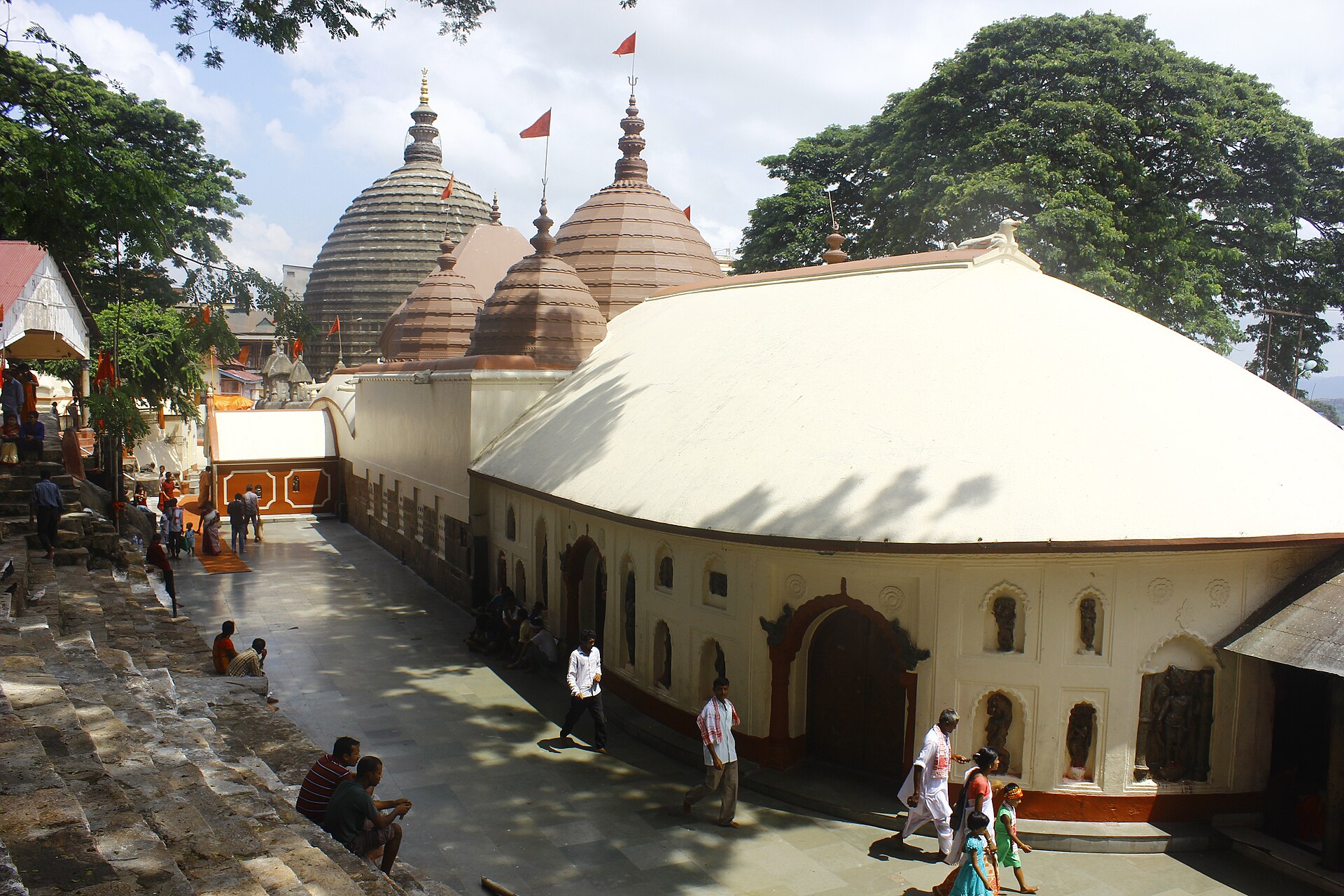
The traditional Hindu lunisolar calendar names the two monsoon months Ashadha and Shravana, and a striking density of observances falls within them. Among the largest is the Rath Yatra at Puri in Odisha, when the deities of the Jagannath temple are drawn through the town on three towering wooden chariots that are rebuilt from scratch each year. Naga Panchami honours snakes, which is not sentimental: the rains flush cobras and kraits out of flooded burrows and into fields and houses, and the festival encodes a real seasonal hazard. Raksha Bandhan, when sisters tie a thread on their brothers' wrists, falls on the full moon of Shravana. In Assam, the Ambubachi Mela at the Kamakhya temple on Nilachal Hill above Guwahati marks the goddess's menstruation, an explicit identification of the monsoon with fertility and renewal, and draws very large crowds of pilgrims and ascetics each June.
Elsewhere the rains carry their own regional forms. Teej, celebrated across Rajasthan, Haryana and Nepal, greets the first greening of a semi arid landscape, with swings hung from trees, green clothing and processions of the goddess Parvati through Jaipur. Bonalu, in Hyderabad and the Telangana districts, is a monsoon festival for the village goddess with a distinctly public health logic behind it: the rainy season historically brought cholera and other epidemics, and the offerings are a plea for protection. In Kerala, Onam falls in the Malayalam month of Chingam, as the rains ease, and coincides with the season of the vallam kali or snake boat races, of which the best known is the Nehru Trophy Boat Race on Punnamada Lake near Alappuzha, rowed since 1952 by crews of well over a hundred oarsmen in a single hull.
Rain as an aesthetic and a discipline
The monsoon is one of the deepest themes in Indian art. Classical music assigns it a family of ragas, above all Megh and the Malhar group, understood as monsoon melodies and traditionally sung in the rainy season. In poetry, the fifth century Sanskrit poet Kalidasa built an entire work, the Meghaduta or Cloud Messenger, around an exiled spirit who asks a passing monsoon cloud to carry a message to his wife in the Himalaya, tracing the cloud's northward route across the map of India. Miniature painting in the Rajput and Pahari courts returned again and again to figures on terraces watching black clouds pile up, lightning threaded through them. The rains are also a period of religious discipline. Buddhist and Jain monastic orders observe the rains retreat, when wandering ascetics settle in one place for the season, a rule that originated in the practical difficulty of travelling through flooded country and the wish to avoid trampling newly emerged insect life.
Underneath the poetry lies hard economics. A large share of Indian cropland is not irrigated and depends directly on rainfall, so the sowing of kharif crops, including rice, cotton, soybean, groundnut and pulses, is timed to the onset. A monsoon that arrives late, or breaks for three weeks in July, or dumps its total in a few catastrophic days rather than spreading it, damages yields even if the seasonal total looks normal. Deficient monsoons in the past have pushed up food prices, cut rural spending and shown up in national growth figures. The government's response has included expanding irrigation, crop insurance schemes and buffer grain stocks, but no policy has yet severed the link between the sky and the rural economy.
How the monsoon will behave under a warming climate is genuinely contested. Most modelling suggests that a warmer atmosphere holds more moisture and that total monsoon rainfall over India is likely to increase, while also arriving in fewer, heavier bursts with longer dry spells between them. That combination raises the risk of both flooding and drought within a single season. There is much less agreement about how aerosol pollution over South Asia, which cools the land surface and may weaken the contrast that drives the monsoon, interacts with greenhouse warming that strengthens it.
For Indian communities settled abroad, in Australia, Britain, Canada, the Gulf and East Africa, the monsoon festivals travel while the rain does not. Onam is celebrated in Melbourne and Sydney community halls in late August and September, complete with the flower carpet and the vegetarian feast served on a banana leaf, in a month when southern Australia is cold and wet for entirely unrelated reasons. Teej and Raksha Bandhan are marked on their calendar dates regardless of local weather. What survives the move, interestingly, is the social content of these festivals, the visiting, the food, the return to a natal village or its symbolic equivalent, rather than the meteorology that generated them. The rain was the original occasion. The gathering has outlived it.
References
- India Meteorological DepartmentMonsoon
- Encyclopaedia BritannicaMonsoon
- NASA Earth ObservatoryThe Indian Monsoon
- Government of KeralaOnam
This is a reference article, written from the sources above. It is background, not news reporting.