
Naming Conventions Across Indian Communities
Reference library · 1105 words
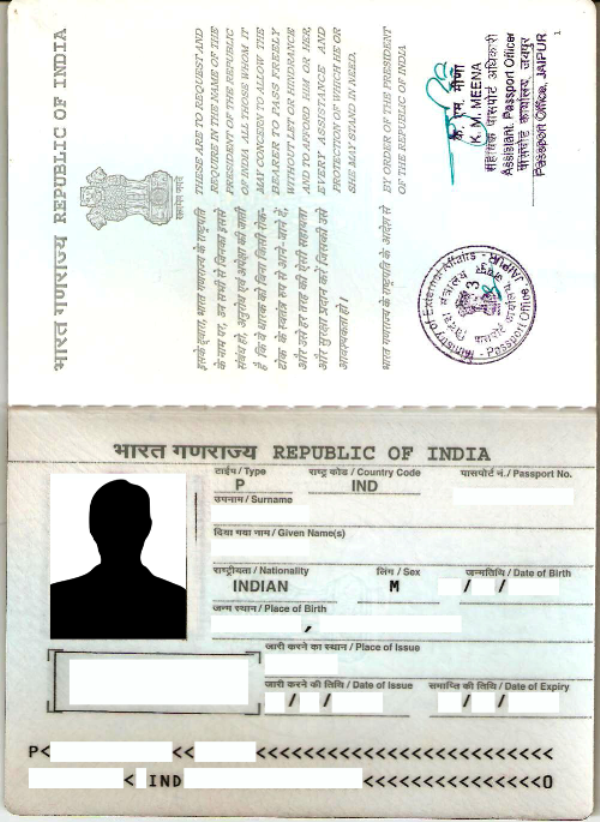

There is no Indian naming system. There are dozens, built on different principles, and the assumption that everyone has a given name followed by an inherited family surname is a northern European convention that fits perhaps half the subcontinent and actively misdescribes the rest. This matters well beyond etiquette. Passport forms, airline bookings, university enrolments, tax records and immigration databases in Australia, Britain, the Gulf and North America are built around the given name plus surname model, and every year large numbers of people of Indian origin have documents rejected, tickets invalidated or records mismatched because their names were never structured that way.
Across much of northern and western India the familiar pattern does apply. A person has a personal name and an inherited surname, and that surname very often signals caste or community: Sharma, Trivedi and Chaturvedi are Brahmin names, Gupta and Agarwal indicate merchant communities, Yadav, Jat and Patel denote agrarian and pastoral communities, and countless others encode a caste, a sub caste, a clan or an ancestral village. In Maharashtra a three part convention is common, in which the middle name is the father's given name, so a man's full official name might read as personal name, father's name, family surname. Bengali surnames such as Chattopadhyay, Bandyopadhyay and Mukhopadhyay acquired anglicised forms during the colonial period, becoming Chatterjee, Banerjee and Mukherjee, and both versions remain in use. Bengali families also commonly maintain two names for the same person, an intimate household name and a formal name used on documents.
The south, where surnames are often absent
Tamil naming traditionally has no family name at all. A person carries a given name preceded by the father's given name, and sometimes by an ancestral village or town, both usually reduced to initials in writing. What looks to a foreign clerk like a surname, and gets entered as one, is often the father's personal name, which means that a father and son will appear to have different family names, and a woman's apparent surname may change on marriage in some usages and not others. Telugu practice generally puts the family or house name first, before the personal name, so the element that ends up in a surname field is the one written first. Malayali naming frequently uses the ancestral house name, again typically as an initial, and Kerala's Syrian Christian families often carry a patronymic in which a grandfather's name recurs in alternate generations.
Muslim naming across India draws on Arabic and Persian conventions rather than on a single surname. A name may combine a personal name, a religious or honorific element, a lineage marker, and a nisba indicating place or occupation. Community and status titles such as Syed, Sheikh, Khan, Mirza, Ansari and Qureshi are widely used and function in documents like surnames, though their original meanings are genealogical or occupational. Regional variation is large: Mappila Muslims in Kerala follow Malayali house name patterns, Bengali Muslims often carry Bengali toponymic surnames, and Muslim families in northern India frequently use a name structure indistinguishable in form from that of their Hindu neighbours.
Two communities produced naming systems by deliberate reform. Sikh practice, following the institution of the Khalsa in 1699, gives the name Singh to men and Kaur to women, explicitly in order to abolish the caste marking function of inherited surnames. In practice many Sikh families later added a clan or village name after Singh or Kaur, so names such as Gill, Sandhu, Dhaliwal, Grewal and Bajwa reappear as third elements, and the caste signalling that the reform sought to remove has partly returned through the back door. Parsi surnames, by contrast, are a nineteenth century artefact of Bombay. When British administration required fixed family names for registration, many Parsi families adopted the trade or the goods they dealt in, producing surnames such as Engineer, Contractor, Doctor, Mistry and a long series of names ending in wala, meaning the person associated with a thing, including Batliwala for bottles and the celebrated Sodabottleopenerwala. These are among the most literal surnames anywhere in the world.
Naming as politics, and naming as paperwork
Because surnames in much of India announce caste, dropping them has been a political act. The Self Respect movement in Tamil Nadu, associated with E. V. Ramasamy, known as Periyar, campaigned from the 1920s against caste titles, and the Dravidian parties that later governed the state pressed the abandonment of caste suffixes, which is one reason Tamil public life features so many people known by a single name or by initials. Ambedkarite families in Maharashtra have adopted new surnames or Buddhist ones to break with inherited caste identifiers. In the other direction, some communities have moved towards adopting a shared surname precisely to consolidate political identity. There is no consensus about whether reducing the visibility of caste in names weakens caste or merely conceals it, and both positions are argued seriously.
The administrative consequences are constant and concrete. Indian identity systems have themselves struggled with the variation: a person's name on an Aadhaar record, a permanent account number card, a school certificate and a passport may differ in the placement of initials, the expansion of a father's name, or the presence of a middle element, and reconciling them is a routine bureaucratic chore. Passport authorities handle single name holders by leaving the surname field blank and repeating the name in the given name field, a workaround that airlines and foreign immigration systems do not always accept, and travellers with a single name have been refused boarding or entry in some jurisdictions. Forms abroad often force an applicant to invent a surname from an initial, after which the invented version becomes the person's legal identity overseas while the original persists at home.
For anyone dealing with Indian names professionally, a few habits help more than any rule. Do not assume the last written element is a family name, because in Telugu and several other conventions it is the personal name. Do not assume an initial is a middle name, because it is frequently a father's name or a house name that the person regards as no part of their own name at all. Ask which element the person is addressed by, since that is often neither the first nor the last written component. And treat a request to record a single name as legitimate rather than as an error to be corrected. The diversity here is not untidiness. It reflects genuinely different ideas about what a name is for: to locate a person in a lineage, in a house, in a place, in a trade, or, in the reforming traditions, deliberately in none of these.
References
- Ministry of External Affairs, Government of IndiaPassport Seva: name and documentation guidelines
- Encyclopaedia BritannicaSikhism: the Khalsa
- Unique Identification Authority of IndiaAadhaar: name and demographic data standards
- Library of CongressCataloging guidance on South Asian names
This is a reference article, written from the sources above. It is background, not news reporting.