
Navratri and Durga Puja: Nine Nights Celebrated
Reference library · 1020 words

Navratri means nine nights, and it is not one festival but a season observed with almost bewildering regional variety across India and wherever Indians have settled. The principal occasion is Sharada Navratri, falling in the lunar month of Ashvin, which lands in September or October, and culminating on the tenth day in Vijayadashami or Dussehra. A second Navratri is kept in the spring month of Chaitra, ending in Rama Navami. What unites the observances is the worship of the goddess in her many forms across nine nights, and the underlying narrative of a divine feminine power defeating a demon that gods and men could not.
That narrative has a specific text behind it. The Devi Mahatmya, also known as the Durga Saptashati or Chandi Path, is a section of the Markandeya Purana composed in Sanskrit probably around the fifth or sixth century of the common era. It tells how the buffalo demon Mahishasura, granted a boon that made him invulnerable to gods and men, was destroyed by Durga, assembled from the combined energies of the gods and armed by each of them, riding a lion. The text is not merely a story; its recitation is itself the central ritual act of the season for many families, and hearing it chanted before dawn is for millions the sound of the festival beginning.
Two very different celebrations
In Gujarat and among Gujarati communities worldwide, Navratri means garba. Dancers circle an earthen lamp or an image of the goddess in concentric rings, clapping in patterns that accelerate through the night, and later switch to dandiya raas with paired sticks. What began as village courtyard devotion has become mass participation: grounds in Ahmedabad and Vadodara host tens of thousands of dancers a night for nine consecutive nights, with choreographed sets, live singers and elaborate costume. Diaspora garba nights in Melbourne, Sydney, London, New Jersey and Nairobi replicate the form, often booking convention centres and importing singers from India for the season. In 2023 UNESCO inscribed garba of Gujarat on its representative list of the intangible cultural heritage of humanity.
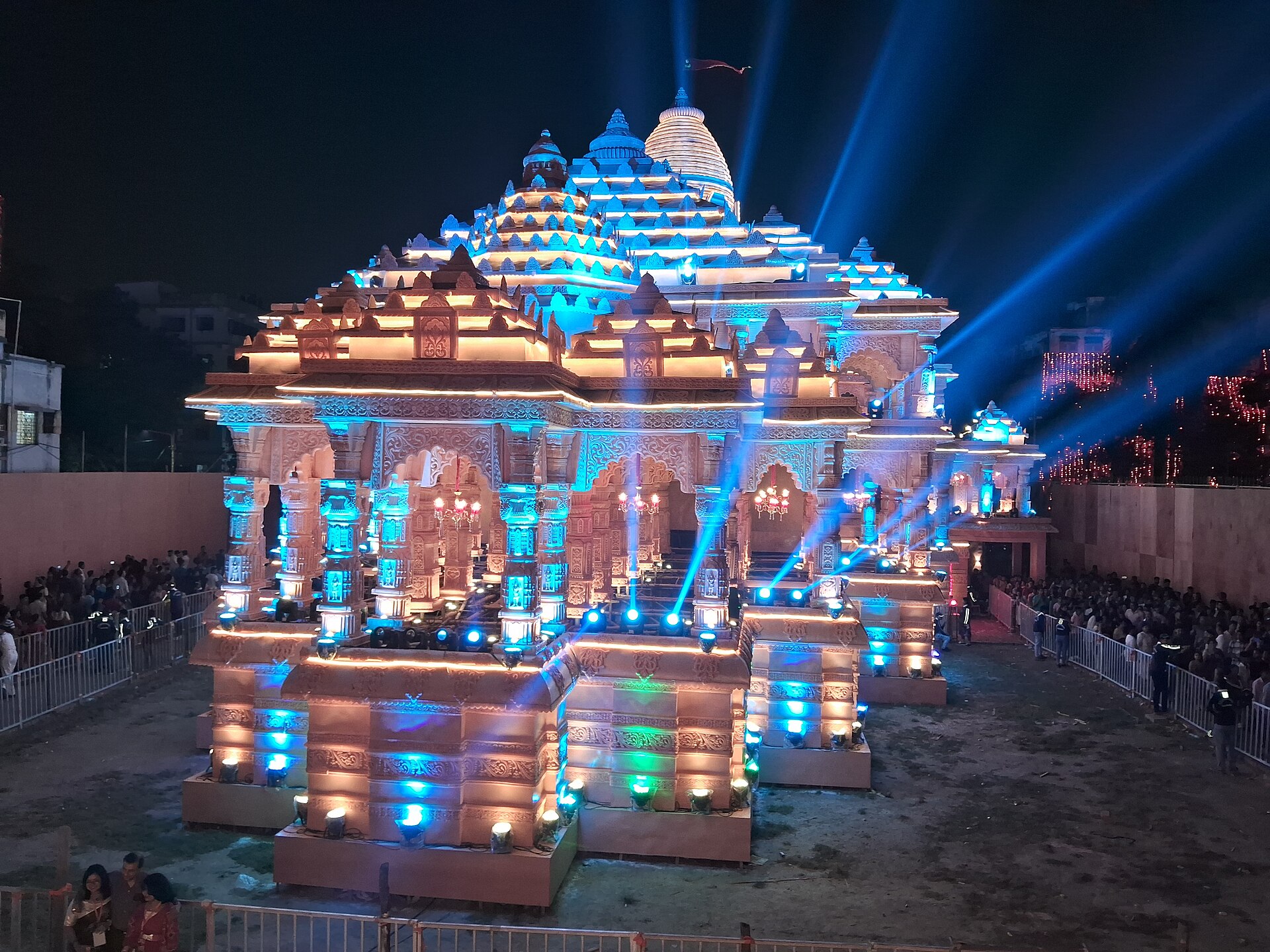
In Bengal, and among Bengalis anywhere, the same nine nights become Durga Puja, and the character is entirely different. The goddess is not danced around but received as a daughter coming home to her parents for a few days, with her four children beside her, and then tearfully sent back. The season opens with Mahalaya, a fortnight earlier, when Bengalis wake before dawn to hear a radio programme of Sanskrit chanting and Bengali song first broadcast in the 1930s, whose narration by Birendra Krishna Bhadra is so beloved that an attempt to replace it once provoked public outrage. The images themselves are made in Kumartuli, a lane of workshops in north Kolkata, where sculptors build straw and bamboo armatures, coat them in clay from the Hooghly, and paint and dress them over months. The public celebration takes place in pandals, temporary structures raised on streets by neighbourhood committees, which have evolved into serious works of installation art: recent years have seen pandals modelled on European cathedrals, on rural mud houses, on shipbreaking yards, on climate change and on political themes, judged in competitions and visited by crowds who walk the city all night. The main days run from Shashthi through to Dashami, when married women smear each other with vermilion in the sindoor khela and the images are carried in procession for immersion in the river. In December 2021 UNESCO inscribed Durga Puja in Kolkata on the same heritage list, citing among other things its role in bringing together people across class and faith. A study commissioned by the British Council found the festival's creative economy, covering artisans, lighting, sound, catering, publishing, advertising and retail, to be worth an enormous sum to West Bengal, and for many craft workers it supplies the year's principal income.
Dolls, tools, effigies and fasting
Elsewhere the season takes other shapes again. In Tamil Nadu, Karnataka and Andhra Pradesh households arrange golu or bommala koluvu, tiered displays of dolls representing gods, historical figures, weddings, villages and increasingly contemporary scenes, and neighbours visit one another to view them and exchange gifts. Mysuru keeps a royal Dasara whose lineage runs back through the Wadiyar rulers to the Mahanavami festival of the Vijayanagara empire; the palace is lit with tens of thousands of bulbs and the Jamboo Savari procession carries the image of the goddess Chamundeshwari through the city in a golden howdah on an elephant. In much of north India the nine nights are given over instead to Ramlila, cycles of open-air theatre retelling the Ramayana over successive evenings, culminating on Dussehra when towering effigies of Ravana, his brother Kumbhakarna and son Meghnad are stuffed with fireworks and burned before large crowds. The Ramlila tradition, including the month-long cycle at Ramnagar across the river from Varanasi, was itself inscribed by UNESCO in 2008.
Common threads run underneath the variety. Many observers fast in some form, avoiding grains, onion and garlic, and eating dishes built from buckwheat and water chestnut flour, sago and rock salt, which has produced a distinct festival cuisine. On the ninth day comes Ayudha Puja or Saraswati Puja, when tools of trade are cleaned, garlanded and set aside from use: mechanics decorate their spanners, drivers their trucks, musicians their instruments, and in many households children place their schoolbooks before the goddess of learning. The tenth day is considered auspicious for beginnings, so children are often started on their letters, and new ventures launched.
The festival is not free of argument. The Durga Puja idols carry mercury and lead in their paint and synthetic material in their decoration, and immersion loads on the Hooghly have forced state authorities to regulate materials and provide artificial tanks. Commercial sponsorship of pandals and government grants to puja committees have been criticised as the intrusion of money and politics into devotion. And there are communities, notably some Asur groups in Jharkhand who identify Mahishasura as an ancestor rather than a demon, who mourn during the festival rather than celebrate, a reading that has provoked heated controversy but is a genuine part of the picture.
References
- UNESCODurga Puja in Kolkata
- UNESCOGarba of Gujarat
- Encyclopaedia BritannicaNavratri
- The British MuseumDurga and the Devi Mahatmya
This is a reference article, written from the sources above. It is background, not news reporting.