


Nurses and Healthcare Workers: A Global Migration Pattern
Reference library · 1043 words
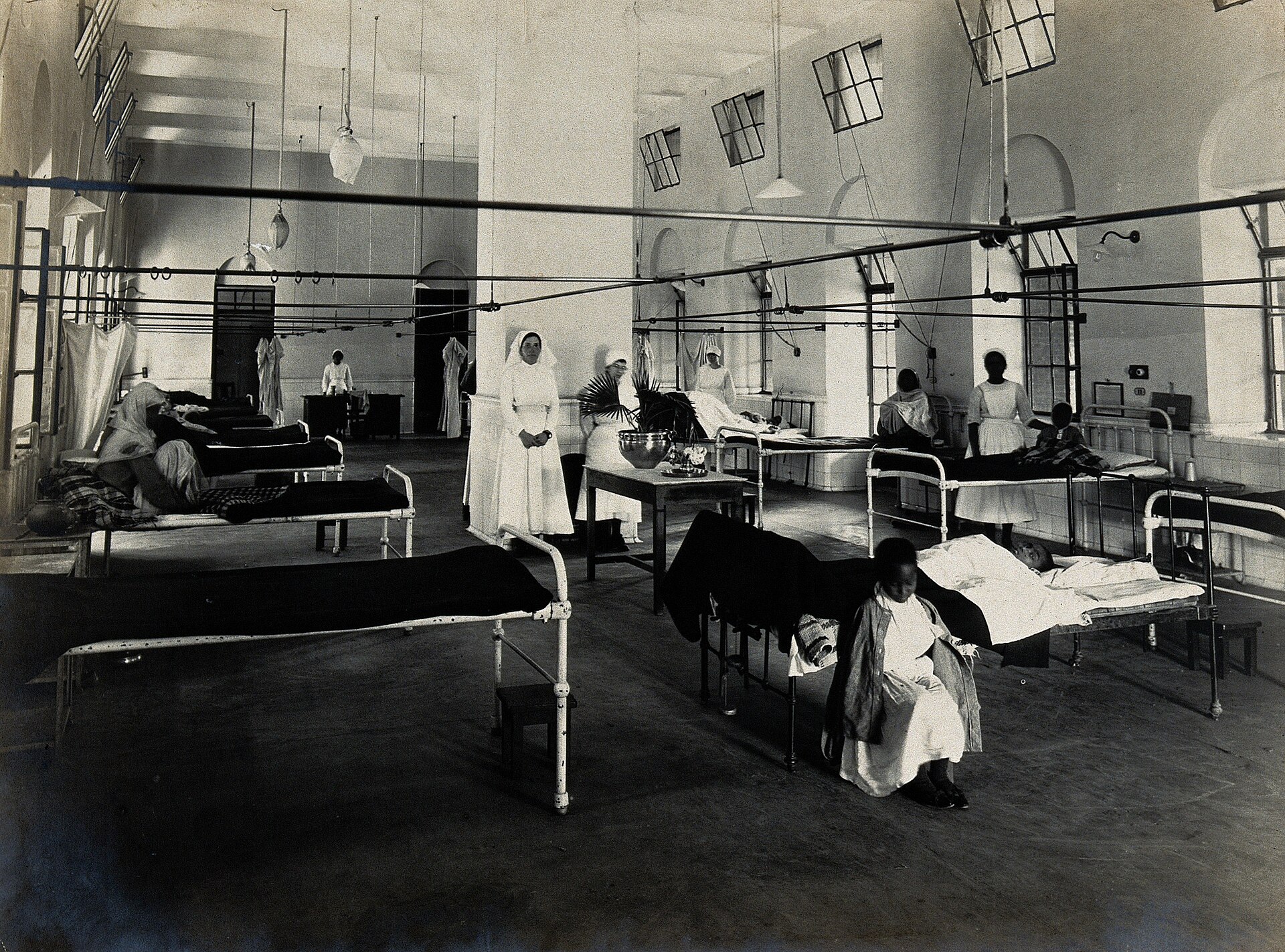

Walk through a hospital ward in London, Dublin, Melbourne, Toronto, Muscat or Riyadh and you will hear Malayalam, Punjabi, Tamil, Telugu and Hindi spoken at the nurses' station. Indian-trained nurses and doctors are among the largest groups of internationally educated health workers in the English-speaking world and in the Gulf, and the flow has been running for more than fifty years. It is one of the most structured and best documented forms of Indian migration, because unlike construction or hospitality it passes through licensing bodies that count everyone who arrives. It is also the form of migration where the ethical questions are sharpest, because a nurse who leaves is a nurse a poorer country trained and no longer has.
Why Kerala, and how the pipeline formed
The historical concentration in Kerala is not coincidental. Christian mission hospitals established nursing schools in Kerala and the surrounding region from the late nineteenth century onward, at a time when nursing was widely regarded elsewhere in India as unsuitable work for women because it involved bodily contact with strangers. Kerala's own social conditions, high female literacy achieved early, later age at marriage and a shortage of local employment for educated women, made the profession attractive rather than stigmatised. Once a first cohort had gone abroad, a network effect took over. Returning nurses funded the education of younger relatives, private nursing colleges multiplied to meet demand, recruitment agencies specialised in the corridor, and a village with several nurses working overseas became a village where nursing was the obvious career. The same pattern later replicated in parts of Tamil Nadu, Andhra Pradesh, Telangana, Punjab and Delhi, and private nursing education expanded rapidly in Karnataka and Maharashtra.
The destinations moved in waves. The Gulf boom from the 1970s drew nurses to Saudi Arabia, Kuwait, the United Arab Emirates and Oman, often on contracts that were financially transformative but did not lead to settlement, since Gulf states generally do not offer permanent residence. From the 1990s the flow widened to the United States, the United Kingdom and Ireland, and later to Australia, New Zealand and Canada, where the destination offered not only higher wages but permanent residence and eventually citizenship for the whole family. That distinction between contract migration and settlement migration shapes almost everything about how a family plans: whether children are educated at the destination or sent to boarding school in India, whether property is bought at home or abroad, whether the wage is remitted or invested locally.
Getting registered is the hard part, and the requirements are demanding and expensive. The United States requires the NCLEX licensing examination, credential verification and, for many, a visa category that has been subject to long backlogs for Indian nationals. The United Kingdom requires registration with the Nursing and Midwifery Council, an English language test at a prescribed level and a practical objective structured clinical examination. Australia requires registration through the national regulator, with internationally qualified nurses assessed through an outcomes-based process combining a knowledge examination and a clinical examination, alongside English requirements. For doctors the equivalents are the United States licensing examinations, the British professional and linguistic assessment or postgraduate membership examinations, and the Australian Medical Council pathway. Each involves fees, coaching, travel and often a year or more of preparation while working full time, which is why an industry of test-preparation institutes has grown around the corridor in Kochi, Delhi and Hyderabad.
The ethics, and the domestic cost
The World Health Organization adopted a Global Code of Practice on the International Recruitment of Health Personnel in 2010, a voluntary instrument that asks destination countries not to actively recruit from countries with critical health workforce shortages and to support the health systems they draw from. The WHO also maintains a health workforce support and safeguards list of countries where active recruitment should be avoided. India is not on that list, which reflects both its large training capacity and its status as a country that has, at times, treated health worker migration as an export sector rather than a loss. That framing is contested inside India itself.
The domestic picture gives the argument force. India's ratio of nurses and midwives to population has historically sat below the level the WHO uses as an indicative benchmark for adequate coverage, and the distribution is severely uneven: the states that train the most nurses are not the states with the greatest shortfall, and rural district hospitals across the northern and central states struggle to fill posts that urban private hospitals fill easily. Domestic nursing wages, particularly in private hospitals, have been a recurring subject of protest and of court and government intervention, and the gap between what a nurse earns in an Indian private hospital and what the same nurse earns in Ireland or the Gulf is large enough that no appeal to national duty will close it. If a country wants to retain health workers, the mechanism available is pay and conditions, not exhortation.
There are also abuses within the recruitment process itself. Agencies charging large placement fees, contracts that differ from what was promised, passport retention by employers in some jurisdictions, and debt taken on to fund migration have all been documented. India's emigration clearance system and state agencies such as Kerala's overseas recruitment body exist partly to provide a regulated alternative, and several destination countries have moved toward employer-pays models and ethical recruitment codes, with bilateral migration and mobility agreements signed between India and countries including the United Kingdom and Germany intended to formalise the flow.
Whether the net effect on India is negative is genuinely debated. Remittances from health workers are substantial and reach households directly. Migration raises the return on nursing education, which increases the number of Indians who train, some of whom never leave. Returning professionals bring clinical practice and management experience back into Indian hospitals. Against that, the workers who leave are disproportionately the experienced ones, the public system that trained many of them bears the cost, and the districts with the worst shortages capture none of the benefit. The most defensible conclusion is that migration is not the cause of India's health workforce problem but that it sharpens it, and that the two are best treated as separate policy questions rather than as a single moral verdict.
References
- World Health OrganizationGlobal Code of Practice on the International Recruitment of Health Personnel
- World Health OrganizationHealth workforce support and safeguards list
- Nursing and Midwifery Council, United KingdomRegistration data reports
- Nursing and Midwifery Board of AustraliaInternationally qualified nurses and midwives
- Ministry of External Affairs, Government of IndiaeMigrate system and emigration clearance
This is a reference article, written from the sources above. It is background, not news reporting.