

Panchayati Raj: Democracy at the Village Level
Reference library · 1043 words
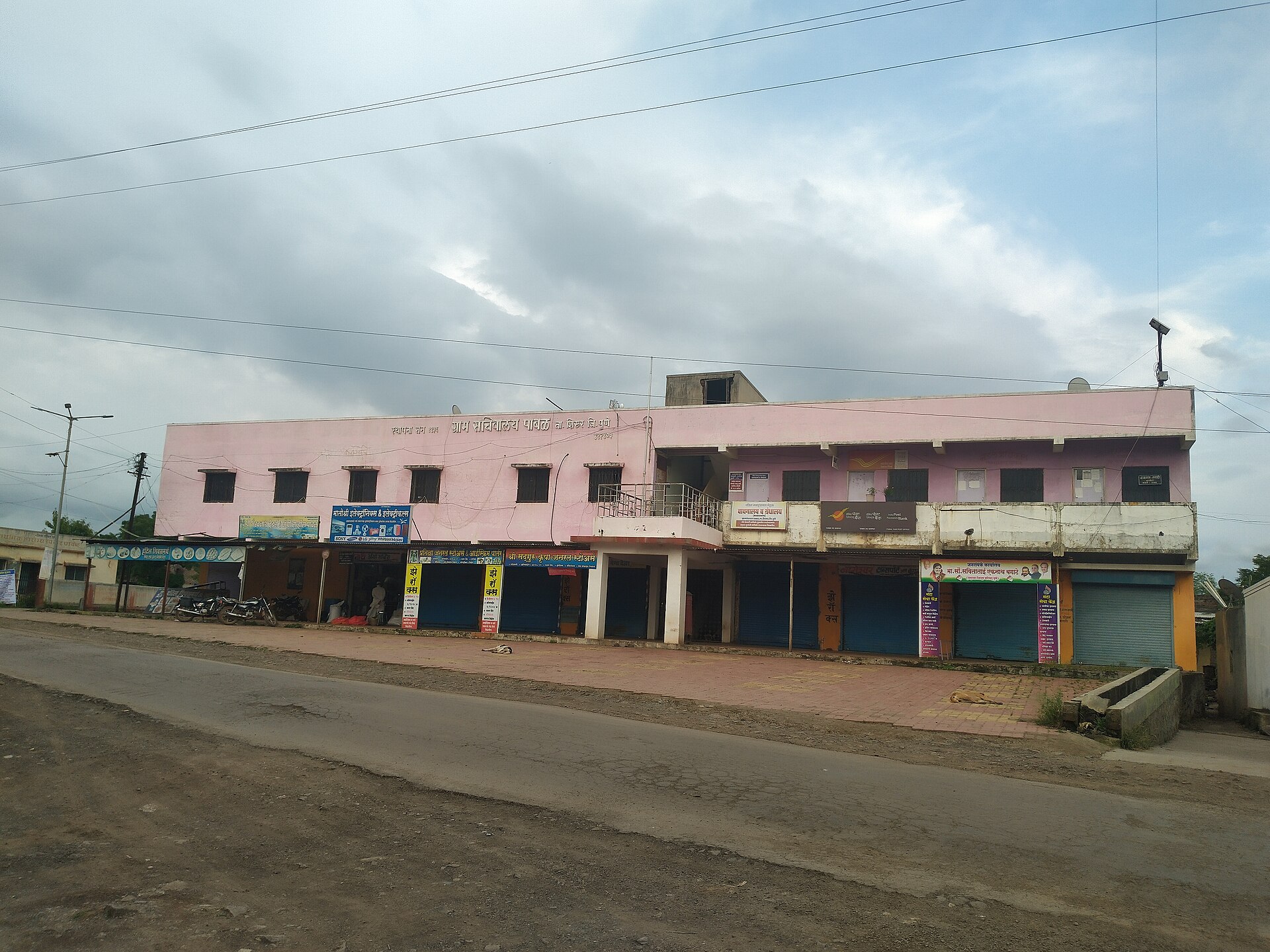

India has three elected tiers that everyone knows about, the Union Parliament, the state legislatures and the municipal bodies of its cities, and a fourth that is far larger than any of them. Panchayati raj is the system of elected rural local government that operates below the state, and it accounts for roughly three million elected representatives across something in the order of a quarter of a million village panchayats. It is, by simple headcount of officeholders, the largest experiment in representative government anywhere in the world.
An argument that took forty years to settle
Village councils of some sort existed long before the republic, but the modern institution comes from a specific political dispute. Mahatma Gandhi argued for gram swaraj, village self rule, and regarded the self governing village as the natural unit of Indian democracy. B. R. Ambedkar disagreed sharply in the Constituent Assembly, arguing that Indian villages were dominated by caste hierarchy and that handing them power would entrench the oppression of the lowest castes rather than relieve it. The Constitution as adopted reflected the deadlock: village panchayats appear only in Article 40, among the Directive Principles of State Policy, which are declared to be non-justiciable statements of intent rather than enforceable rights.
The first serious attempt at implementation came from the Balwantrai Mehta Committee, which reported in 1957 after examining why community development programmes were failing to engage villagers, and recommended a three tier structure with real powers. Jawaharlal Nehru inaugurated the system at Nagaur in Rajasthan on 2 October 1959. It spread but then decayed. States were reluctant to devolve funds, and in many places elections were simply not held for years at a stretch. The Ashok Mehta Committee reviewed the failure in 1978 and recommended a two tier design and constitutional protection.
Protection eventually arrived with the seventy third amendment to the Constitution, passed in 1992 and brought into force on 24 April 1993, now marked annually as National Panchayati Raj Day. The amendment inserted Part IX into the Constitution and made the essential features mandatory rather than optional. Its companion, the seventy fourth amendment, did the same for urban local bodies.
How the structure works
The system has three levels in states with a population above a specified threshold: the gram panchayat covering a village or group of villages, the panchayat samiti at the intermediate block level, and the zilla parishad at the district level. Smaller states may operate two tiers. Beneath the elected panchayat sits the gram sabha, which is not a council but the assembly of every registered voter in the village, and which is meant to approve plans, beneficiary lists and accounts. Where the gram sabha functions properly it is the sharpest accountability instrument in the system; where it is convened perfunctorily, it is a signature sheet.
The amendment fixed several things that states had previously manipulated. Terms are five years, and if a panchayat is dissolved early, fresh elections must be held within six months. Elections are conducted by an independent State Election Commission rather than by the state government. A State Finance Commission must be constituted every five years to recommend how state revenues are shared with local bodies. Seats are reserved for Scheduled Castes and Scheduled Tribes in proportion to their population, and not less than one third of all seats and of chairperson positions are reserved for women; more than half the states have since legislated to raise the women's share to fifty per cent. Over 1.4 million of the elected representatives in the system are women, which is a scale of political inclusion without parallel.
The Eleventh Schedule, added by the same amendment, lists twenty nine subjects that states may devolve to panchayats, including agriculture, minor irrigation, drinking water, rural roads, primary education, health and sanitation, and poverty alleviation. The wording is permissive, and this is the central weakness: the Constitution requires states to hold panchayat elections but does not compel them to hand over any particular function. The Panchayats (Extension to the Scheduled Areas) Act of 1996, usually called PESA, goes further for tribal majority areas, giving the gram sabha rights over minor forest produce, land alienation and consultation before land acquisition. Some north eastern states with Sixth Schedule autonomous councils, and certain other areas, are outside the framework entirely.
What it has and has not achieved
Practitioners summarise the problem as the three Fs: funds, functions and functionaries. Most panchayats have little independent revenue, since property taxation in villages is thin and politically difficult, so they depend on tied grants that arrive earmarked for particular schemes. Many hold responsibilities on paper without the staff to discharge them, because line department employees report to the state rather than to the panchayat. And state governments have often created parallel bodies, such as scheme specific committees for water or education, that bypass the elected panchayat entirely. Finance Commission grants for rural local bodies have grown substantially and are now a significant untied source, which has improved matters somewhat.
A widely discussed social problem is proxy representation. Where a seat is reserved for a woman, the elected member's husband may in practice attend meetings and take decisions, a phenomenon known bluntly as sarpanch pati or pradhan pati. It is real and well documented. It is also not the whole story: an influential study by the economists Raghabendra Chattopadhyay and Esther Duflo, published in 2004, compared randomly reserved and unreserved village councils in West Bengal and Rajasthan and found that women leaders invested more in the public goods that women in their villages said they wanted, notably drinking water. Later research has found evidence that repeated exposure to women leaders reduces bias against them among voters.
The clearest successes have come where a state government made devolution a deliberate project. Kerala's People's Plan Campaign, launched in 1996, transferred a large share of the state's plan budget to local bodies together with training and technical support, and is the case most often cited internationally. Panchayats have also become the delivery machinery for the national rural employment guarantee scheme, for rural sanitation and for water supply programmes. Whether panchayati raj has genuinely transferred power or has mainly decentralised administration remains, thirty years after the amendment, an argument with strong evidence on both sides.
References
- Government of India, Ministry of Panchayati RajMinistry of Panchayati Raj
- Government of IndiaConstitution of India, Part IX
- Encyclopaedia BritannicaPanchayat
- Government of KeralaLocal Self Government Department
- World BankDecentralization and local governance research
This is a reference article, written from the sources above. It is background, not news reporting.