
Partition: A History Remembered Carefully
Reference library · 1096 words
.jpg)
On 15 August 1947 British rule in India ended and two states came into existence. Within weeks, somewhere between ten and twenty million people had left their homes and moved across a new border in one direction or the other, in what remains the largest forced migration in recorded human history. Estimates of how many died in the accompanying violence range from several hundred thousand to two million. That range is not carelessness. Nobody counted, the administrative apparatus in the affected districts had collapsed, and the two new governments had reasons of their own not to establish a precise figure. Any account of Partition that offers a confident death toll should be treated with caution.
The political sequence is better documented than the human one. The Muslim League, led by Muhammad Ali Jinnah, adopted the Lahore Resolution in March 1940 calling for independent states in the Muslim majority regions of the subcontinent. A British Cabinet Mission in 1946 proposed instead a loose federation with a weak centre and grouped provinces, which the League accepted and the Congress effectively rejected on the grounds that a centre too weak to govern would not be able to build a modern state. In August 1946 the League called a day of direct action; the resulting killings in Calcutta ran for days and spread to Noakhali, Bihar and Punjab, and after that the possibility of a shared settlement narrowed sharply. Louis Mountbatten arrived as the last Viceroy in March 1947, concluded quickly that a united India was unattainable and that delay would be more dangerous than haste, and announced a plan in June.
The line
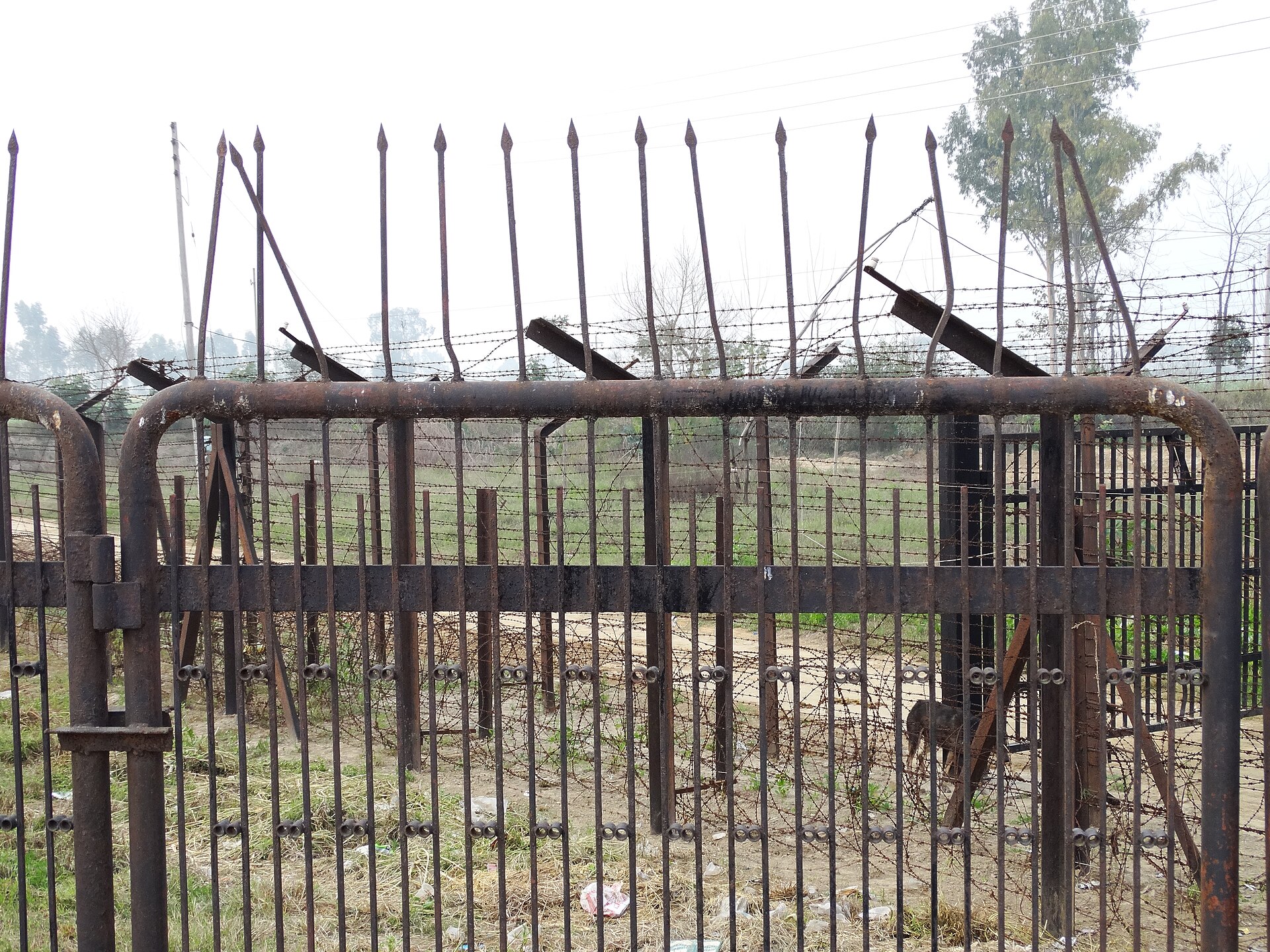
The border was drawn by Cyril Radcliffe, a British barrister who had never previously visited India and who was appointed to chair the boundary commissions for both Punjab and Bengal. He arrived in July 1947 with roughly five weeks to divide two provinces containing tens of millions of people, working largely from outdated census returns and district maps. The commissions included Indian judges nominated by the Congress and the League who disagreed on almost everything, leaving Radcliffe to decide. His awards were completed before independence but were not published until 17 August, two days after the celebrations, apparently so that the departing administration would not have to manage the consequences of the announcement.
The delay had a direct human cost. In the Punjab districts around Lahore, Amritsar, Gurdaspur and Ferozepur, people did not know until after independence which country they were in, and communities that had begun to feel unsafe made decisions in the dark. Punjab and Bengal were the two provinces cut in half, and their experiences differed. In Punjab the movement was rapid, near total and extraordinarily violent: columns of refugees on foot stretching for miles, trains arriving with everyone aboard killed, and organised armed bands on all sides. The Sikh community, whose religious geography straddled the line with Nankana Sahib and other central shrines falling in Pakistan, was displaced almost in its entirety from the western side.
In Bengal the pattern was slower and never really ended. Migration between East Bengal and West Bengal continued in waves over decades, driven by episodes of violence and by the erosion of security for minorities, and resumed on a vast scale during the 1971 war that produced Bangladesh. Sindh, which was not divided, nonetheless saw the departure of most of its substantial Hindu population, while Karachi filled with Urdu speaking migrants from north India who became a distinct community there.
What is often left out
Two aspects of Partition were long absent from official histories in both countries. The first is the mass abduction and forced marriage of women, estimated in the tens of thousands, taken by men of the other community during the crossings. India and Pakistan agreed on a recovery programme, given legal force in India by legislation in 1949, under which police searched for such women and returned them across the border. The operation was carried out over years and is now read by many historians as a second violation, since women who had built new lives, sometimes with children, were removed again without consent, and some were rejected by their original families on return. The second omission is the fate of people who were poor, low caste or otherwise without means, who could not buy a train ticket or claim allotted property on arrival, and who appear rarely in memoirs written by the professional classes who dominated the written record.
The princely states form a separate strand. Around five hundred and sixty of them had to accede to India or Pakistan or attempt independence. Hyderabad's Nizam attempted independence and was annexed by Indian military action in September 1948, accompanied by communal violence that an official inquiry documented and that the Indian government did not publish for decades. Jammu and Kashmir's Maharaja delayed, then acceded to India in October 1947 after an armed incursion from Pakistan, producing the first war between the two states and a dispute that has not been settled.
Why the remembering matters
Historians continue to disagree about causation. One line of argument, associated with Ayesha Jalal's study of Jinnah published in 1985, holds that the demand for Pakistan functioned for much of its life as a bargaining position aimed at securing Muslim parity within a united India, and that Partition was an outcome nobody planned. Another emphasises the colonial state's long habit of governing through religious categories, from separate electorates onwards, which made a communal division of politics almost structurally inevitable. These explanations are not mutually exclusive, and honest accounts hold several at once.
Memory has taken different institutional forms. Literature carried what the archives did not: Saadat Hasan Manto's short stories, Khushwant Singh's novel Train to Pakistan, Bhisham Sahni's Tamas and Amrita Pritam's poetry remain the way most people in the subcontinent first encounter the subject. Oral history projects, including the 1947 Partition Archive founded in 2010, have recorded thousands of survivor testimonies as the last generation with direct memory reaches the end of life. A Partition Museum opened in the Town Hall at Amritsar in 2017 and a second site later opened in Delhi. In 2021 the Indian government designated 14 August as a day of remembrance for the horrors of Partition, a decision welcomed by some as overdue recognition and criticised by others as an invitation to use grief for present political purposes. That criticism is worth taking seriously, because the defining feature of Partition memory is that it is still recruited into arguments about who belongs where, on all sides of the borders it created.
References
- The 1947 Partition ArchiveThe 1947 Partition Archive
- Partition MuseumPartition Museum, Amritsar
- The National Archives (UK)The National Archives
- Encyclopaedia BritannicaPartition of India
This is a reference article, written from the sources above. It is background, not news reporting.