
Princely States: A Patchwork of Rule
Reference library · 1099 words
.jpg)
A map of India in 1946 is not a single colour. Roughly two fifths of the territory of the subcontinent was not British India at all but a mosaic of separately ruled states, each with its own ruler, its own laws, in many cases its own currency, postage stamps, army and railway gauge. The number is usually given as about 565, though the total depends entirely on what you count, since the list ranges from Hyderabad, larger than most European countries, down to estates in Gujarat consisting of a village and a few hundred acres. These were the princely states, and understanding them is essential to understanding both how the British governed India and how independent India was assembled.
The states existed because conquest is expensive. As the East India Company expanded through the eighteenth and early nineteenth centuries, it found that defeating a ruler and then leaving him on his throne under a treaty was cheaper and more stable than administering his territory directly. The resulting relationship was called paramountcy. The ruler surrendered control of defence, external relations and communications to the British Crown, accepted the presence of a Resident or Political Agent, and in return kept internal authority, a hereditary title and, in the more important cases, a hereditary gun salute. The salute states were ranked by the number of guns fired in ceremonial greeting, from nine up to twenty one; the five twenty one gun states were Hyderabad, Mysore, Baroda, Gwalior and Jammu and Kashmir.
Paramountcy was not a fixed thing. Under Lord Dalhousie, Governor General from 1848 to 1856, the British applied the doctrine of lapse, refusing to recognise adopted heirs and annexing states whose rulers died without a natural son. Satara, Nagpur, Jhansi and others were absorbed on this basis, and Awadh was annexed in 1856 on the different ground of misgovernment. The resentment this generated among rulers and their retainers contributed directly to the revolt of 1857. After the Crown assumed direct government in 1858, policy reversed: Queen Victoria's proclamation promised to respect the rights and dignity of the princes, adoption was recognised, and annexation effectively stopped. The states became a conservative pillar of the Raj, and the British came to value them precisely because their rulers had no interest in nationalist politics.
Rule inside the states
It is tempting to picture the princely states uniformly as feudal backwaters, and this is inaccurate. Administration varied enormously. Mysore under its Dewans, notably Sir M. Visvesvaraya who served from 1912 to 1918, built the Krishna Raja Sagara dam, established the Mysore University in 1916 and supported the Bhadravati iron works, and the state was widely regarded as among the best administered in India. Baroda under Sayajirao Gaekwad III introduced compulsory primary education in stages and funded scholarships, including support for B. R. Ambedkar's studies abroad. Travancore and Cochin achieved literacy levels far above the British Indian average, a legacy still visible in Kerala's social indicators. Against this, other states were personal despotisms with negligible public spending, arbitrary justice and heavy levies on cultivators. There is no single princely record, and generalising in either direction is a mistake.
Politically the princes were organised through the Chamber of Princes, established in 1921 as a consultative body sitting in Delhi. Within many states, movements demanding responsible government developed from the 1920s onward, coordinated loosely through the All India States People's Conference. The Indian National Congress was for a long time cautious about intervening in state affairs, a caution that eroded through the late 1930s. In Kashmir, Hyderabad, Travancore and elsewhere, these internal movements would matter greatly at the moment of transfer.
Accession and dissolution
The Indian Independence Act of 1947 provided that paramountcy would lapse with British withdrawal, and would not be transferred to either successor dominion. Read literally, this meant that on 15 August 1947 every princely state became legally independent. Nobody in London or Delhi seriously intended that outcome, and a States Department under Sardar Vallabhbhai Patel with V. P. Menon as secretary was created in July 1947 to prevent it. Their instrument was a short document, the Instrument of Accession, under which a ruler transferred defence, external affairs and communications only, retaining everything else. Combined with an offer of privy purses and the retention of titles and personal privileges, and with a firm reminder of geography, this secured accession from the overwhelming majority of rulers before independence. Travancore and Bhopal both signalled intentions to stay out and both changed course.
Three cases did not resolve smoothly, and they resolved in three different ways. Junagadh, a small state on the Kathiawar coast with a Muslim ruler and a largely Hindu population and no land border with Pakistan, acceded to Pakistan in September 1947; Indian forces moved in, the Nawab left for Karachi, and a plebiscite held in February 1948 recorded overwhelming support for India. Hyderabad, the largest state, sought independence under the Nizam and signed a standstill agreement, but the position collapsed amid the activity of the Razakar militia and a communist led peasant uprising in Telangana; Indian troops entered in September 1948 in an operation code named Polo, and the state was integrated after a few days of fighting. Jammu and Kashmir, with a Hindu Maharaja and a Muslim majority, remained undecided until an incursion of tribal fighters from Pakistan in October 1947 led Hari Singh to sign the Instrument of Accession on 26 October, after which Indian troops were airlifted to Srinagar. The war that followed ended in a ceasefire on 1 January 1949 and a line that, with modifications, still divides the territory. The legitimacy of that accession has been disputed by Pakistan ever since, and remains the central issue between the two states.
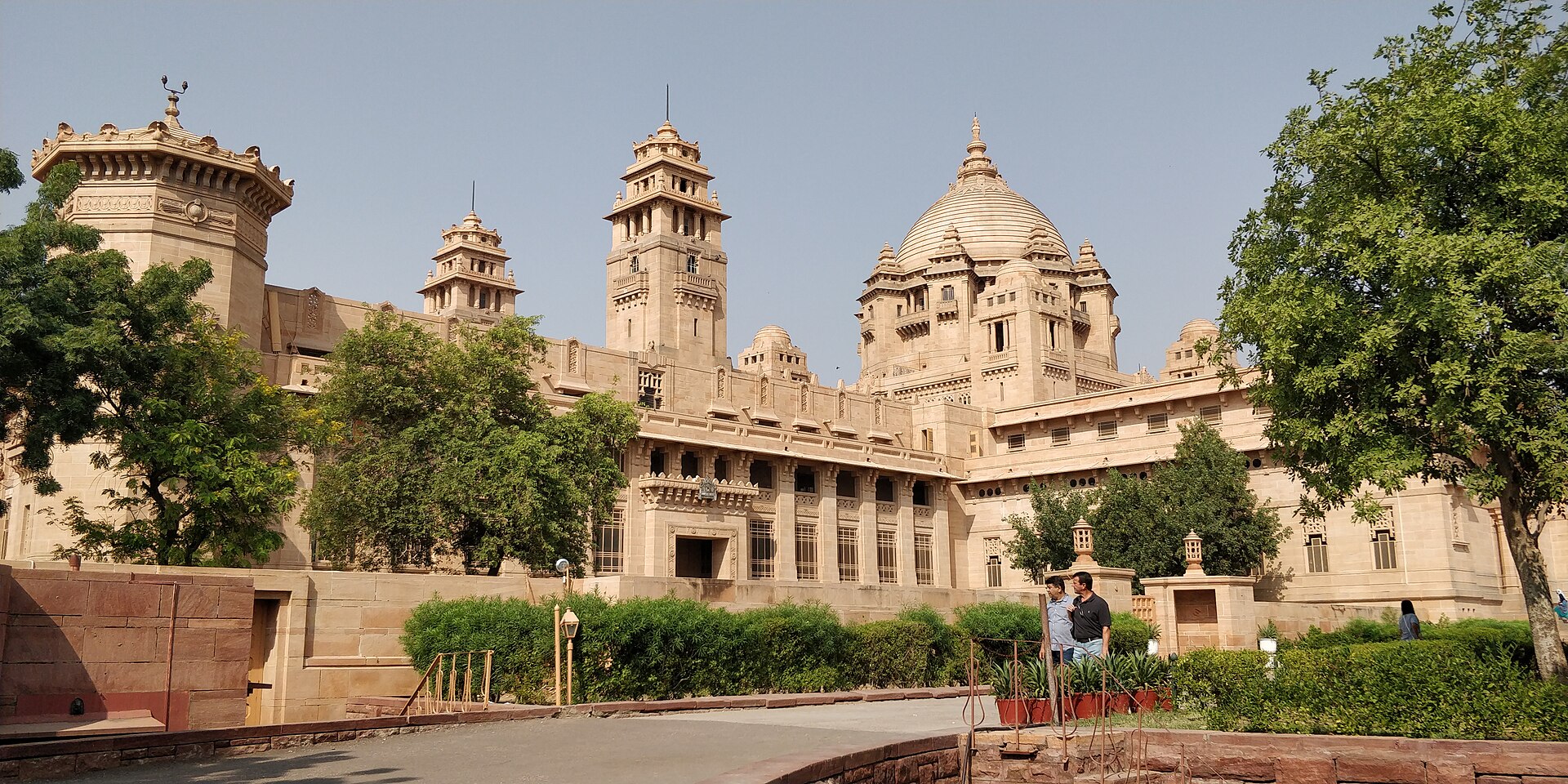
Integration then proceeded quickly. Small states were merged into neighbouring provinces or grouped into new unions: the Rajputana states became Rajasthan and the Kathiawar states became Saurashtra. The States Reorganisation Act of 1956 completed the process by redrawing internal boundaries largely on linguistic lines, erasing most princely borders from the map. The rulers kept their privy purses, tax free payments calibrated to their former revenues, together with titles and privileges, for a further generation. In 1970 the government attempted to abolish them by presidential order and was overruled by the Supreme Court; Parliament then passed the Twenty Sixth Amendment in 1971, which removed the constitutional recognition of rulers and terminated the purses outright. Some former ruling families converted palaces into hotels, notably in Udaipur, Jaipur and Jodhpur, and several members entered electoral politics with considerable success, which suggests that the local loyalties the states created outlived the states themselves.
References
- National Archives of IndiaRecords of the States Department and Instruments of Accession
- Constitution of India, Government of IndiaThe Constitution (Twenty Sixth Amendment) Act, 1971
- British LibraryIndia Office Records: Crown Representative and the princely states
- Encyclopaedia BritannicaPrincely state
This is a reference article, written from the sources above. It is background, not news reporting.