Railways and the Shape of Colonial India
Reference library · 1121 words
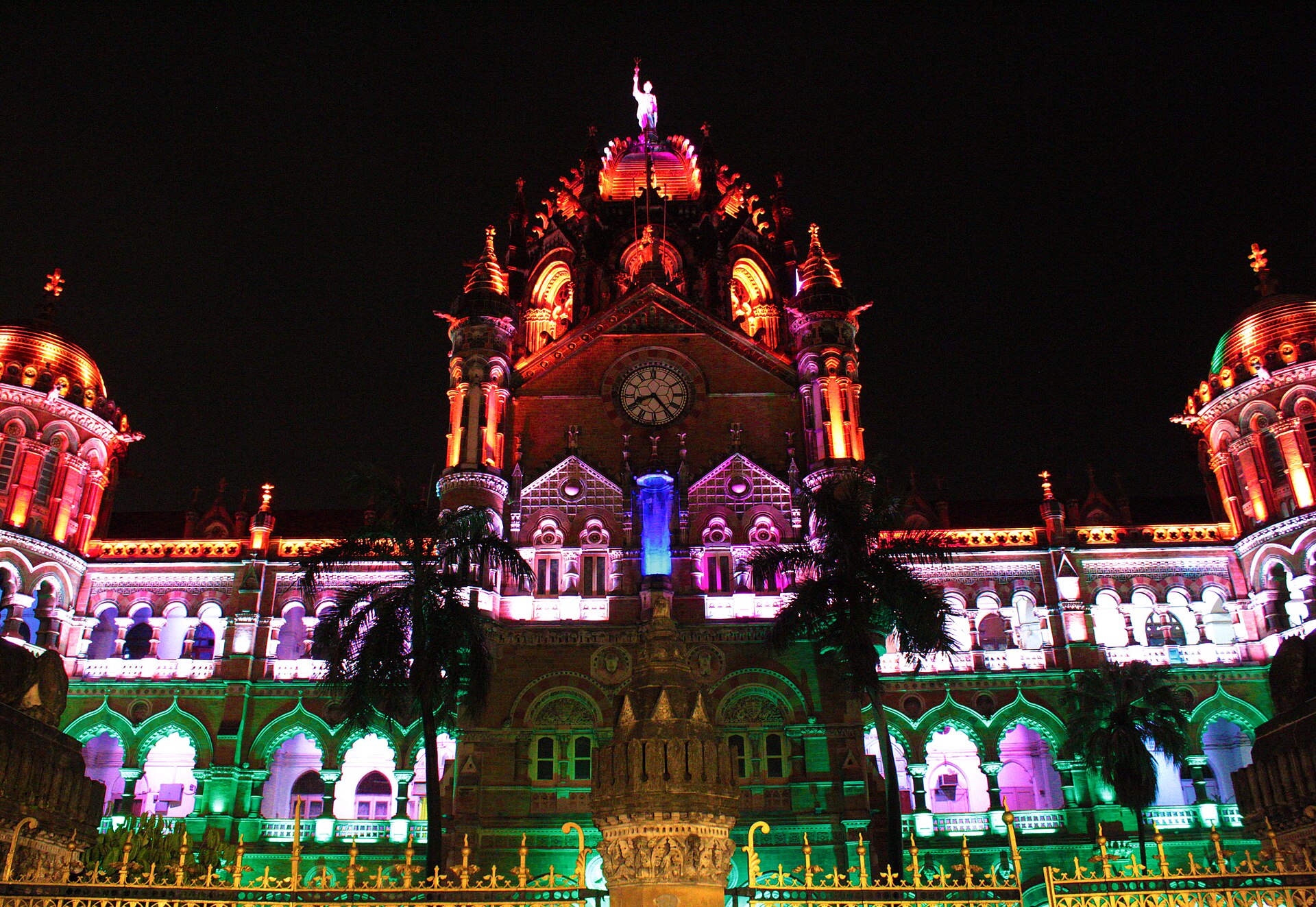

On 16 April 1853 a train of fourteen carriages left Bori Bunder in Bombay for Thane, about twenty one miles away, hauled by three locomotives named Sahib, Sindh and Sultan. It was not the first railway track laid in India, since a short goods line had operated near Madras in the late 1830s, but it was the first passenger service, and it began a construction programme that within seventy years produced one of the largest rail networks in the world. What that network was built for, who paid for it and what it did to Indian society are three different questions, and they have three different answers.
Who paid, and who profited
The financing arrangement is the key to understanding colonial railway policy. Lord Dalhousie's minute of 1853 set out a plan for trunk lines built not by the state but by private British companies operating under a guarantee: the Government of India promised shareholders a fixed annual return, generally five per cent, on capital invested, and provided the land free of charge. If the line earned less, the difference came from Indian revenues. If it earned more, profits were shared.
The consequence was a system in which British investors carried almost no risk. Capital flowed easily, which is why construction was fast, but companies had little incentive to control costs, since expensive construction increased the capital base on which the guaranteed return was calculated. Indian nationalist economists made this a central exhibit in the drain of wealth argument: Dadabhai Naoroji and Romesh Chunder Dutt pointed out that the interest payments left India annually while the assets and most of the manufactured inputs were British. The government recognised the problem, began building state lines from around 1869 and bought out several companies from the 1870s, but the guarantee model shaped the network that already existed and continued in modified form.
Strategic considerations mattered as much as commercial ones, particularly after the rebellion of 1857, which had exposed how slowly troops could be moved across the subcontinent. Lines were routed and stations built with military use in mind, and the loop lines to the north west frontier were plainly defensive. The two motives are hard to disentangle, because the same route could serve both.
Gauge, geography and the ports
Dalhousie insisted on a broad gauge of five feet six inches for trunk routes, wider than the British standard, on the reasoning that a wider track would be more stable in Indian conditions. From the 1870s, under pressure to extend cheaply into famine prone districts, the administration authorised metre gauge lines, and later narrow gauge for hill and feeder routes. The result was the gauge muddle: a network on which through traffic repeatedly had to be transhipped. Independent India lived with the problem for decades and only addressed it systematically through Project Unigauge from 1992, converting metre gauge routes to broad gauge over many years.
The map itself carries the clearest evidence of purpose. Trunk routes ran from the interior to the three presidency ports of Bombay, Calcutta and Madras, and to Karachi, rather than connecting Indian producing regions to one another. Cotton moved from the Deccan to Bombay, jute from Bengal's interior to Calcutta, wheat from Punjab to Karachi. When the American Civil War cut off supplies to Lancashire between 1861 and 1865, Indian cotton exports surged, and the railway was the instrument that made it possible. In the other direction the trains carried cheap Manchester cloth deep inland, undercutting handloom weavers in markets they had previously supplied without competition.
The engineering was often extraordinary, and much of it survives. The Darjeeling Himalayan Railway, opened in the early 1880s, climbs the hills through loops and zigzags on a two foot gauge and was the first Indian railway inscribed by UNESCO, in 1999, with the Nilgiri rack railway and the Kalka to Shimla line added later. The Pamban bridge to Rameswaram, opened in 1914, was for decades India's only sea bridge. Victoria Terminus in Bombay, designed by Frederick William Stevens and completed in 1887, was inscribed as a World Heritage site in 2004 under its present name, Chhatrapati Shivaji Terminus.
What the railways did to Indian society
The economic effect is genuinely contested, and readers should be wary of confident summaries in either direction. The older nationalist case held that railways were built to extract raw materials and distribute British manufactures, and that they accelerated the decline of Indian handicrafts while doing little for Indian industry, since locomotives, rails and rolling stock were largely imported for decades. Against this, quantitative economic history published in recent years, notably work analysing district level price and trade data, has found that connection to the railway sharply reduced price differences between districts, raised real agricultural incomes, and weakened the link between local rainfall failure and local mortality. Both findings can be true: a network can raise incomes and integrate markets while the returns on the investment flow abroad.
Famine is the hardest case. Railways could move grain into a scarcity district faster than bullock carts ever had. They could also move grain out of a district in which prices were rising, towards ports and towards buyers who could pay more, which is what critics of colonial famine policy have documented for the disasters of the 1870s and 1890s. The technology was neutral; the policy of non interference in grain markets was not.
The social effects were less ambiguous. Third class travel, which carried the overwhelming majority of passengers in conditions that were routinely appalling, put people of different castes and religions into the same crowded compartment for days at a time, which no earlier form of Indian travel had done at that scale. Pilgrimage was transformed: journeys to Varanasi, Puri, Haridwar and Tirupati that had once taken months became a matter of days, and the volume of pilgrims rose accordingly. The railway also created a distinctive workforce, housed in railway colonies with their own schools, hospitals and institutes, in which the Anglo Indian community occupied a recognised and substantial place.
Politically, the network became a tool of the movement that ended colonial rule. Gandhi travelled third class through India in 1917 and wrote about what he saw, and mass mobilisation across a subcontinent would have been impossible without a system that let organisers and newspapers move quickly. Partition in 1947 then cut the network in two, splitting the North Western Railway, and the refugee trains of that year remain among the most painful images of the period. In 1951 the surviving companies and princely state systems were merged into the zonal structure of Indian Railways, which is now among the largest employers on earth and still runs on much of the alignment surveyed in the nineteenth century.
References
- UNESCO World Heritage CentreMountain Railways of India
- UNESCO World Heritage CentreChhatrapati Shivaji Terminus (formerly Victoria Terminus)
- Indian Railways, Ministry of RailwaysEvolution of Indian Railways: Historical Background
- The British LibraryRailways in India: collections and history
- American Economic Review (Dave Donaldson)Railroads of the Raj: Estimating the Impact of Transportation Infrastructure
This is a reference article, written from the sources above. It is background, not news reporting.