


Remittances and the Economics of Migration
Reference library · 1099 words


A remittance is a small private transfer of money from a person working abroad to a household at home. Individually the sums are unremarkable: a few hundred dollars a month, timed to a school fee or a hospital bill or a wedding. Collectively they add up to one of the largest and most reliable financial flows in the world economy. India receives more remittance money than any other country and was the first to cross the threshold of one hundred billion United States dollars in a single year, a milestone recorded by the World Bank for 2022. Globally, money sent home by migrants to low and middle income countries now substantially exceeds official development assistance and, in most years, rivals or exceeds foreign direct investment.
What distinguishes remittances from other capital flows is who decides. Foreign investment responds to expected returns and leaves when the outlook sours. Remittances respond to obligation. A migrant who has committed to supporting parents or repaying a loan continues sending money when the recipient economy weakens, and often sends more, because the need at home has risen. Economists describe this as counter cyclical behaviour, and it was demonstrated dramatically in 2020, when forecasters predicted a collapse in global remittances during the pandemic and the flows instead proved remarkably resilient. Part of that was migrants drawing down savings to support families in crisis, and part was a shift from informal cash carrying channels to recorded bank and digital transfers when borders closed, which made previously invisible money visible in the statistics.
How the money moves and what it costs
The channels form a hierarchy of cost. At the top sit banks, historically slow and expensive for small sums. Below them are money transfer operators such as Western Union and MoneyGram, with dense agent networks that reach places banks do not. Below those are digital providers and remittance apps, generally the cheapest formal option. Alongside all of them runs the informal system, known in South Asia as hawala or hundi, in which a broker in one country accepts cash and a counterpart in another pays it out, with the two settling between themselves later. Hawala is fast, cheap, requires no documentation and leaves almost no trace, which is precisely why it is illegal in India under foreign exchange law and why authorities worldwide treat it as a money laundering concern. It persists because for undocumented migrants and remote villages it often remains the only channel that works.
Cost is the central policy fight. The United Nations Sustainable Development Goals set a target of reducing the average cost of sending remittances to less than three per cent of the amount sent and eliminating corridors that charge more than five. The global average has fallen over two decades but remains well above that target, and the burden is deeply unequal: transfers from the Gulf to South Asia are among the cheapest corridors in the world, partly because of enormous volume and fierce competition, while corridors within and out of sub-Saharan Africa remain the most expensive. Every percentage point matters because the money is being sent by people on low wages in amounts small enough that fixed fees bite hard.
What remittances do to the places that receive them
At household level the effects are well documented and largely positive. Remittance receiving families in India spend more on food, healthcare, housing and children's education, and are markedly less likely to fall into poverty when a crop fails or an earner falls ill. In Kerala, the state most transformed by outward migration, decades of survey work by the Centre for Development Studies in Thiruvananthapuram have traced how Gulf earnings rebuilt housing stock and financed private schooling and health care.
At the level of a whole economy the picture is more argued over. Sceptics point to several mechanisms of harm. Large inflows of foreign currency can push up the exchange rate and make a country's other exports less competitive, a version of what economists call Dutch disease. Money spent on consumption and land rather than on productive enterprise inflates asset prices without expanding output, and land prices in migrant heavy districts of Kerala and Punjab have risen far ahead of local earnings. Dependence can also entrench itself, with a generation growing up expecting to migrate rather than to build a career locally, and with governments under less pressure to create jobs because families are solving the problem privately.
Then there is the loss of the person. The classic brain drain argument holds that when a country trains a doctor or an engineer at public expense and that person emigrates, the country has subsidised a richer economy. The counter argument, sometimes called brain gain, is that the prospect of emigration raises the incentive to acquire skills, that not everyone who trains leaves, that some return with capital and experience, and that diaspora networks generate investment, trade and knowledge transfer of their own. India's information technology industry is frequently cited as evidence for the second view, given the role of returnees and of diaspora professionals in Silicon Valley. Neither argument has clearly won, and the answer probably differs by profession: the case for harm is strongest in health care, where the departure of nurses and doctors from a country with few of them is difficult to offset.
Beyond the household transfer
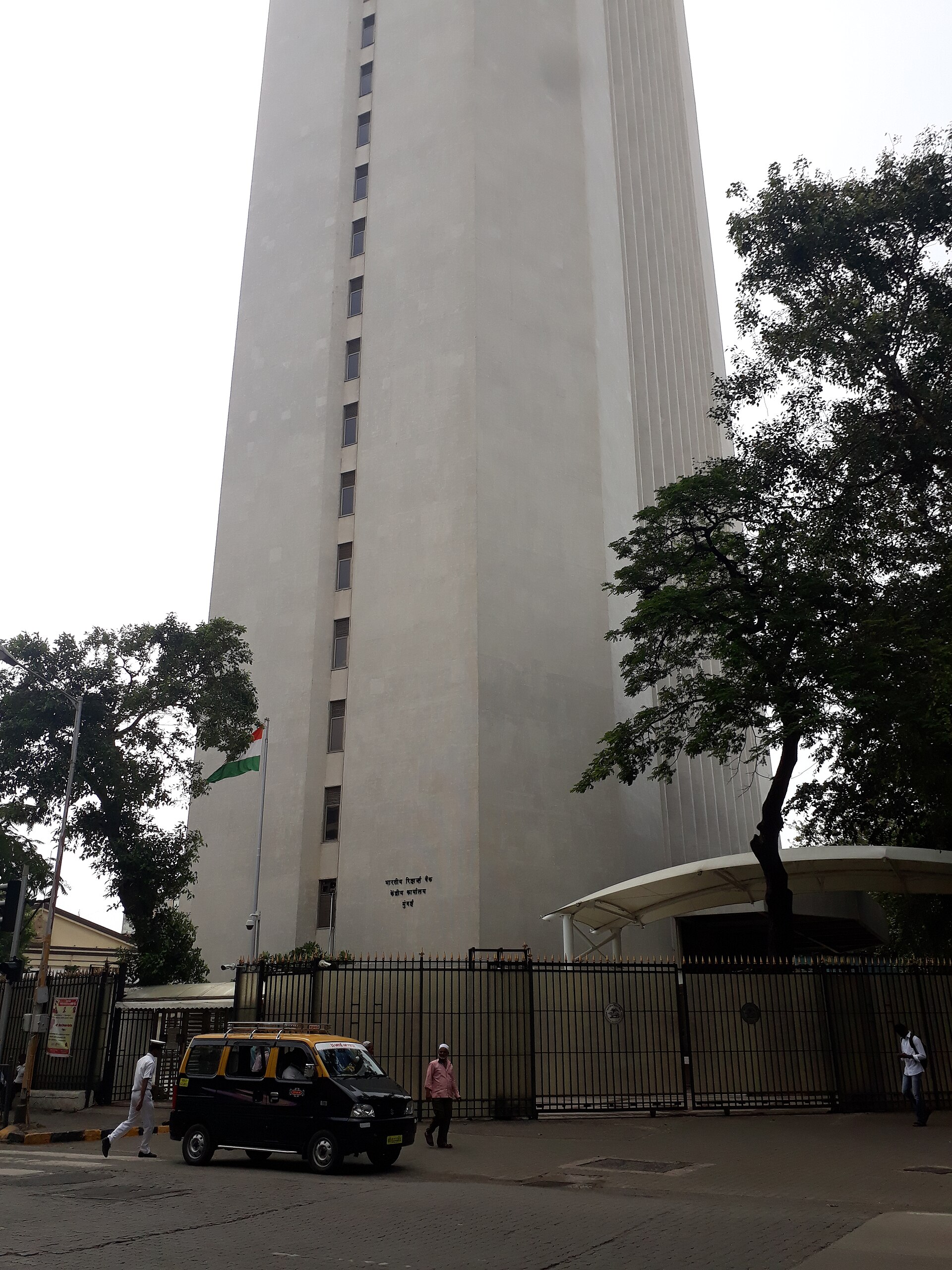
Governments have tried to capture diaspora money in more structured forms. India issued Resurgent India Bonds in 1998, after sanctions imposed following its nuclear tests restricted other funding, and India Millennium Deposits in 2000, both aimed at non resident Indians and both raising substantial sums quickly. Non resident deposit accounts, held in rupees or foreign currency under Reserve Bank rules, remain a significant and more volatile source of external finance than ordinary remittances, since depositors move them in response to interest rates and exchange rate expectations in a way that families supporting parents do not.
The composition of India's inflows is also shifting. Reserve Bank surveys of remittance sources have found the share coming from advanced economies rising relative to the Gulf, reflecting the growth of skilled and student migration to the United States, Britain, Canada, Australia and Singapore. This changes the character of the flow. Gulf remittances have historically been many small, regular transfers from manual workers to rural households in Kerala, Uttar Pradesh and Bihar. Remittances from advanced economies tend to be fewer, larger and less regular, sent by professionals whose families are often already comfortable, and are more likely to be investment than subsistence. The aggregate number keeps rising, but it is describing an increasingly different set of people.
References
- World BankMigration and remittances
- KNOMADGlobal Knowledge Partnership on Migration and Development
- Reserve Bank of IndiaReserve Bank of India
- United NationsSustainable Development Goal 10
This is a reference article, written from the sources above. It is background, not news reporting.