Reorganising States Along Linguistic Lines
Reference library · 1096 words

The internal map of India that exists today is not the map the British left. Colonial provinces had been assembled by conquest, treaty and administrative convenience, so the Madras Presidency stretched across Tamil, Telugu, Malayalam and Kannada speaking districts, while Bombay Presidency covered Marathi, Gujarati, Konkani and Kannada areas, and several hundred princely states of wildly varying size sat between and among them. Within a decade of independence, most of that had been dismantled and replaced by states drawn largely on the basis of language. It was one of the largest peacetime redrawings of an internal political map anywhere, and it was done under intense popular pressure that the national leadership had initially resisted.
The idea itself was older than independence. The Indian National Congress reorganised its own provincial committees along linguistic lines from 1920, at the Nagpur session, on the practical ground that a mass movement had to be conducted in the languages people actually spoke. Congress resolutions through the 1920s and 1930s endorsed linguistic provinces as a principle for a future free India, and regional organisations such as the Andhra Mahasabha campaigned for specific states. The commitment was clear enough that when it was not honoured after 1947, campaigners could quote the party's own record back to it.
Why the leadership hesitated, and what forced its hand
Partition changed the calculation. Having just watched a country divided on the basis of religious identity, with the human consequences visible in every refugee camp, Jawaharlal Nehru, Vallabhbhai Patel and much of the Congress leadership were extremely reluctant to redraw internal boundaries around any other ascriptive identity. A commission under S. K. Dar reported in 1948 against linguistic reorganisation, arguing it would encourage sub nationalism at the expense of national unity. A Congress committee of Nehru, Patel and Pattabhi Sitaramayya, generally known by the initials JVP, reported in 1949 in similarly discouraging terms while conceding that Andhra might be a special case if opinion there was overwhelming.
Opinion in the Telugu districts of Madras State was overwhelming, and it was expressed in a way the government could not absorb. Potti Sriramulu, a Gandhian activist, began a fast unto death in Madras in October 1952 demanding a separate Andhra state. He died on 15 December 1952 after fifty eight days. The reaction across the Telugu districts was immediate and violent, with attacks on public property and deaths in police firing. Within days the Union government announced it would create the state. Andhra State came into being on 1 October 1953, carved from the Telugu speaking districts of Madras, with Kurnool as its first capital.
Having conceded once, the government could not refuse everyone else, so it did the constitutionally sensible thing and appointed a commission to design a general settlement. The States Reorganisation Commission, chaired by Fazl Ali with K. M. Panikkar and H. N. Kunzru as members, was appointed in 1953 and reported in 1955. Its recommendations were pragmatic rather than doctrinaire: language should be a major criterion but not the only one, and financial viability, administrative convenience and the preservation of national unity should also weigh. Parliament acted on it through the States Reorganisation Act of 1956, which took effect on 1 November 1956 and reduced a complicated inheritance to fourteen states and six centrally administered territories, abolishing the old classification of states inherited from the princely settlement. Kerala was formed by joining Travancore and Cochin with the Malayalam speaking Malabar districts of Madras; Mysore state, later Karnataka, absorbed Kannada districts from Bombay, Hyderabad and Madras; Madras State kept its Tamil core and was renamed Tamil Nadu in 1969.
The unfinished business
The 1956 Act deliberately left two of the hardest cases unresolved, and both then resolved themselves through agitation. Bombay State was kept as a bilingual unit containing both Marathi and Gujarati speakers, with the city of Bombay, commercially dominant and demographically mixed, as the prize both claimed. The Samyukta Maharashtra Samiti campaigned for a Marathi state including Bombay, and the Mahagujarat Andolan for a separate Gujarat. Police firing on demonstrators in Bombay in January 1956 killed a large number of protesters at Flora Fountain, now renamed Hutatma Chowk, meaning Martyrs' Crossing, where a memorial stands. In 1960 the state was divided: Maharashtra with Bombay as capital and Gujarat with a new capital eventually built at Gandhinagar, both dating their statehood to 1 May 1960.
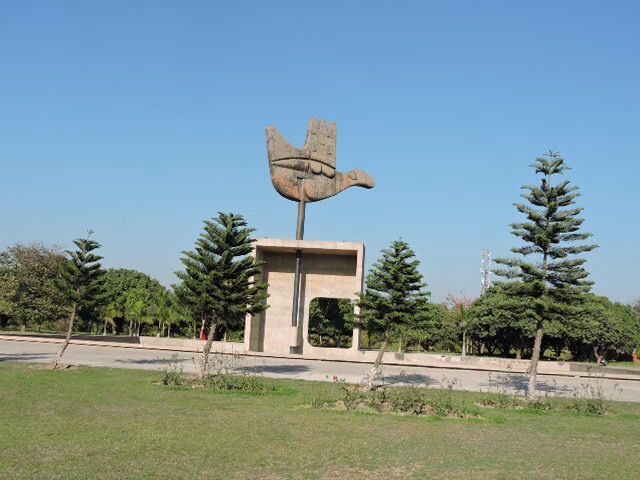
Punjab was the other case, and here language and religion were entangled, which is precisely why the commission had avoided it. The Akali Dal's demand for a Punjabi speaking state was resisted on the ground that it was a demand for a Sikh majority state by another name, and census returns of mother tongue in the region became politically loaded, with many Punjabi speaking Hindus recording Hindi. After sustained agitation, the Punjab Reorganisation Act of 1966 divided the state on 1 November 1966 into a Punjabi speaking Punjab and a Hindi speaking Haryana, transferred hill districts to Himachal Pradesh, and left Chandigarh as a shared capital administered as a Union Territory, an arrangement intended to be temporary that has now lasted well over half a century.
The north east followed a different logic, closer to ethnicity and to the settlement of insurgencies than to language alone. Nagaland was created in 1963, Meghalaya in 1972 along with statehood for Manipur and Tripura, and Mizoram and Arunachal Pradesh became states in 1987, the Mizoram settlement following a peace accord. Later state creations abandoned the linguistic principle entirely: Chhattisgarh, Uttarakhand and Jharkhand, all created in November 2000, were carved out on grounds of regional neglect, tribal population and administrative distance from distant capitals, and Telangana, separated from Andhra Pradesh on 2 June 2014, divided a single language community on grounds of regional grievance over water, jobs and investment.
The larger judgement is contested. One view, associated with the constitutional settlement's defenders, holds that linguistic reorganisation defused the most dangerous fault line available by giving language communities secure political homes, so that language became a matter of state politics rather than a threat to the Union. The opposing view is that it entrenched regional identities, made language a permanent instrument of political mobilisation, and generated an endless queue of further claims. That queue is real: Vidarbha, Gorkhaland, Bodoland, Bundelkhand and others have active movements. Parliament retains the power under Article 3 to create, merge or rename states by ordinary majority, needing only to refer the bill to the affected legislature for its views, which it is free to ignore. The map, in other words, remains formally easy to change and politically very hard to.
References
- Government of IndiaThe States Reorganisation Act, 1956
- Encyclopaedia BritannicaStates Reorganisation Act
- Government of IndiaThe Constitution of India, Article 3
- PRS Legislative ResearchThe Andhra Pradesh Reorganisation Act, 2014
- National Archives of IndiaNational Archives of India
This is a reference article, written from the sources above. It is background, not news reporting.