
Script Reform and the Push for Standardisation
Reference library · 1062 words
.jpg)
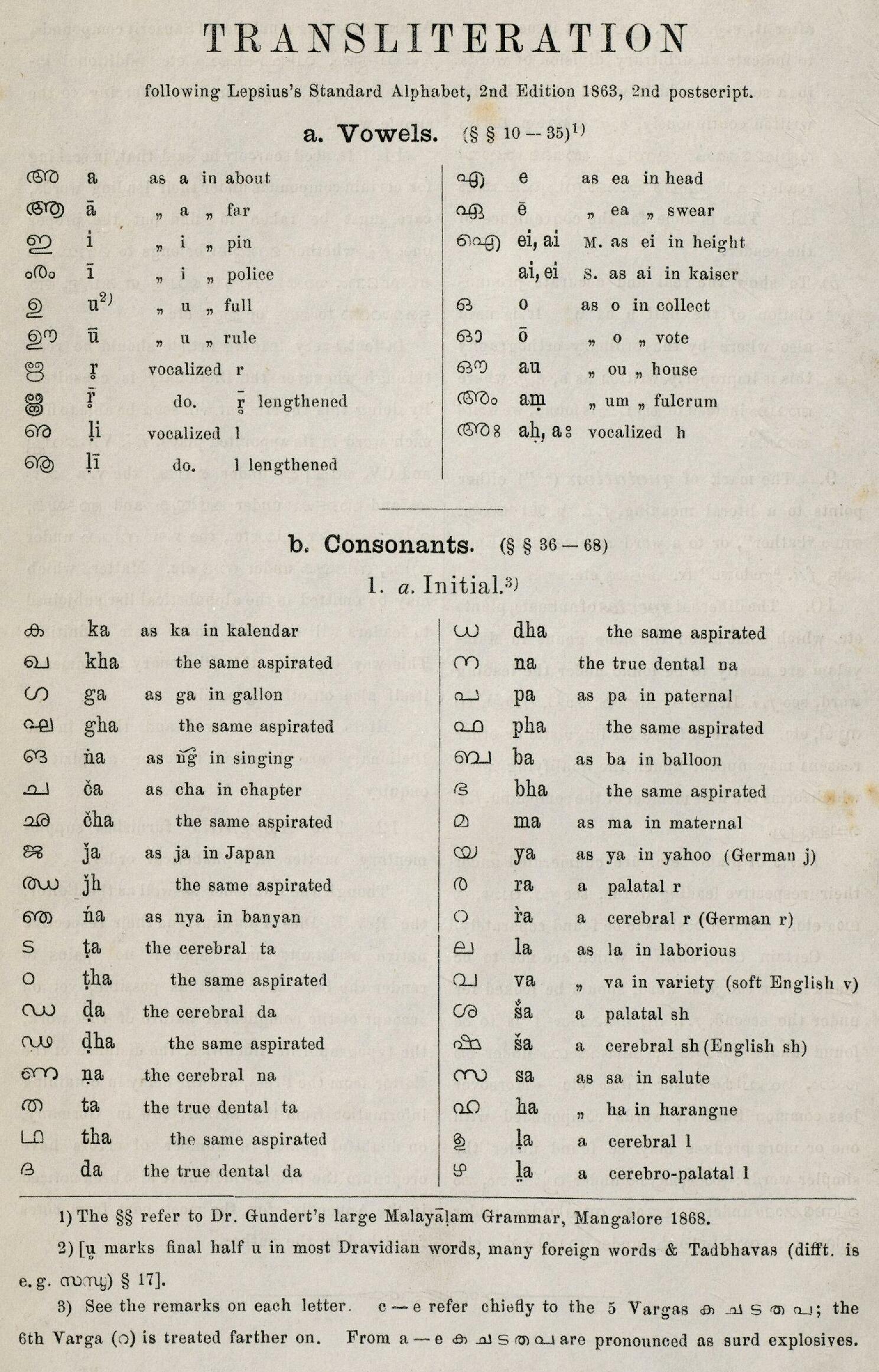
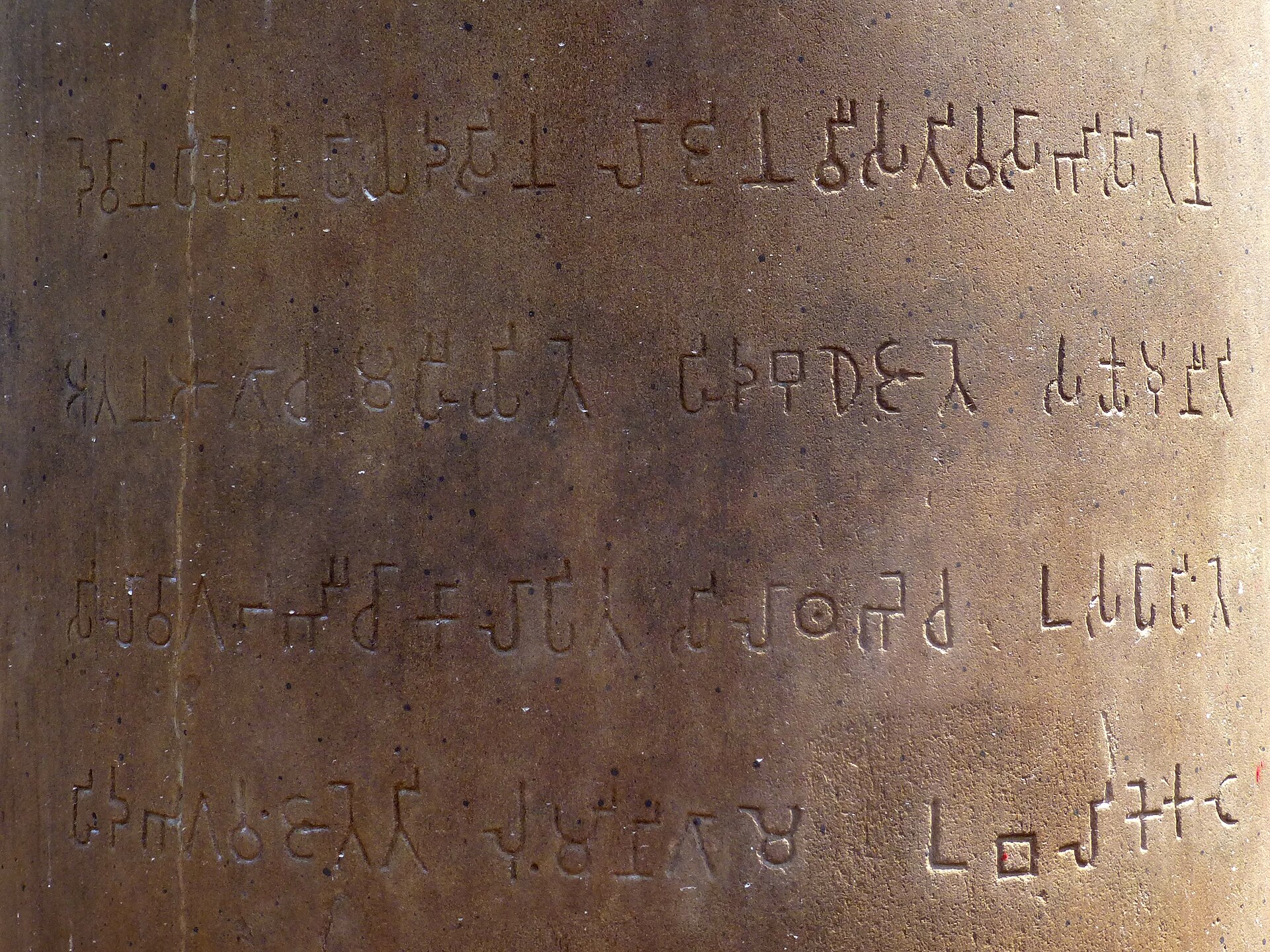
India writes in more scripts than any other country of comparable size. Devanagari serves Hindi, Marathi, Nepali, Sanskrit and Konkani; Bengali script serves Bengali and, in modified form, Assamese; and Gurmukhi, Gujarati, Odia, Tamil, Telugu, Kannada, Malayalam, Meitei Mayek and the Perso Arabic script used for Urdu and Kashmiri all carry substantial literatures. Most of these, apart from the Perso Arabic and Roman scripts, descend from Brahmi, the script of the Ashokan inscriptions of the third century BCE, and they share a common underlying logic while looking entirely different on the page. Managing that inheritance, deciding what counts as correct spelling, which letters are official, and how the whole system should be encoded for computers, is the unglamorous work of script standardisation.
Why standardisation became urgent
Before printing, variation was tolerable. A scribe in Varanasi and a scribe in Pune could form letters differently without consequence. Printing changed that, because a typefoundry must cut a fixed set of sorts, and every additional conjunct consonant, of which Devanagari has hundreds, is another piece of metal to cut, store and set. Nineteenth century presses, including missionary presses and the great Indian publishing houses, therefore made practical decisions about which conjuncts to render as fused ligatures and which to render with a half letter followed by a full letter. Those decisions gradually became conventions.
Mass literacy made the pressure political. If the state prints textbooks for tens of millions of children, it must decide what the correct form is. After independence, the Central Hindi Directorate, established in 1960, was charged with standardising Hindi spelling and Devanagari orthography for official use, and it issued guidance on matters such as the use of the anusvara, the dot marking nasalisation, in place of a written nasal consonant, and the treatment of the nukta, the subscript dot marking sounds borrowed from Persian and Arabic. The Bureau of Indian Standards subsequently issued standards for Devanagari character sets. Parallel bodies did similar work for other languages, and Sahitya Akademi, the national academy of letters founded in 1954, has played a role in stabilising literary usage across all its recognised languages.
Contested reforms and abandoned ones
Not every reform proposal succeeded, and the failures are instructive. Bengali orthography preserves distinctions that no longer exist in speech, including several letters representing sibilants that are pronounced identically by most speakers, and reformers have argued for simplification for more than a century without carrying the point. The reason is that spelling encodes etymology and connects a reader to older texts, and the constituency for keeping that connection, teachers, writers and publishers, is exactly the constituency whose agreement any reform requires.
Tamil is the notable case where reform did succeed. In the 1970s the Tamil Nadu government adopted a set of reforms associated with the Dravidian movement and with the writer and politician who led it, simplifying certain vowel sign combinations so that the marks attached consistently to the right of a consonant rather than being fused into irregular shapes. The reform reduced the number of distinct shapes a learner and a typesetter had to know. It was accepted because it was pushed by a government with a strong ideological commitment to Tamil, and it was framed as a modernisation of Tamil rather than an imposition from outside.
The most politically loaded proposals have been those to change script altogether. Proposals to write all Indian languages in Devanagari, floated at various points as a route to national unity, ran into immediate and predictable resistance in the south and east, where the script is part of a distinct cultural identity. Proposals to romanise, that is to write Indian languages in the Latin alphabet, have surfaced repeatedly, most influentially in arguments about typewriters and later about computing. They too have failed, but with a twist discussed below.
Script is also entangled with the boundary between languages. Hindi and Urdu are, at the level of everyday conversation, largely the same language written in two different scripts and drawing high vocabulary from different sources, Sanskrit in one case and Persian and Arabic in the other. The scripts did not create that divide, but they made it visible and durable, and the same pattern appears in Punjabi, written in Gurmukhi in Indian Punjab and in the Shahmukhi form of the Perso Arabic script in Pakistani Punjab, so that speakers of one language read two mutually illegible traditions. Konkani is written in Devanagari, Roman and Kannada scripts by different communities, and the choice of official script has been a live political dispute in Goa.
Encoding, and the reform nobody planned
The decisive standardisation of the past forty years was technical. Early Indian computing used incompatible fonts in which each vendor mapped Devanagari shapes onto Latin byte values in its own way, so a document made in one system was unreadable in another. The Indian Script Code for Information Interchange, known as ISCII, was standardised by the Bureau of Indian Standards in the 1980s and 1990s and exploited the common Brahmi structure to give all the major Indian scripts a parallel encoding, meaning text could be transliterated between scripts mechanically. ISCII fed into the Unicode Standard, which now allocates separate blocks to Devanagari, Bengali, Gurmukhi, Gujarati, Oriya, Tamil, Telugu, Kannada, Malayalam and others, along with encodings for historic scripts such as Brahmi and Sharada. Unicode did more for practical standardisation than any orthographic committee, because it made the correct forms the ones the computer could render.
The unplanned reform is romanisation by the back door. Because early mobile phones and keyboards handled the Latin alphabet best, hundreds of millions of Indians learned to type their language in Roman letters phonetically, producing the ad hoc transliteration familiar from text messages and social media. Predictive input tools now convert this into native script automatically, which has partly reversed the trend, and Indian language content online has grown substantially. But an entire generation has become fluent at writing its mother tongue in a script that has no standard at all, spelling the same word several different ways in the same conversation. Whether that erodes native script literacy or simply adds a register alongside it is not yet settled, and researchers studying Indian digital language use disagree. What is clear is that the most consequential decisions about how Indian languages are written are now made by engineers designing input methods rather than by committees issuing orthographic circulars.
References
- Unicode ConsortiumThe Unicode Standard: South and Central Asia scripts
- Central Hindi Directorate, Government of IndiaKendriya Hindi Nideshalaya
- Sahitya AkademiSahitya Akademi, India's National Academy of Letters
- Bureau of Indian StandardsIndian Standards catalogue
This is a reference article, written from the sources above. It is background, not news reporting.