
Seasonal and Circular Migration Within India
Reference library · 975 words
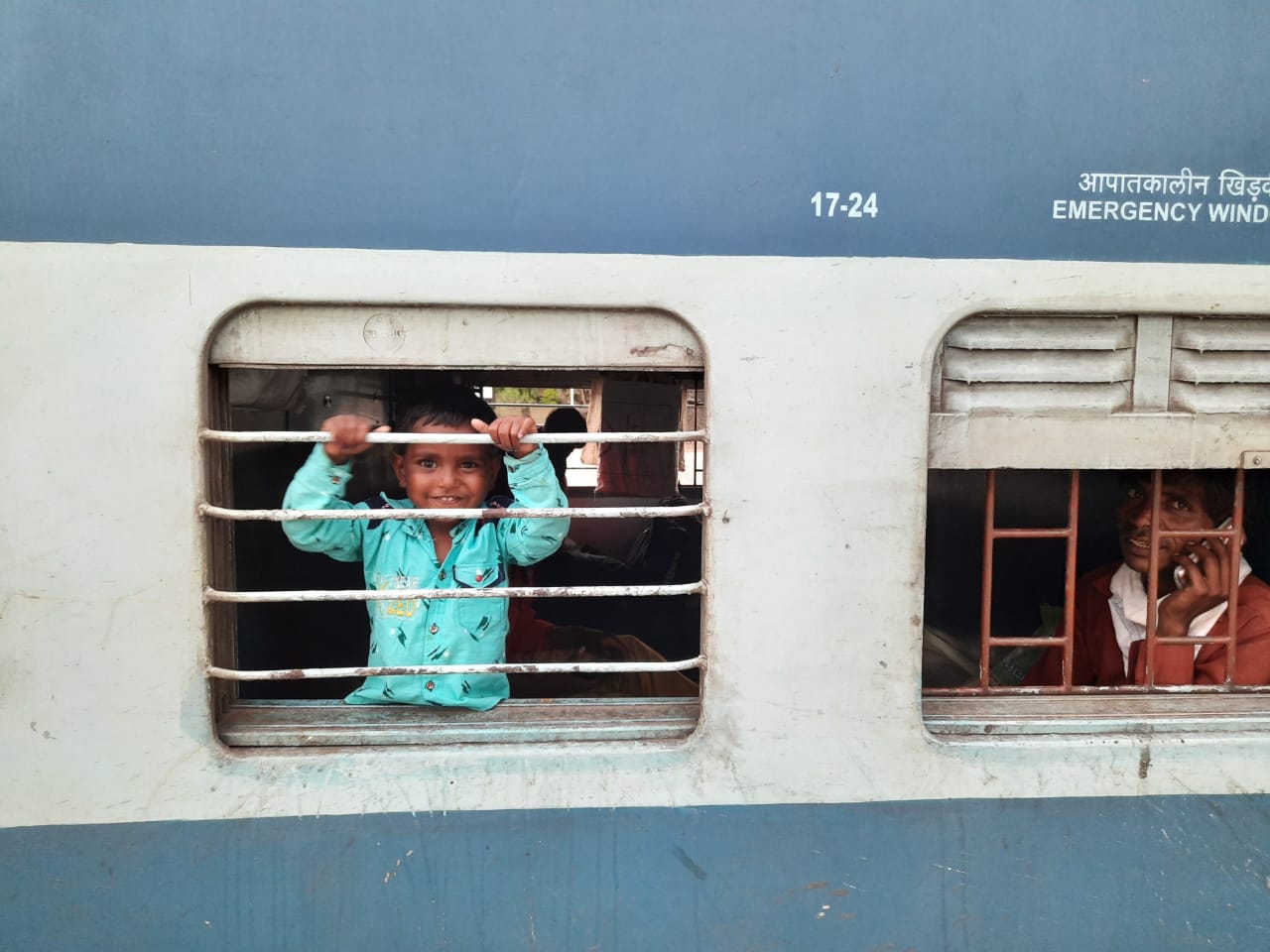

Most writing about Indian migration deals with people who leave and settle somewhere else. A far larger movement happens inside the country, and it is not a one-way journey at all. Every year, after the monsoon crop is harvested and before the next sowing, millions of people leave villages in Bihar, eastern Uttar Pradesh, Jharkhand, Odisha, Chhattisgarh, western Rajasthan and the Marathwada districts of Maharashtra to work somewhere else for three, six or nine months, and then come home. They cut sugarcane, mould bricks, transplant paddy, carry loads on construction sites, work in roadside eateries, pull rickshaws and staff small factories. The household remains anchored in the village. The worker circulates. Economists call this circular or seasonal migration, and it is probably the single most important livelihood strategy for the poorest rural households in India.
Counting it is genuinely difficult, and the official numbers should be read with that caveat attached. The census asks where a person's last residence was and how long they have lived at the current place, which captures people who have moved and stayed, and systematically misses someone who is away for five months and back before the enumerator arrives. The 2011 census counted more than forty-five crore internal migrants on that definition, but the overwhelming majority of those moves are women relocating on marriage. When the Economic Survey of 2016 to 2017 tried a different method, using unreserved railway passenger flows to estimate work-related movement, it arrived at figures for annual inter-state migration far higher than survey-based estimates had suggested. The honest summary is that the direction and structure of the flows are well understood while the totals are not.
How the recruitment actually works
Very little of this movement happens through anything resembling a labour market with advertised vacancies. It runs on labour contractors, known variously as mukadam, sardar, thekedar or jamadar, who are usually from the same district and often the same caste and village network as the workers they recruit. The contractor advances a lump sum of cash before departure, timed to coincide with a wedding, a medical bill, a festival or the need to repay an earlier debt. That advance is then worked off at the destination. This is the mechanism at the heart of the system, and it explains most of its abuses.
Two well-documented examples show the shape of it. In the sugarcane belt, cutters recruited largely from Beed and neighbouring districts of Marathwada travel to mills in western Maharashtra and Karnataka for the crushing season. They are hired as couples rather than individuals, the unit of hiring being the koyta or sickle, so a husband and wife are counted and paid as one worker, with the advance settled against the tonnage the pair cuts. Children travel with them, which is one reason school dropout rates track the cane calendar. In brick kilns across eastern and southern India, workers recruited from districts such as Bolangir, Nuapada and Kalahandi in western Odisha, and from Bihar, Jharkhand and Chhattisgarh, arrive under the advance system, live on the kiln premises for the dry season, and are paid piece rates per thousand bricks moulded, with accounts settled only at the end. When accounts are kept by the employer, are disputed by an illiterate worker far from home, and are backed by an advance already spent, the arrangement slides easily into debt bondage. Rescue operations by district administrations and the National Human Rights Commission have repeatedly found kiln workers held in exactly these conditions.
Destinations, and the rights that do not travel
The flows have well-worn corridors. Punjab and Haryana draw agricultural labour from Bihar and eastern Uttar Pradesh for paddy transplanting and wheat harvest. Delhi and the National Capital Region, Mumbai, Surat, Bengaluru and Hyderabad draw construction and manufacturing labour from across the eastern states. Kerala, which has a shrinking and ageing local workforce and unusually high local wages, has become the destination for several lakh workers from West Bengal, Assam, Odisha and Bihar, referred to in state policy as guest workers. Kerala is also the state that has responded most institutionally, with a dedicated health insurance scheme for migrant workers and state-supported hostel accommodation, which is not the norm elsewhere.
The core policy problem is that in India most social entitlements are administered by the state where a person is registered, not the state where they work. A worker's ration card, their child's school place, their public health entitlement and their electoral roll entry all sit in the home village. Cross the state line and much of that becomes inaccessible. The Inter-State Migrant Workmen Act of 1979 was meant to require registration of contractors and of workers, displacement allowances and equal wages, and it was almost entirely unenforced; its provisions have since been folded into the Occupational Safety, Health and Working Conditions Code of 2020, whose implementation is still incomplete. The two most consequential recent measures are administrative rather than legislative: the One Nation One Ration Card scheme, which makes subsidised grain entitlements portable across states through biometric authentication, and the eShram database, launched in 2021 to register unorganised workers nationally.
The lockdown announced in March 2020 made the whole system visible in a way that decades of research had not. With trains, buses and workplaces halted at a few hours' notice, hundreds of thousands of workers with no local entitlement, no savings and no employer obligation began walking home along highways and railway lines, sometimes for hundreds of kilometres. Special trains were eventually run from May, but the images of that walk permanently changed the Indian policy conversation. They demonstrated that a workforce essential to construction, food processing and urban services had, in a legal sense, no address at the place where it worked. Whether the reforms since then have fixed that, or merely digitised the record of it, remains a fair question.
References
- Ministry of Finance, Government of IndiaEconomic Survey 2016-17, chapter on India on the Move
- Office of the Registrar General and Census Commissioner, IndiaCensus 2011 migration tables (D series)
- International Labour OrganizationInternal labour migration in India
- Ministry of Labour and Employment, Government of IndiaeShram portal for unorganised workers
This is a reference article, written from the sources above. It is background, not news reporting.