

Tea and Coffee: India's Export Beverages
Reference library · 1128 words
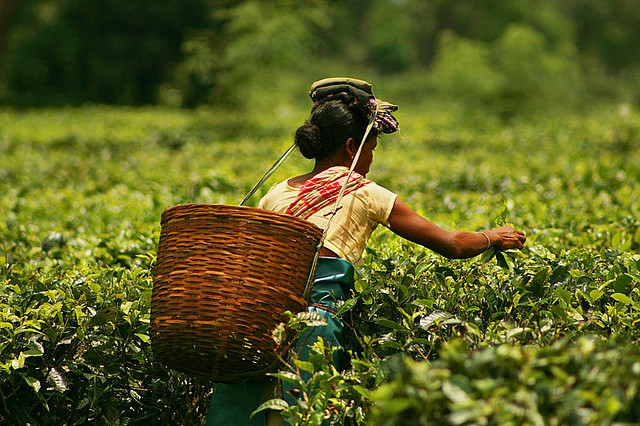

India is one of the very few countries that is simultaneously a major producer, a major exporter and a major consumer of both tea and coffee. That combination is unusual and it explains most of what is distinctive about the two industries. Tea is grown at enormous scale and drunk domestically in such quantity that exports are effectively the residual. Coffee is grown on a much smaller footprint, is barely drunk outside a few southern states and the metropolitan cafe belt, and is therefore overwhelmingly an export crop. The two share a colonial origin, a plantation labour structure and exposure to weather, and almost nothing else.
How tea became an Indian crop
Tea in India begins with a botanical dispute. The Chinese plant, Camellia sinensis, was assumed to be the only tea plant until British observers in Assam in the 1820s reported a wild variety used by the Singpho people. Robert Bruce is generally credited with the observation in 1823 and his brother Charles with establishing that the Assam plant was a genuine tea. A Tea Committee appointed by the East India Company in 1834 experimented with Chinese seed and Chinese planters, the first consignment of Assam tea reached London in 1838, and the Assam Company was floated the following year. Planting in Darjeeling began in the 1840s, using Chinese stock at altitude, which is why Darjeeling tea tastes nothing like Assam, and the Nilgiris in the far south followed.
The plantation system that resulted was built on labour recruited from far away. Workers were brought to Assam largely from the Chhotanagpur plateau in what is now Jharkhand and from Odisha and Chhattisgarh, under recruitment arrangements that were coercive in practice and are now widely described as a form of indenture. Their descendants, several million people, form the tea garden communities of Assam, who remain among the state's poorest and whose classification and entitlements are still politically contested. The Plantations Labour Act of 1951 obliged estates to provide housing, water, medical care, creches and schooling, effectively making the employer a substitute local government, and the persistent gap between what the statute requires and what estates deliver is the core of Assam's recurring wage disputes.
India today produces on the order of one and a third million tonnes of made tea a year, second only to China, with Assam contributing more than half and West Bengal, including Darjeeling and the Dooars, most of the remainder. Roughly four fifths is consumed at home, which is why Indian tea prices track the domestic market more than the London one. Exports, typically in the range of two hundred million kilograms, go chiefly to Russia and other former Soviet states, Iran, the United Arab Emirates, the United Kingdom and the United States. The Tea Board of India, constituted under the Tea Act of 1953, regulates the industry and runs the public auction system through centres at Guwahati, Kolkata, Siliguri, Coonoor and Kochi; Guwahati is the largest auction for CTC tea, the crushed, torn and curled leaf that goes into everyday Indian chai, while orthodox whole leaf production is the smaller, higher value segment.
Darjeeling illustrates the fragility of a premium reputation. It was the first Indian product registered as a geographical indication after the GI legislation of 1999 came into force, and it secured protected status in the European Union in 2011. Yet output is small, gardens are old, and the industry is intensely vulnerable to disruption: the political shutdown in the hills in 2017 closed the gardens for about a hundred days and destroyed the second flush, the most valuable harvest of the year.
Coffee's quieter empire
Coffee reached India by a different route and a much older one. The tradition holds that a pilgrim remembered as Baba Budan carried seeds from Yemen to the hills of Chikmagalur in Karnataka in the seventeenth century; the range there still carries his name. Commercial planting by British growers began in the first half of the nineteenth century, and Karnataka has remained the centre ever since, producing roughly seventy per cent of Indian coffee, with Kerala and Tamil Nadu accounting for most of the rest and a smaller but growing volume from the Araku valley in Andhra Pradesh and from the north east.
Two facts define the industry. First, about seventy per cent of the crop is robusta rather than arabica, which suits the European espresso blend market. Second, the great majority of production is exported, chiefly to Italy, Germany, Belgium, Russia and Turkey, often as green beans that disappear anonymously into blends. Indian coffee is also almost entirely shade grown, planted under a canopy of native and silver oak trees alongside pepper vines and cardamom, which gives estates in Kodagu and Chikmagalur real value as bird habitat and gives growers a second income from spices.
The Coffee Board, established in 1942, once bought the entire crop and marketed it through a pool, paying growers a share. Liberalisation in the mid 1990s dismantled that monopoly, allowing growers to sell and export on their own account. The consequence was a more responsive market and far greater exposure to world price swings set in New York and London. Several Indian coffees carry geographical indications, including Monsooned Malabar, produced by deliberately exposing beans to the humid south west monsoon in coastal warehouses, a technique that began as an accident of long sea voyages, along with Coorg arabica and Araku valley coffee grown by tribal cooperatives. Domestically, the Indian Coffee House chain, run as worker cooperatives since the late 1950s, and the cafe boom that began with Cafe Coffee Day in the mid 1990s, have slowly built an urban drinking culture outside the south.
Prices, labour and a changing climate
Both crops face the same three pressures. Prices for bulk grades are set globally and have often failed to keep pace with production costs, squeezing smallholders hardest; a rising share of Indian tea now comes from small growers selling green leaf to bought leaf factories rather than from integrated estates, which shifts risk downward. Labour is the second pressure: plantation work is arduous, wages are low, and younger workers are leaving for construction and urban service jobs.
Climate is the third and least tractable. Tea yields respond sharply to the timing of rainfall, and Assam has seen both extended dry spells and destructive floods within single seasons. Arabica coffee is vulnerable to the white stem borer, which spreads in warmer, drier conditions, and unseasonal rain at flowering can wipe out a year's crop. Regulation adds another layer: European rules requiring proof that imported coffee was not grown on recently deforested land oblige exporters to trace consignments to individual plots, a heavy burden for an industry of small holdings and a test of access to their most valuable market.
References
- Tea Board of IndiaTea Statistics and Auction Data
- Coffee Board of IndiaCoffee Statistics and Database
- Food and Agriculture Organization of the United NationsFAOSTAT Crops and Livestock Products
- Ministry of Labour and Employment, Government of IndiaThe Plantations Labour Act, 1951
- European CommissionRegulation on Deforestation-free Products
This is a reference article, written from the sources above. It is background, not news reporting.