Telugu: A Language Shaped by the Deccan
Reference library · 1096 words
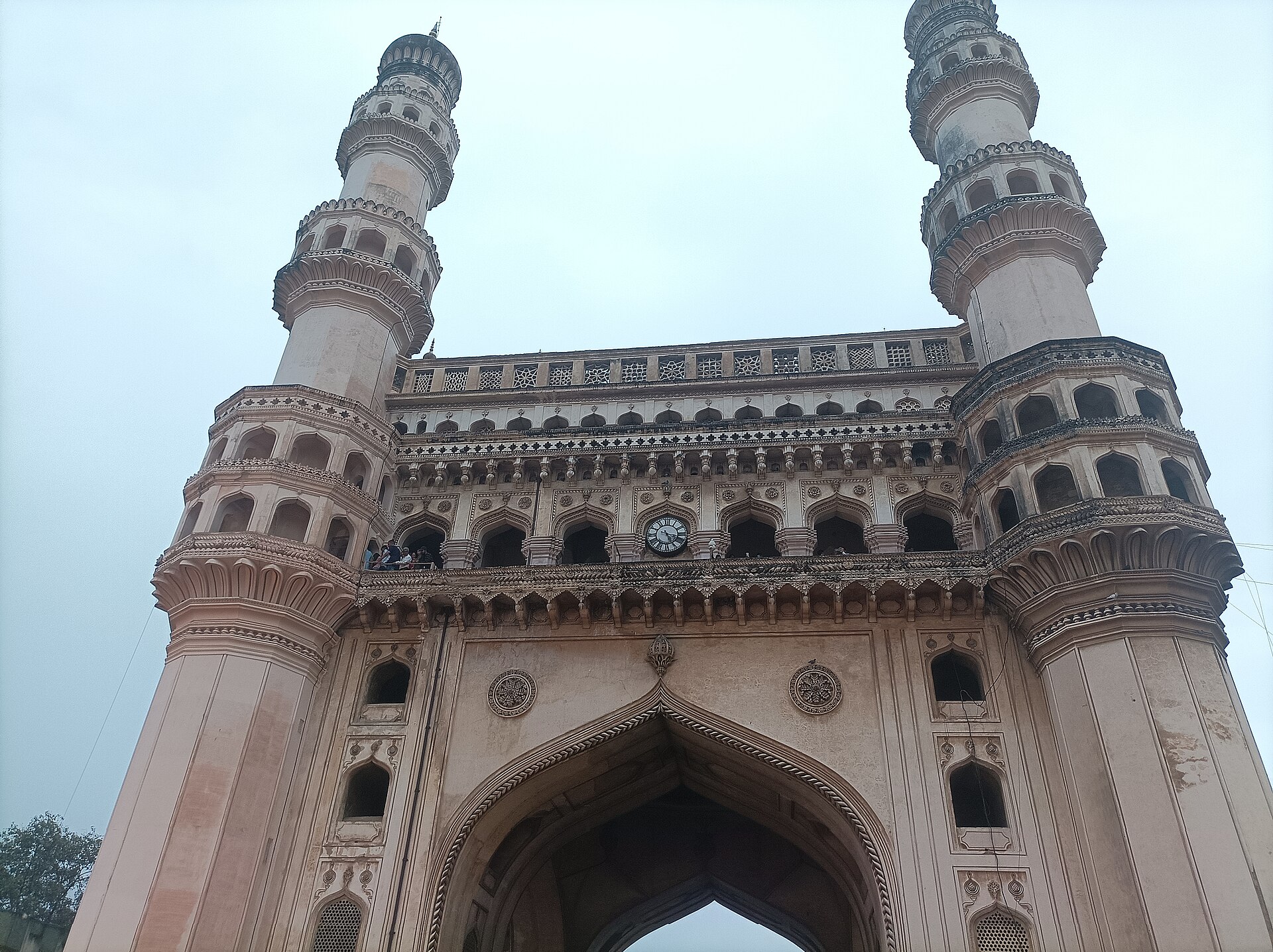

Telugu is the most widely spoken Dravidian language and one of the most spoken languages in India, the official language of both Andhra Pradesh and Telangana and of the small enclave of Yanam in Puducherry. It has a literary tradition running back a thousand years, a script of considerable visual distinctiveness, and, in the last three decades, one of the fastest growing diaspora populations of any Indian language community. Its history is inseparable from the geography of the Deccan plateau, which is where the language was formed, contested and repeatedly reshaped by outside rule.
Linguistically, Telugu belongs to the South Central branch of the Dravidian family, alongside Gondi, Konda, Kui and Kuvi, most of which are spoken by Adivasi communities in the forested uplands of central India. This matters because it locates Telugu's origins not on the coast but inland, among languages that have remained largely oral. Dravidian is an independent family, unrelated to the Indo Aryan languages of northern India such as Hindi, Bengali and Marathi, although the two families have exchanged so much vocabulary, and influenced each other's sound systems and syntax so extensively over three millennia of contact, that South Asia is a standard textbook example of a linguistic area.
Telugu is agglutinative: grammatical relations are expressed by stacking suffixes onto a stem rather than by separate words, so that a single Telugu word can carry what English needs a short phrase to say. Most words end in a vowel, which is one reason Telugu acquired the nickname of the Italian of the East, a phrase attributed to nineteenth century European observers and repeated ever since. It has a large inherited Dravidian core, a very heavy layer of Sanskrit borrowings absorbed through literature and ritual, and in Telangana a substantial layer of Persian and Urdu vocabulary in administration, food, law and everyday speech, left by centuries of rule from the Bahmani and Qutb Shahi courts and then the Nizams of Hyderabad.
Script, inscriptions and the first literature
The Telugu script descends, like almost every Indian script, from Brahmi, by way of a southern branch sometimes called the Telugu Kannada script, whose forms are visible in inscriptions of the Kadamba and Chalukya periods. Telugu and Kannada writing were essentially a single tradition until the later medieval centuries, when the two diverged into the distinct but visibly related scripts used today. The rounded letterforms are a consequence of writing material: incising straight lines on a palm leaf splits the leaf along its fibres, so scribes in the south developed curved strokes.
Individual Telugu words and place names appear in Prakrit inscriptions from the Satavahana period, and the language is clearly older than its written record. The inscription usually cited as the earliest substantially in Telugu is the Kalamalla record from Kadapa district, assigned to the sixth century and issued under the Renati Cholas. From that point the epigraphic record thickens steadily.
Literary Telugu begins conventionally in the eleventh century with Nannaya, a court poet of the Eastern Chalukya ruler Rajaraja Narendra, who began a Telugu rendering of the Mahabharata. He did not finish it. Tikkana, in the thirteenth century, took up the later books, and Errana completed the remainder in the fourteenth, and the three are known collectively as the trinity of poets. The choice of the epic as the founding text mattered: it committed literary Telugu to a highly Sanskritised register, and it established a poetic idiom that later writers had to work with or against.
The high point of courtly Telugu came under the Vijayanagara empire in the sixteenth century, when the emperor Krishnadevaraya, himself the author of the poem Amuktamalyada, presided over a celebrated literary circle. A line in praise of Telugu as the finest of the regional languages is popularly attributed to him and quoted constantly in Telugu public life. In parallel, a devotional literature developed that reached far beyond courts: Annamacharya composed thousands of short devotional songs to the deity at Tirumala, and the seventeenth century poet known as Kshetrayya wrote padams that remain central to the repertoire of Carnatic music and of Kuchipudi dance, itself a Telugu speaking tradition from a village in the Krishna delta.
The modern argument about how to write
By the nineteenth century, written Telugu had drifted so far from speech that literacy required mastering an artificial classical register, the grandhika. The reformer Gidugu Venkata Ramamurthy campaigned for decades to replace it with vyavaharika, the language people actually spoke, arguing that the classical register was an obstacle to mass education. He was opposed by pandits who regarded the spoken form as corrupt. The turning point in public perception is usually dated to Gurajada Apparao's play Kanyasulkam, first performed and published in the 1890s, a sharp social satire on the practice of marrying young girls to old men for a bride price, written in living spoken Telugu including its dialects and slang. The spoken register eventually won, and modern Telugu prose, journalism and cinema use it.
Language and politics have been tightly linked. In 1953 Andhra State was carved out of the Madras Presidency for Telugu speakers following a campaign in which the death of the activist Potti Sriramulu after a fast played a decisive part, and the episode helped push the central government towards the general reorganisation of Indian states on linguistic lines in 1956. That reorganisation joined the coastal Telugu districts with the Telugu speaking areas of the former Hyderabad state to form Andhra Pradesh. The union proved unstable, partly because the prestige dialect in education, media and cinema was the coastal one, and Telangana speech was routinely used in films to mark comic or rustic characters. Dialect was therefore not incidental to the movement that led to the creation of a separate Telangana state in 2014; it was one of its recurring grievances. Telangana's government has since promoted its own dialectal norms in textbooks and official usage.
Telugu received classical language status from the Government of India in 2008, a designation carrying research funding and institutional recognition, granted after considerable lobbying and some scholarly objection about the criteria. Abroad, the language has grown rapidly. Migration of software and medical professionals from the Telugu districts to the United States from the 1990s onwards, much of it channelled through the H-1B visa, has made Telugu one of the fastest growing languages in American census data, with substantial communities also in Australia, Canada, Britain and the Gulf. Whether the second generation retains it is an open question, and Telugu associations abroad devote much of their effort to weekend schools designed to answer it.
References
- Encyclopaedia BritannicaTelugu language
- Office of the Registrar General and Census Commissioner, IndiaCensus of India: Language
- Ministry of Education, Government of IndiaClassical Languages
- Central Institute of Indian LanguagesCentral Institute of Indian Languages
This is a reference article, written from the sources above. It is background, not news reporting.