
The Bengal Renaissance and Its Ideas
Reference library · 1010 words
.jpg)
Between roughly the early nineteenth century and the early twentieth, the city of Calcutta and the Bengali speaking region around it produced an intense burst of intellectual, literary, religious and scientific activity that historians conventionally call the Bengal Renaissance. The name is borrowed and imperfect, and scholars have argued about it for decades, but the phenomenon it points at is real: within a few generations, Bengal produced a modern prose literature, a reformist religious movement, the first Indian Nobel laureate in any field, pioneering scientific research, and much of the vocabulary in which Indian nationalism would later be argued.
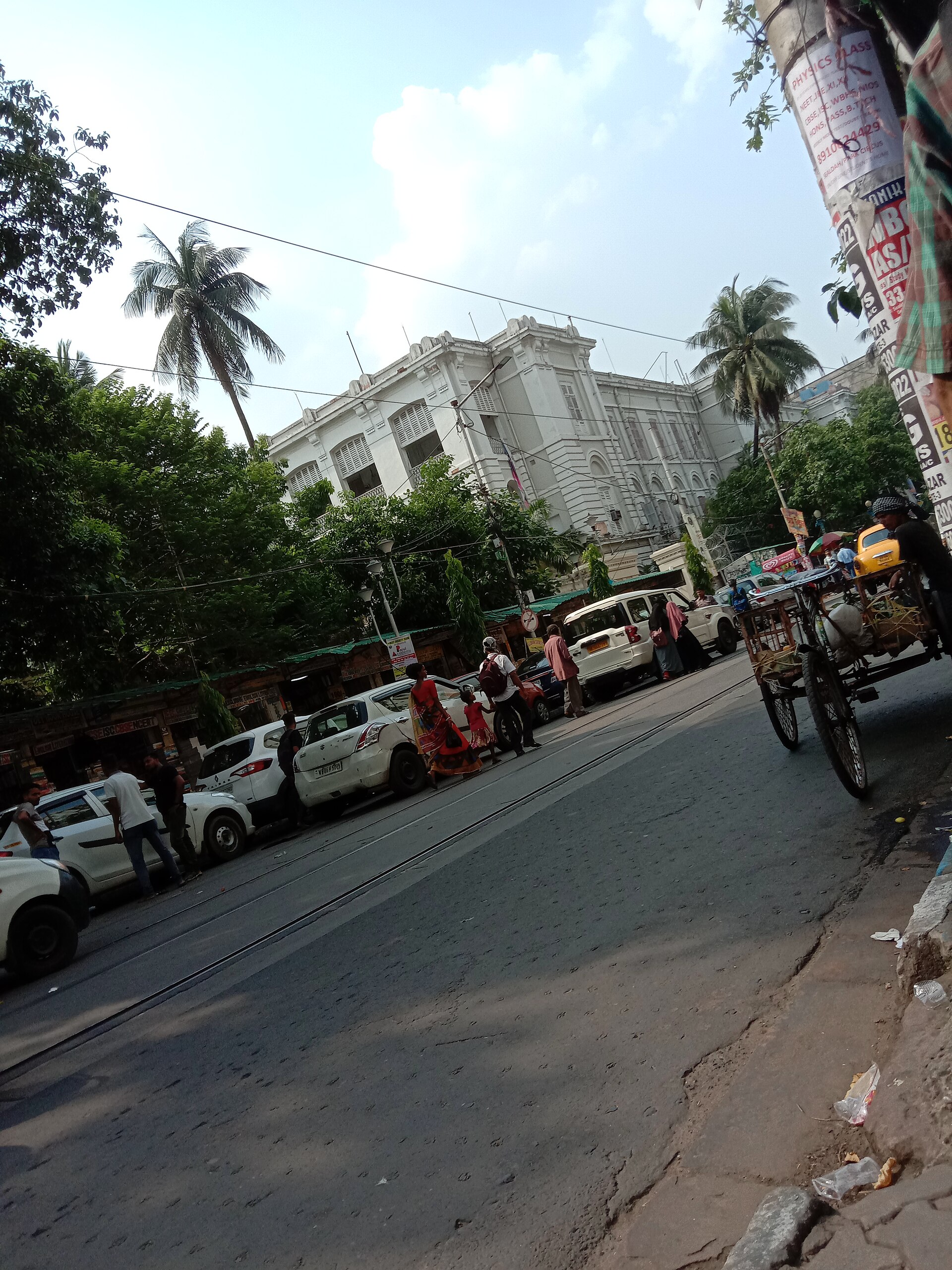
The setting explains a good deal. Calcutta was the capital of British India from 1772 until 1911, which made it the point where colonial administration, English education, printing presses, law courts and a new commercial class all concentrated. Bengal had been under East India Company control since the Battle of Plassey in 1757, longer than anywhere else, so the encounter with European institutions was earliest and deepest there. Hindu College, later Presidency College, was founded in 1817. The Asiatic Society had been established in 1784 by William Jones. Printing in Bengali developed rapidly, including at the Baptist mission at Serampore. The result was a stratum of Bengalis, mostly from upper caste families, who read both Sanskrit and English and who could argue with European ideas rather than merely receive them.
Reform, and the argument about what reform meant
The figure conventionally placed at the start is Rammohan Roy, who founded the Brahmo Sabha in 1828, later the Brahmo Samaj. Roy argued for a monotheistic reading of the Upanishads, opposed image worship, and campaigned against sati, the burning of widows on their husbands' funeral pyres, which the Governor General Lord William Bentinck prohibited by regulation in 1829. Roy's method mattered as much as his conclusions: he argued from Sanskrit scripture that the practices he opposed were not authorised by it, which set the pattern for a century of reformist argument across India. He also campaigned for a free press and for modern education, and he died in Bristol in England in 1833.
The Brahmo Samaj went on under Debendranath Tagore and then Keshub Chandra Sen, splitting more than once over how far to break with Hindu practice. Alongside it, Ishwar Chandra Vidyasagar campaigned successfully for the legalisation of Hindu widow remarriage, achieved by legislation in 1856, and worked to standardise Bengali prose and expand girls' schooling. Later in the century a very different current ran through Ramakrishna Paramahamsa, a temple priest at Dakshineswar whose ecstatic devotional religion attracted educated urban followers, and his disciple Narendranath Datta, who took the name Swami Vivekananda, addressed the World's Parliament of Religions in Chicago in 1893, and founded the Ramakrishna Mission in 1897. Vivekananda's presentation of Vedanta as a universal philosophy, combined with an insistence on social service, had enormous influence both abroad and on Indian self perception.
The literary transformation was equally consequential. Bankim Chandra Chattopadhyay wrote novels that established modern Bengali fiction and, in Anandamath of 1882, produced the song Vande Mataram, which became a nationalist anthem and remains, in a shortened form, India's national song, though it has also been a source of communal contention. Michael Madhusudan Dutt introduced blank verse into Bengali. Above all there was Rabindranath Tagore, whose poetry, songs, fiction, essays, painting and educational work at Santiniketan spanned six decades, and who in 1913 became the first non European to win the Nobel Prize in Literature, for Gitanjali. Tagore wrote the national anthems of both India and Bangladesh, and the Sri Lankan anthem is generally accepted to have been influenced by him.
Science, politics and the criticism of the whole idea
The scientific side is less well known abroad but substantial. Jagadish Chandra Bose worked on radio waves and on plant physiology in Calcutta in the 1890s and afterwards, and his priority in aspects of wireless research has been argued by historians of science. Prafulla Chandra Ray, a chemist, founded Bengal Chemical and Pharmaceutical Works in 1901 as a deliberate exercise in industrial self reliance and wrote a history of Hindu chemistry. Satyendra Nath Bose, working in Dhaka and Calcutta, produced in 1924 the statistical derivation that Einstein extended, which is why a whole class of particles is called bosons. Meghnad Saha's work on thermal ionisation transformed astrophysical spectroscopy. Prasanta Chandra Mahalanobis founded the Indian Statistical Institute in 1931.
The political outflow was direct. The partition of Bengal in 1905, ordered by Lord Curzon and widely seen as an attempt to divide the province along religious lines and weaken nationalist organisation, provoked the Swadeshi movement, a boycott of British goods and a push for indigenous production. The partition was annulled in 1911 and the capital moved to Delhi. Bengal subsequently produced both the constitutional nationalism of figures such as Surendranath Banerjea and a revolutionary strand, and later Subhas Chandra Bose, who broke with Gandhi's leadership and eventually raised the Indian National Army with Japanese support during the Second World War.
The critical objections to the whole framing deserve to be stated plainly. The movement was overwhelmingly a phenomenon of the Hindu upper castes, principally the bhadralok, the educated gentry class whose incomes often came from land tenures created by the Permanent Settlement of 1793. Muslims, who formed a majority of Bengal's population, were largely outside it, a fact with obvious bearing on what happened in 1905 and again in 1947. Lower caste Bengalis were similarly marginal to it. Some historians have argued that the reform movements, for all their genuine achievements on widow remarriage and sati, left caste and landholding substantially untouched because their beneficiaries had no interest in disturbing either. Others question whether "renaissance" is the right word at all for a movement that was in part a response to colonial subordination rather than a rediscovery of a classical past. These criticisms do not dissolve the achievement. They do mean that any account which presents the period as a general awakening of Bengal, rather than of one class within it, is telling only part of the story.
References
- Encyclopaedia BritannicaRammohun Roy
- The Nobel PrizeRabindranath Tagore, Nobel Prize in Literature 1913
- Asiatic Society, KolkataHistory of the Asiatic Society
- Indian Statistical InstituteHistory and P. C. Mahalanobis
This is a reference article, written from the sources above. It is background, not news reporting.