The Caribbean's Indian Roots
Reference library · 1025 words
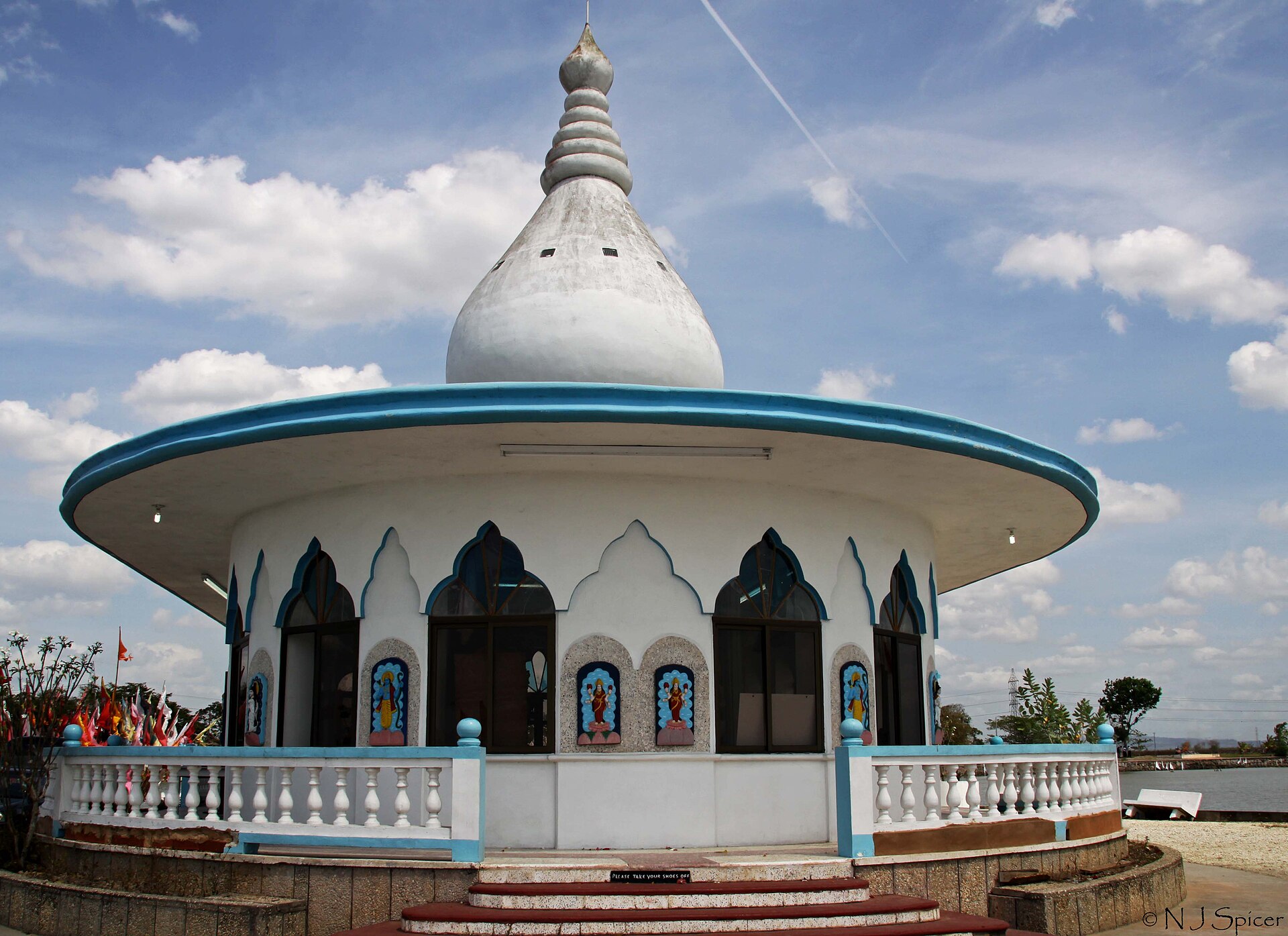

Walk through central Port of Spain or along the Demerara coast of Guyana and the Indian presence is not a recent immigrant story but the fabric of the place: temples and mosques beside Anglican churches, roti shops on the main road, Hindi film songs remade with soca rhythms, and surnames from eastern Uttar Pradesh carried by families who have not seen India for five generations. Roughly forty per cent of the population of Trinidad and Tobago and of Guyana is of Indian descent, and there are substantial communities in Suriname, Jamaica, Martinique, Guadeloupe and Saint Lucia. All of this traces to a single labour system that ran for eighty years and moved well over half a million people across the Atlantic.
Britain abolished slavery in its empire with effect from 1834, and the transitional apprenticeship scheme that followed ended in 1838. Sugar planters in the Caribbean faced a workforce that, given a choice, largely declined to keep cutting cane for the people who had owned them. The planters' answer was indentured labour recruited in Asia on fixed term contracts. The first ships from Calcutta, the Whitby and the Hesperus, reached British Guiana in May 1838 carrying labourers for estates belonging to a Liverpool merchant family, an experiment so badly run that recruitment was suspended for several years. When it resumed it became systematic. The Fatel Razack arrived in Trinidad on the thirtieth of May 1845, a date now marked there as Indian Arrival Day and observed as a public holiday. Jamaica received labourers from the same year. The Dutch, having abolished slavery in Suriname in 1863, signed a treaty with Britain and began receiving Indian workers in 1873; the French took smaller numbers to Guadeloupe and Martinique from the 1850s.
How indenture worked
Recruiters, known as arkatis, worked the districts of eastern Uttar Pradesh and Bihar, with a smaller southern stream through Madras. Famine, land pressure, debt and caste disability supplied the motive; misrepresentation supplied much of the rest, since many recruits had no realistic idea of the distance involved or the work awaiting them. Migrants were held in depots at Calcutta and Madras, examined, registered, and shipped on voyages that took months. The contract was usually five years of estate labour with fixed wages and rations, renewable, with a right to a return passage after a further period of residence. In practice many were induced to commute the return passage for a grant of land or a cash payment, which is precisely how a temporary labour force became a permanent population.
The scale differed by colony. British Guiana received the largest number, on the order of a quarter of a million people. Trinidad received something close to one hundred and forty thousand, Suriname around thirty four thousand, Jamaica around thirty six thousand. Conditions on the estates were regulated on paper by protectors of immigrants and by ordinances setting rations and hospital provision, and were in practice enforced by criminal sanctions against workers who left the estate or refused to work. Historians disagree sharply about how to characterise the system. One influential reading, associated with the historian Hugh Tinker, treated indenture as effectively a new system of slavery. Later scholarship has argued that this flattens real differences, since indentured workers had contracts, wages, legal personality and the theoretical right to complain, and that it also erases the agency of people who made a calculated, if badly informed, decision to leave. Both positions accept the coercion, the mortality on the voyages and the estates, and the near impossibility of leaving before the term expired.
Building a culture in the Caribbean
What emerged was not transplanted India but something new. The migrants came overwhelmingly from Bhojpuri speaking districts, and the language that developed on the estates, known as Caribbean Hindustani or Sarnami in Suriname, is a Bhojpuri derived creole that absorbed English, Dutch and Creole vocabulary. Caste distinctions weakened sharply because the ships and barracks mixed people who would never have eaten together at home, and because there were too few Brahmins to police the boundaries; new religious authority structures emerged, including the Sanatan Dharma Maha Sabha in Trinidad and the Arya Samaj. Islam travelled too. The Shia commemoration of Muharram became Hosay in Trinidad, a street procession with elaborate model tombs that drew participants of all faiths, and in 1884 colonial authorities in San Fernando fired on a Hosay procession they had banned, killing a substantial number of people in an episode still commemorated locally.
The food is now inseparable from Caribbean national cuisine: roti and curry channa, doubles sold from carts as a breakfast staple, pholourie, and the chutney music that fused Bhojpuri wedding songs with Trinidadian rhythms and later with soca. Divali is a public holiday in Trinidad and Tobago and in Guyana, and Phagwah, the Caribbean form of Holi, is celebrated publicly in Georgetown and in New York.
Politics followed the demographics, and not always happily. In both Guyana and Trinidad, party systems formed along the fault line between the Indian descended and African descended populations, a division encouraged under colonial rule and hardened by Cold War interference in British Guiana in the early 1960s, when the removal of the Indo Guyanese leader Cheddi Jagan was actively pursued by British and American agencies. Trinidad and Tobago elected its first Prime Minister of Indian descent in 1995 and its first woman Prime Minister, also of Indian descent, in 2010. Guyana has had several Indo Guyanese presidents. Ethnic voting remains a defining feature of both political systems and a subject of continuous, unresolved public argument.
The Caribbean is also now a source of onward migration rather than only a destination. Large Indo Caribbean communities have formed in Toronto, in New York, particularly around Richmond Hill in Queens, and in London. They arrive with Hindu and Muslim practice, Bhojpuri derived speech and Caribbean accents, and are frequently misread by more recently arrived South Asians as something other than Indian. That misreading is itself a useful reminder: this diaspora is older than most of the countries it now lives in, and it did not so much preserve an Indian culture as invent a Caribbean one.
References
- The National Archives (United Kingdom)Indian indentured labour records
- Encyclopaedia BritannicaIndentured labour
- University of the West IndiesThe University of the West Indies
- British LibraryIndian indentured labour in the Caribbean
- BBCTrinidad and Tobago country profile
This is a reference article, written from the sources above. It is background, not news reporting.